
Fighting Back Against Parkinson’s
Parkinson’s disease takes more than motor function. Depression affects up to half of all Parkinson’s patients, and the psychological burden of living with a progressive neurological condition compounds the physical challenges. But research is showing that boxing — specifically non-contact boxing training — is helping patients fight back on both fronts.
A 2022 scoping review published in the American Journal of Lifestyle Medicine included two studies examining the Rock Steady Boxing program, a non-contact boxing program designed specifically for people with Parkinson’s disease. Both studies demonstrated meaningful improvements in depressive symptoms, quality of life, and Parkinson’s-specific outcomes.
The Rock Steady Boxing Program
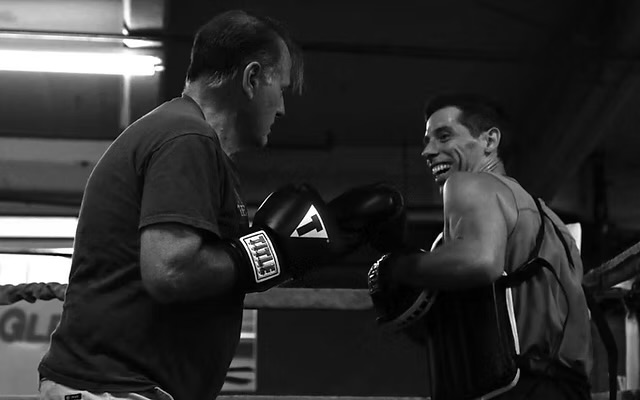
Rock Steady Boxing has grown into a national program, but the research behind it focuses on what happens in the gym. The program uses instructor-led group sessions built around traditional boxing exercises adapted for Parkinson’s patients: warm-ups, ring work, pad work, bag work circuits, and core work with cool-downs.
The first study tracked 44 participants — 33 men and 11 women with an average age of 71 — over 12 to 36 weeks of weekly 75-minute sessions. The results showed statistically significant improvement in depressive symptoms as measured by the PHQ-9, a clinical depression screening tool widely used in healthcare. Participants also showed improvement in Parkinson’s-specific symptoms assessed by the PDQ-39 quality of life questionnaire.
The second study used a mixed-method approach with six participants aged 59 to 81 and older, training twice per week for 12 weeks in 60-minute sessions. This study went further by also interviewing caregivers. Participants reported improved mood, reduced depressive symptoms, and better quality of life. Caregivers independently confirmed improvements in activities of daily living and reported reduced perceived stigma associated with the disease.
Why Boxing Works for Parkinson’s Patients
Parkinson’s disease attacks the motor system, progressively reducing coordination, balance, and movement control. Boxing training directly challenges every one of those deficits. Throwing combinations requires coordination between upper and lower body. Footwork drills demand balance. Bag work develops power and range of motion.
But the mental health benefits may be equally important. The group training format provides social connection for patients who often become increasingly isolated as their condition progresses. The physical challenge provides a sense of accomplishment and agency. And the identity of being someone who boxes — rather than someone who is defined by a disease — emerged as a meaningful psychological shift in both studies.
Caregivers in the second study noted that the program reduced the stigma they perceived around the disease. Seeing their loved ones actively training, working hard, and improving shifted how both the patients and the people around them related to the diagnosis.
More Than Exercise
The review’s authors noted that the combination of physical training and group support makes boxing programs like Rock Steady particularly effective for chronic disease populations. The exercises themselves address motor symptoms while the training environment addresses the depression, isolation, and loss of identity that often accompany Parkinson’s.
For families dealing with a Parkinson’s diagnosis, the research suggests that adding a structured boxing program to the treatment plan can produce measurable benefits — not just in how patients move, but in how they feel.
Read the full study in the American Journal of Lifestyle Medicine