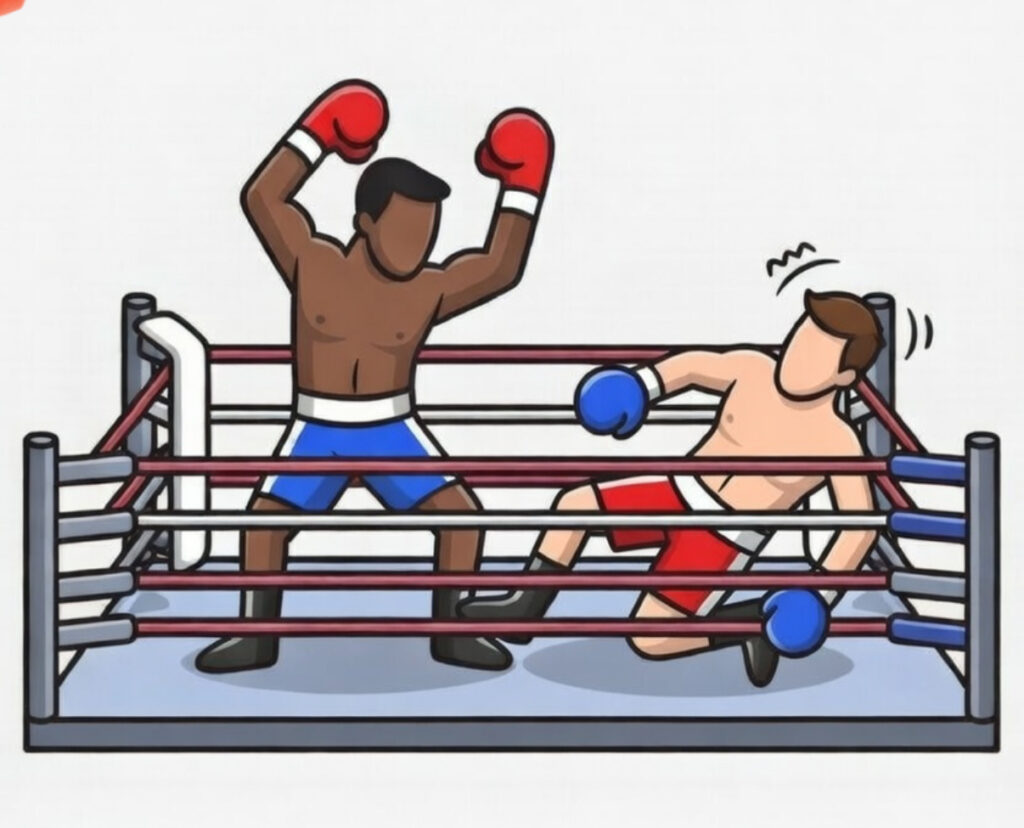
TKO stands for technical knockout. It happens when the referee, the ringside doctor, or a fighter’s corner stops the fight because one boxer can no longer safely continue — even though they haven’t been knocked down for a full 10-count. A TKO counts as a stoppage win on the record, same as a KO.
The difference between a KO and a TKO comes down to one thing: whether the losing fighter hit the canvas and failed to beat the count. If they did, it’s a KO. If the fight was stopped while they were still standing — or between rounds — it’s a TKO.
Every Way a Boxing Fight Can End
KO (Knockout): A fighter is knocked to the canvas and cannot rise before the referee counts to 10. The cleanest, most definitive ending in boxing. When Mike Tyson flatlined Michael Spinks in 91 seconds, that was a KO — Spinks went down and never got up.
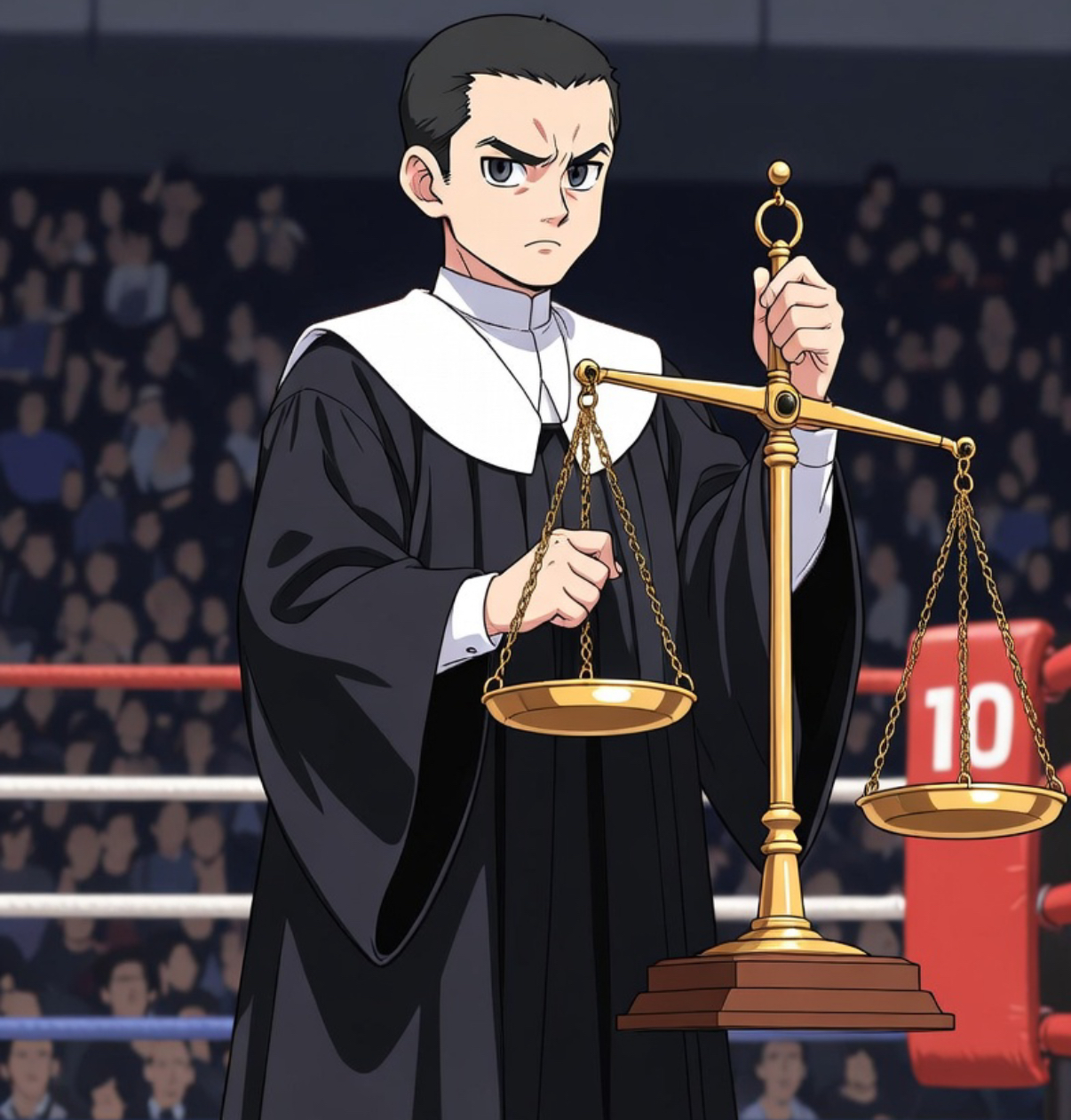
TKO (Technical Knockout): The fight is stopped without a completed 10-count. This covers several scenarios. The referee can wave it off if a fighter is absorbing too much punishment. The ringside doctor can stop it between rounds if a cut is too severe. A fighter’s corner can throw in the towel. Three knockdowns in a single round trigger an automatic TKO in many jurisdictions. All of these go on the record as a TKO.
RTD (Retired / Corner Stoppage): When a fighter’s corner decides their boxer shouldn’t come out for the next round. Technically a subcategory of TKO, but some record books list it separately. Roberto Duran’s famous “No Más” moment against Sugar Ray Leonard in 1980 is the most infamous example of a fighter quitting on the stool.
Decision (UD / SD / MD): If all scheduled rounds are completed, the fight goes to the judges’ scorecards. Unanimous decision means all three judges agree. Split decision means two judges picked one fighter and one picked the other. Majority decision means two judges picked a winner and the third scored it a draw.
Draw: The judges’ scores result in a tie. Can be a split draw, majority draw, or unanimous draw. Draws are rare but they happen — Tyson Fury’s first fight with Deontay Wilder in 2018 ended in a split draw that most viewers felt Fury deserved to win.
DQ (Disqualification): A fighter is disqualified for repeated or egregious fouls. Evander Holyfield’s win over Mike Tyson in their 1997 rematch is the most famous DQ in boxing history, after Tyson bit a chunk of Holyfield’s ear.
No Contest (NC): The fight is declared void, usually due to an accidental headbutt or foul that prevents the fight from continuing before enough rounds are completed for a technical decision.
Why TKOs Are More Common Than KOs
Modern boxing is heavily regulated for fighter safety. Referees are trained to stop fights early rather than let a hurt fighter absorb unnecessary damage. Ringside doctors have more authority than ever to halt bouts over cuts and swelling. Corners are more willing to pull their fighters than they were 30 years ago. The result is that TKOs vastly outnumber clean knockouts on the record books.
This doesn’t make TKOs less impressive. Some of the most devastating finishes in boxing history are technically TKOs. When Manny Pacquiao dismantled Ricky Hatton in two rounds in 2009, the final sequence was a TKO — the referee jumped in after Hatton crumpled against the ropes. No one watching would call that anything less than a knockout.
Why This Matters When You’re Watching a Fight
When a broadcast says a fighter has “30 wins, 25 by knockout,” that number almost always combines KOs and TKOs. The record doesn’t distinguish between knocking someone cold and having the referee step in during a beating. So when you’re comparing knockout ratios between fighters, know that the number is broader than it sounds. A power puncher and a volume puncher who overwhelms opponents can have similar KO percentages for very different reasons.
QUICK FACTS
- TKO = Technical Knockout, stopped without a completed 10-count
- KO = fighter knocked down and fails to beat the count to 10
- TKOs can be called by the referee, doctor, or corner
- Three knockdowns in one round = automatic TKO in most jurisdictions
- KO and TKO are combined in a fighter’s official knockout record
- DQ, RTD, Draw, and No Contest are other possible outcomes