Detroit doesn’t ask for respect — it takes it. The Motor City has been producing world-class fighters since before most boxing towns had a gym worth walking into. Built on blue-collar grit and powered by the most famous training ground in the sport’s history, Detroit’s boxing legacy runs deep enough to rival any city on earth. Here are the best boxers from Detroit, from a heavyweight who changed the world to a right hand that still haunts highlight reels.
Detroit’s Greatest Fighters
Joe Louis
Heavyweight · Detroit (via Alabama) · 66-3 (52 KOs)
“The Brown Bomber” didn’t just put Detroit on the boxing map — he redrew the entire map. Raised in Detroit after moving from Alabama as a kid, Louis became the longest-reigning heavyweight champion in history, holding the belt from 1937 to 1949 with 25 successful title defenses. That record stood for decades and still hasn’t been touched in the modern era. His destruction of Max Schmeling in their 1938 rematch wasn’t just a fight — it was a moment that transcended sport and became a symbol of American defiance.
They named an arena after this man. Not a street, not a plaque — an arena. Joe Louis gave his title-fight purses to the Army during WWII and fought 96 exhibitions for the troops. Try finding another athlete in any sport who did that.
Thomas “Tommy” Hearns
Welterweight through Light Heavyweight · Detroit · 61-5-1 (48 KOs)
“The Hitman” is the most dangerous right hand God ever attached to a 6’1″ frame. Raised in Detroit and forged at Kronk Gym under Emanuel Steward, Hearns became the first fighter in history to win world titles in five weight divisions. Five. From welterweight to light heavyweight, nobody was safe. His annihilation of Roberto Durán in two rounds is one of the most devastating knockouts ever recorded on film.
The wars with Sugar Ray Leonard and Marvin Hagler? Those aren’t just great fights — they’re the fights people use to explain what boxing actually is. Hearns-Hagler lasted three rounds and is still considered the greatest opening round in the sport’s history. Detroit doesn’t get any more iconic than Tommy Hearns.
James Toney
Middleweight through Heavyweight · Ann Arbor / Detroit · 77-10-3 (52 KOs)
“Lights Out” James Toney might be the most skilled pure boxer Michigan ever produced — and that’s saying something considering the company he’s keeping on this list. Toney won the IBF middleweight title by stopping Michael Nunn, moved up to dominate at super middleweight, and eventually campaigned as a cruiserweight and heavyweight because he simply didn’t care about weight classes.
His shoulder roll defense was elite, his counter-punching was surgical, and his mouth was just as fast as his hands. Toney talked trash to everybody and backed it up more often than not. A legitimate Hall of Famer who never got the mainstream credit his skills deserved.
Milton McCrory
Welterweight · Detroit · 31-3 (22 KOs)
Detroit-born and Kronk-trained, McCrory captured the WBC welterweight title in 1983 and was one of Emanuel Steward’s first stars. Slick, powerful, and dangerous — McCrory defended his belt multiple times and looked like a future pound-for-pound entrant before running into a buzz saw named Donald Curry. At his best, McCrory was everything Kronk was about: speed, power, and zero hesitation.
Hilmer Kenty
Lightweight · Detroit · 25-4 (16 KOs)
The man who started it all. Kenty was the first Kronk fighter to win a world title, claiming the WBA lightweight belt in 1980 with explosive power and speed that announced Detroit as a serious player. Without Kenty breaking through that door, the Kronk dynasty doesn’t happen the way it did. Every champion who followed him owes a nod to the guy who went first.
Steve McCrory
Flyweight · Detroit · Olympic Gold Medalist (1984)
Milton’s brother Steve brought Olympic gold back to Detroit from the 1984 Los Angeles Games, winning the flyweight tournament. Another Kronk product, another McCrory doing damage on the biggest stage. His professional career didn’t reach the same heights, but that gold medal belongs to Detroit forever.
Jimmy Paul
Lightweight · Detroit · IBF Champion (1985)
Another Kronk product who captured a world title — Paul won the IBF lightweight belt in 1985 with the kind of technical boxing and durability that Steward drilled into every fighter who walked through those basement doors. Part of the wave that made Kronk the most feared gym on the planet.
Tony Harrison
Super Welterweight · Detroit · WBC Champion (2018)
“Super Bad” proved Detroit’s boxing pipeline didn’t die with the original Kronk. Harrison shocked the world by outboxing Jermell Charlo to claim the WBC super welterweight title in 2018 — a fight almost nobody gave him a chance in. Harrison has said the Charlo rivalry means everything to him, and the two delivered one of the best rivalries of the decade. Detroit grit, personified.
Cornelius Bundrage
Super Welterweight · Detroit · IBF Champion
Hard-hitting and late-blooming, Bundrage won the IBF super welterweight title when most people had written him off. A Detroit lifer who earned everything the hard way — no shortcuts, no favors, just hands and heart.
Hedgemon Lewis
Welterweight · Detroit · NYSAC World Champion (1972)
Before the Kronk era exploded, Lewis was holding it down for Detroit in the welterweight division. He won the NYSAC world title in 1972 and fought the best of his era including José Nápoles. A precursor to what was coming — Detroit was always going to produce champions, Kronk just put it into overdrive.
Why Detroit Produces Legends
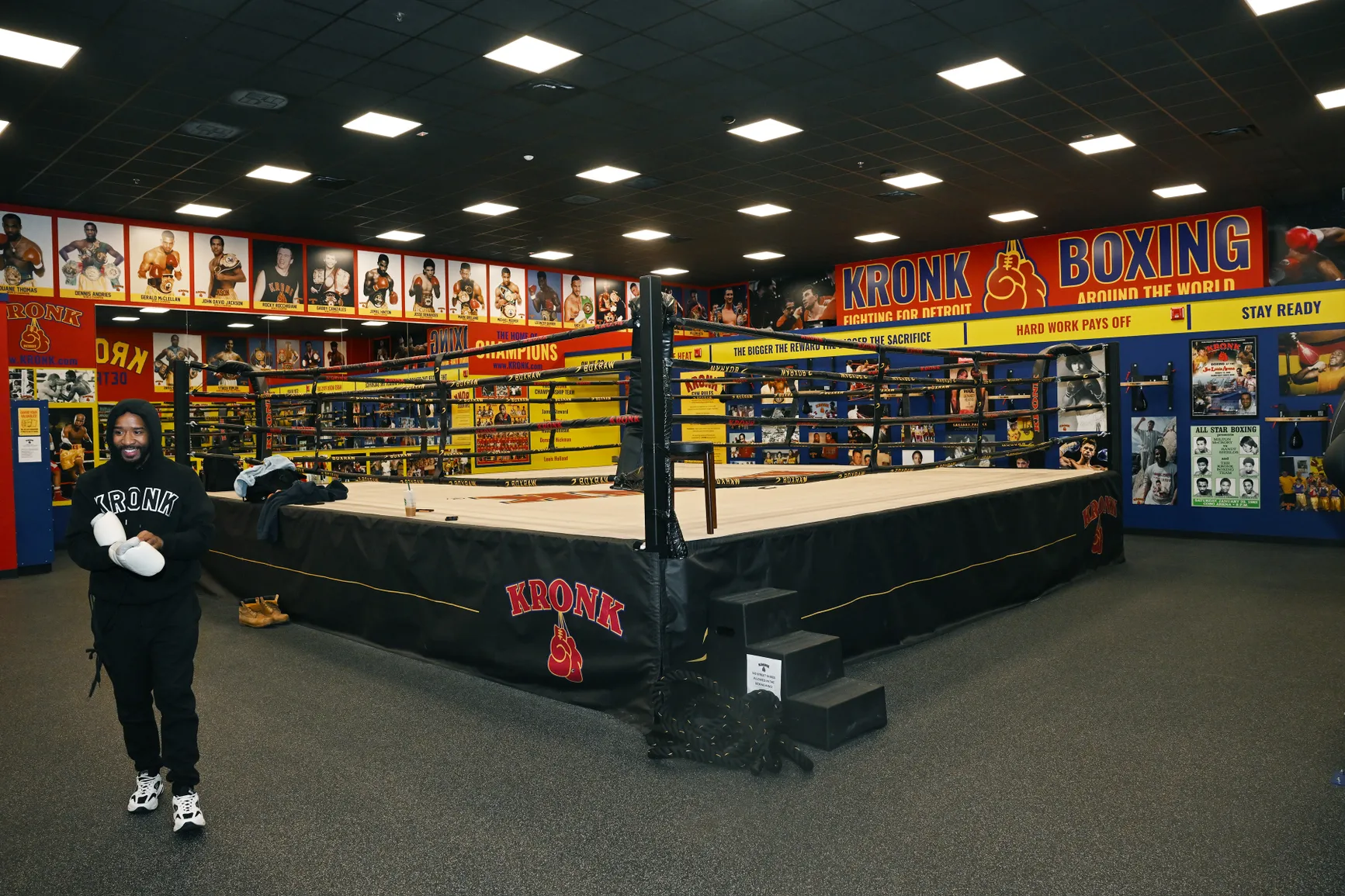
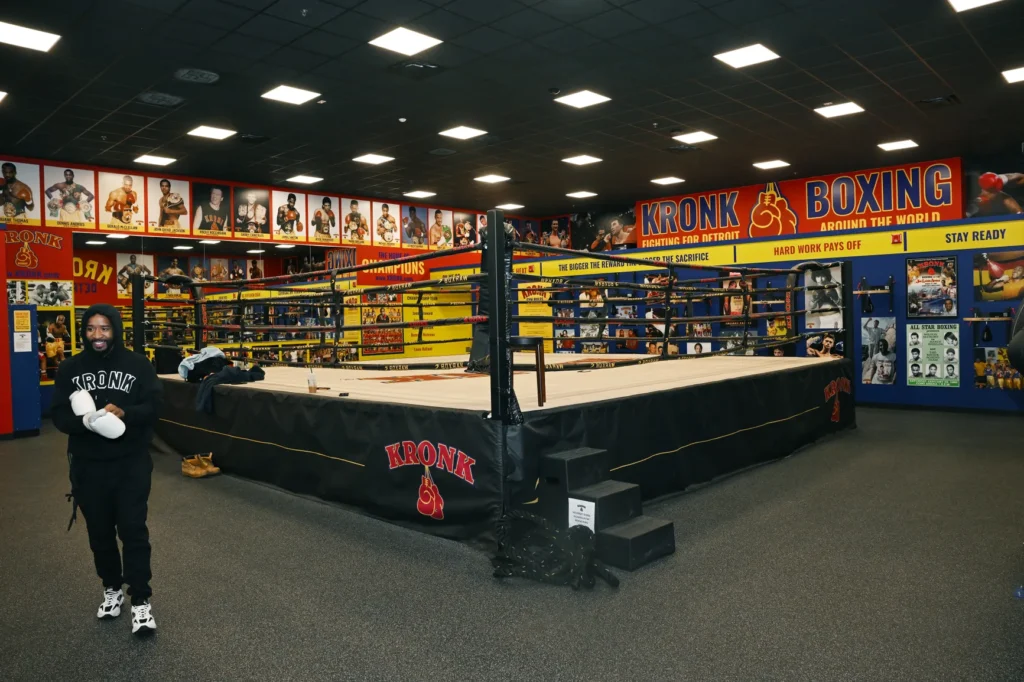
One word: Kronk. The gym that started in a gritty basement recreation center on McGraw Avenue became the most famous boxing factory in the world. Emanuel Steward’s genius — teaching fighters to sit down on their punches, work behind the jab, and finish what they started — combined with Detroit’s blue-collar DNA to create something unrepeatable. Hearns himself has been working to bring big-time boxing back to the city, and the next generation of Detroit prospects is already making noise.
From Joe Louis changing the world with his fists to Tommy Hearns terrifying five different weight classes, Motor City fighters share one thing: they hit you and you stay hit. The original Kronk closed years ago, but its reopened facility keeps the tradition alive — and Detroit keeps producing fighters who remind everybody why you don’t mess with the Motor City.