No city on earth has shaped boxing more than New York. For more than a century, New York City has been the sport’s undisputed capital — the place where prizefighting was legalized, where the rules were written, where champions were crowned, and where the business of boxing was invented. From bare-knuckle brawls in underground athletic clubs to sold-out spectacles at Madison Square Garden, the history of boxing in New York City is, in many ways, the history of boxing itself.
Before the Walker Law: Boxing’s Underground Era
Boxing existed in New York long before it was legal. In the late 19th century, prizefighting was officially banned in the state, but the sport thrived in the shadows. Bars, saloons, and social clubs throughout the city reinvented themselves as “athletic clubs” to exploit a loophole that allowed members of private organizations to box one another. These weren’t polished affairs — they were smoky, dangerous, often mob-connected gatherings where gamblers and working-class fans packed into cramped rooms to watch bare-knuckle and early gloved fights.
One of the most famous of these underground venues was Sharkey’s Athletic Club, a saloon on Columbus Avenue near West 67th Street owned by heavyweight Tom Sharkey. The painter George Bellows, who lived across the street, immortalized the scene in his 1909 masterpiece Stag at Sharkey’s — one of the most iconic images in American art — depicting two fighters bathed in light while spectators howled from the darkness. Bellows was part of the Ashcan School, a group of artists drawn to the gritty realism of New York life, and boxing was their perfect subject.
The Horton Law briefly legalized boxing in New York in 1896, but Governor Theodore Roosevelt — himself a boxer at Harvard — pushed for its repeal in 1900 after a string of ring fatalities and corruption scandals. For the next two decades, professional boxing in New York operated in a legal gray area, with bouts technically disguised as private club exhibitions. The Frawley Law of 1911 legalized ten-round “no-decision” bouts (where no winner was officially declared), but it too was repealed in 1917, leaving the sport in limbo again.
The Walker Law and the Birth of Modern Boxing
Everything changed on March 25, 1920, when New York State Senator James J. Walker convinced his colleagues to pass the Walker Law, which legalized professional prizefighting under state regulation and established the New York State Athletic Commission to oversee the sport. The law limited bouts to fifteen rounds, required a physician at ringside, mandated the use of gloves, and created a licensing system for boxers, managers, promoters, and referees.
The Walker Law didn’t just legalize boxing in New York — it created the regulatory framework that the rest of the country would follow. By 1924, the commission had licensed more than 6,100 professional boxers. Other states modeled their own commissions on the NYSAC, and the National Boxing Association was established in 1921 specifically to counter New York’s outsized influence over the sport. For decades, a NYSAC title recognition was considered the gold standard in professional boxing — if New York didn’t recognize you as champion, your claim was debatable.
The impact was immediate and explosive. With boxing now legal and regulated, promoters could operate openly, build audiences, and attract mainstream attention. The sport moved from back rooms to front pages, and New York became the undisputed center of the boxing universe.
Tex Rickard and the Rise of the Mega-Promotion
No figure was more important to boxing’s emergence as a mainstream spectacle than promoter Tex Rickard. A former gold prospector and saloon owner from Texas, Rickard understood something fundamental about the fight game: boxing wasn’t just a sport — it was entertainment, and the promotion was as important as the fight.
Rickard had already staged the first million-dollar gate in boxing history when Jack Dempsey knocked out Georges Carpentier in 1921 at a specially built wooden stadium in Jersey City, New Jersey — just across the river from Manhattan. He then brought big-time boxing directly into New York City, partnering with Madison Square Garden and eventually becoming its president. Under Rickard’s stewardship, the Garden became the epicenter of professional boxing, hosting championship fights that attracted society figures, celebrities, politicians, and enormous press coverage.
Rickard’s genius was in matchmaking narratives as much as fights. He understood that ethnic rivalries, national pride, and personality clashes sold tickets. In a city teeming with immigrant communities — Irish, Italian, Jewish, African American, Puerto Rican — boxing became a vehicle for cultural identity and upward mobility. Every neighborhood had its fighters, and the city’s arenas were packed with fans who saw their own stories reflected in the ring.
The Golden Age: Fight Clubs in Every Borough
From the 1920s through the 1950s, New York City was the most boxing-saturated city in the world. You could see a professional fight nearly every night of the week, in every borough, at venues ranging from 2,000-seat neighborhood clubs to outdoor stadiums holding tens of thousands.
In Manhattan, Madison Square Garden was the crown jewel, but it was far from the only game in town. St. Nicholas Arena — known as “The Rink” — sat at 66th Street and Columbus Avenue and hosted Monday night fights from 1906 until 1962. By the time it closed, an estimated 10,000 to 30,000 fights had been staged there. Floyd Patterson fought his first professional bout at St. Nick’s in 1952. A young Cassius Clay stopped Billy Daniels there in 1962, just nine days before its final card. The DuMont Television Network broadcast fights live from the arena, making Boxing from St. Nicholas Arena its last regularly scheduled program before the network folded.
Brooklyn had the Broadway Arena in Bushwick, which hosted Tuesday night fights and packed in 4,500 fans. The Eastern Parkway Arena in Brownsville, known as the “House of Upsets,” became famous for its Monday night televised fights in the 1950s under matchmaker Teddy Brenner, who would later run Madison Square Garden’s boxing program. Queens had the Ridgewood Grove Arena on the Brooklyn-Queens border with Saturday night shows, and the Sunnyside Garden Arena, a beloved 2,500-seat venue where the Golden Gloves were once held and where Floyd Patterson, Tony Canzoneri, and countless others fought. The Bronx had the massive Bronx Coliseum and the Fairmont Athletic Club. Even Staten Island had Thompson Stadium.
And then there were the outdoor stadiums. The Polo Grounds, where the Giants played baseball in upper Manhattan, hosted some of the most dramatic fights of the era — including the 1923 classic between Jack Dempsey and Luis “Wild Bull of the Pampas” Firpo, where Firpo knocked Dempsey clean through the ropes and into the press row. Ebbets Field in Brooklyn hosted nearly 90 fight cards before its demolition in 1960. Writer Pete Hamill famously said that when the wrecking ball hit Ebbets Field, many Brooklynites shifted their passion from baseball to boxing.
Stillman’s Gym: The University of Eighth Avenue
If the arenas were where boxing’s drama played out for the public, Stillman’s Gym was where it lived every day. Located at 919 Eighth Avenue in Manhattan, just two blocks from the old Madison Square Garden, Stillman’s was the most famous boxing gym in the world from the 1920s through the 1950s — the place writer A.J. Liebling of The New Yorker dubbed “The University of Eighth Avenue.”
The gym was run by Lou Stillman, born Louis Ingber, a former private detective who took over the Marshall Stillman Athletic Club in 1919 and eventually bought it outright. Stillman was an unforgettable character — acid-tongued, perpetually armed with a loaded .38 under his tweed jacket, and famous for calling everyone, including world champions, “ya bum.” He refused to open the windows or clean the floors, insisting that fresh air was bad for fighters. The place was legendarily filthy, and Stillman wouldn’t have it any other way.
But the talent was staggering. On any given afternoon, you might see Joe Louis, Sugar Ray Robinson, Rocky Marciano, Rocky Graziano, Willie Pep, Jake LaMotta, Kid Gavilan, and Marcel Cerdan all working out in the same room. Stillman had a pecking order: the best fighters sparred in Ring 1, everyone else was relegated to Ring 2. Frank Sinatra, Dean Martin, and Tony Bennett were regulars in the crowd. Fans paid fifteen cents — later raised to a quarter — just to watch the workouts.
By the time Stillman sold the gym in 1959, more than 35,000 boxers had trained within its walls. Today, there is not even a marker on the site — just an apartment building where the center of the boxing universe once stood.
Cus D’Amato and the Gramercy Gym
While Stillman’s was the sport’s public stage, the Gramercy Gym at 116 East 14th Street was its most important classroom. This was the domain of Cus D’Amato, the Bronx-born trainer and manager who developed the peek-a-boo defensive style and produced three world champions: Floyd Patterson, José Torres, and Mike Tyson.
D’Amato opened the gym in 1939 and spent decades there, fighting not just opponents in the ring but the International Boxing Club, a powerful organization with alleged mob ties that controlled championship boxing in the 1950s. D’Amato refused to do business with them, which cost his fighters opportunities but earned him a reputation as one of the few honest men in the game.
Patterson became the youngest heavyweight champion in history in 1956 at age 21 — a record that would stand until D’Amato’s final pupil, Mike Tyson, broke it thirty years later at age 20. Torres won the light heavyweight title in 1965 and later became chairman of the New York State Athletic Commission. D’Amato eventually relocated to Catskill, New York, in 1970, where he launched Tyson’s career from a gym above the village police station. But the foundation was built in that 14th Street gym in Manhattan. Today, a street sign reading “Cus D’Amato Way” marks the spot where the Gramercy Gym once stood.
Gleason’s Gym: The Last Great Training Ground
Gleason’s Gym, the oldest active boxing gym in America, has been operating since 1937. Founded by Robert Gagliardi in the Hub section of the Bronx, the gym moved to Manhattan — settling one block from Madison Square Garden — before relocating to its current home in DUMBO, Brooklyn, under the Manhattan Bridge.
The list of champions who trained at Gleason’s reads like a hall of fame unto itself: 136 professional world champions, including Muhammad Ali, Jake LaMotta, Roberto Duran, and Mike Tyson. The gym served as a filming location for 26 movies, including Martin Scorsese’s Raging Bull and Clint Eastwood’s Million Dollar Baby, both Academy Award winners. Miles Davis and Sammy “The Bull” Gravano were among the non-boxing regulars.
Under longtime owner Bruce Silverglade, Gleason’s evolved from a pure fight gym into a community institution. Women were admitted starting in the 1980s and now make up about a third of the membership. Professional and amateur fighters share space with businesspeople, fitness enthusiasts, and children. But the core identity remains — this is a place where world champions are still made, and where New York City’s boxing tradition lives and breathes every day.
Madison Square Garden: The Mecca
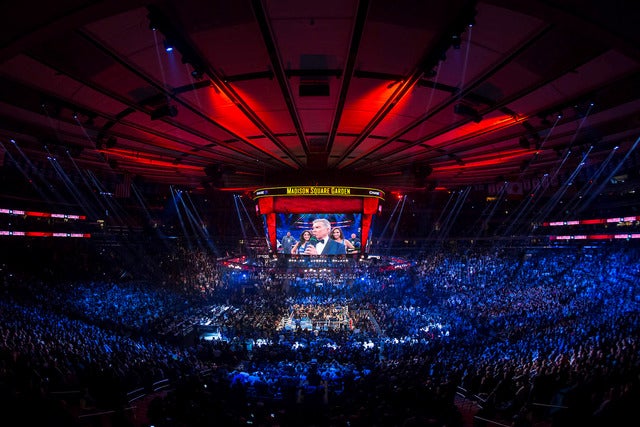
No venue is more synonymous with boxing than Madison Square Garden. The current Garden — the fourth to carry the name — opened in 1968 on Seventh Avenue between 31st and 33rd Streets. But boxing at the Garden dates back to the 1880s, when the original venue on Madison Square hosted bare-knuckle exhibitions and early gloved bouts.
The second Garden, which opened in 1890 and was designed by Stanford White, became the city’s premier sporting venue. The third Garden, built in 1925 at Eighth Avenue and 50th Street, was where boxing truly became Madison Square Garden’s signature sport. Under Tex Rickard and later promoters, it hosted the biggest fights in the world, and the phrase “championship fight at Madison Square Garden” became shorthand for the pinnacle of the sport.
The fights staged at the Garden across its four incarnations constitute the single greatest collection of boxing events in history. Muhammad Ali fought Joe Frazier twice at the Garden — the first, in March 1971, billed as “The Fight of the Century,” remains one of the most anticipated sporting events ever. Joe Louis fought there. Sugar Ray Robinson fought there. Roberto Duran won the lightweight title from Ken Buchanan there. Lennox Lewis fought Evander Holyfield there. Bernard Hopkins stopped Felix Trinidad there. Gennadiy Golovkin and Canelo Alvarez headlined there.
The Garden’s steep bowl design creates an atmosphere that fighters consistently describe as unique — the crowd sits on top of the action, and New York fans bring an intensity that no other city matches. “MSG” on a fighter’s record remains the ultimate credential. It is, without argument, the most important boxing venue in the history of the sport.
Television, Decline, and the Emptying of the Fight Clubs
The very thing that brought boxing into millions of homes ultimately gutted the ecosystem that sustained it. In the late 1940s and 1950s, televised boxing was everywhere — you could watch fights on Monday, Wednesday, and Friday nights from venues across the city. The Gillette Friday Night Fights on NBC, later on ABC, became appointment viewing for a generation.
But television was a double-edged sword. Why pay to see a fight at the Broadway Arena or Sunnyside Garden when you could watch one for free at home? One by one, the neighborhood fight clubs that had thrived for decades began to close. St. Nicholas Arena held its last card in 1962. The Eastern Parkway Arena shuttered. The Ridgewood Grove went dark. Sunnyside Garden held on until 1977 before the wrecking ball came. From a peak of roughly 120 boxing clubs in New York, the number dwindled to a fraction.
The rise of closed-circuit television further reduced the need for massive live audiences. When Floyd Patterson fought Ingemar Johansson at the Polo Grounds in 1959, only 18,215 fans showed up — but the closed-circuit broadcast generated over a million dollars. The economics of boxing were shifting away from gate receipts and toward broadcast revenue, a trend that would only accelerate with the arrival of pay-per-view decades later.
The decline of New York’s club scene was also part of a broader urban story. Neighborhoods changed, venues aged, and the demographic shifts of the 1960s and 1970s reshaped the city. The final boxing event at the Polo Grounds preceded its demolition. The last fight card at the old location was a quiet death for what had once been a roaring ecosystem.
The Fighters Who Defined New York
New York City has produced, adopted, and showcased more great boxers than any city in history. The list is overwhelming in its depth.
Sugar Ray Robinson, born Walker Smith Jr. in Michigan but raised in Harlem, is widely considered the greatest pound-for-pound fighter who ever lived. He fought his first professional bout in New York in 1940 and amassed a record of 174 wins over 200 fights. Robinson’s Harlem was his kingdom — he owned a nightclub, a barbershop, and a dry cleaning business on a stretch of Seventh Avenue known as “Sugar Ray’s Block.” He was the welterweight champion once and the middleweight champion five times, and his style, charisma, and business savvy made him the prototype for the modern superstar athlete.
Mike Tyson came from the mean streets of Brownsville, Brooklyn, where he was arrested 38 times by age 13 before D’Amato rescued him from a reform school and reshaped his life. Floyd Patterson grew up in Bedford-Stuyvesant. Riddick Bowe was from Brownsville. Shannon Briggs came out of Brooklyn. Jake LaMotta, the “Raging Bull” from the Bronx, fought his legendary rivalry with Robinson across New York rings. Sandy Saddler fought 56 times in the New York metropolitan area alone, including four legendary battles with Willie Pep — two at Madison Square Garden, one at Yankee Stadium, one at the Polo Grounds.
And boxing was always the sport of New York’s immigrant communities. Italian fighters like Tony Canzoneri, who grew up in Brooklyn after his family moved from New Orleans, dominated in the 1920s and 1930s. Jewish boxers like Benny Leonard, who trained at Stillman’s Gym and became the lightweight champion, were heroes in their neighborhoods. Puerto Rican fighters found their home in New York rings. As writer Jack Newfield put it, boxing rivalries were “built on ethnic tension, and you could get ten thousand people for a fight between two neighborhood heroes.”
The Golden Gloves and the Ring Masters: New York’s Amateur Pipeline
The New York Daily News Golden Gloves, first held at the third Madison Square Garden in 1927, became the most prestigious amateur boxing tournament in the United States. Over 1,200 boxers applied to compete in the inaugural event, and the tournament has run continuously ever since — producing more professional champions than the Olympics.
The list of Golden Gloves alumni who went on to professional greatness is staggering: Sugar Ray Robinson, Floyd Patterson, Emile Griffith, José Torres, Riddick Bowe, Mark Breland, Iran Barkley, and dozens more. The tournament served as the entry point for generations of New York fighters — kids from the Bronx, Brooklyn, Harlem, and Queens who laced up gloves in PAL gyms and community centers and dreamed of seeing their names on a Garden marquee.
The Golden Gloves also served a social function that extended beyond boxing. In a city defined by its diversity, the tournament brought together young men and women from every neighborhood and background, competing under rules that didn’t care about your zip code. It was, and remains, one of New York’s great democratic traditions.
Today, the tournament is known as the Ring Masters Championships — the “Road to the Garden” — with USA Boxing Metro’s best amateur fighters advancing through regional bouts to compete in the finals at Madison Square Garden. Winners still punch their tickets to the National Golden Gloves Tournament of Champions, keeping the pipeline from New York’s gyms to the sport’s biggest stages alive nearly a century after Paul Gallico’s idea first brought amateur boxing to the Garden floor.
Boxing in New York Today
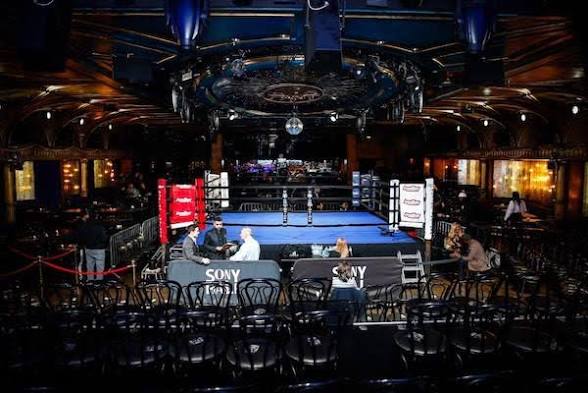
New York City’s boxing scene in the 21st century looks vastly different from the golden age of neighborhood fight clubs, but the sport’s roots in the city run too deep to die. Madison Square Garden continues to host major championship cards. The Barclays Center in Brooklyn, which opened in 2012, brought championship boxing back to the borough for the first time since 1931 and has since hosted more than 250 bouts and 60 title fights. The Hulu Theater at MSG, Sony Hall in Times Square, and other mid-size venues have hosted regular professional cards.
Gleason’s Gym endures in DUMBO. Newer gyms like Mendez Boxing in Manhattan, Church Street Boxing in Tribeca, and others carry on the training tradition. The Ring Masters Championships — the successor to the Golden Gloves — still crowns champions every spring at the Garden. And the New York State Athletic Commission, more than a century after the Walker Law created it, continues to regulate the sport.
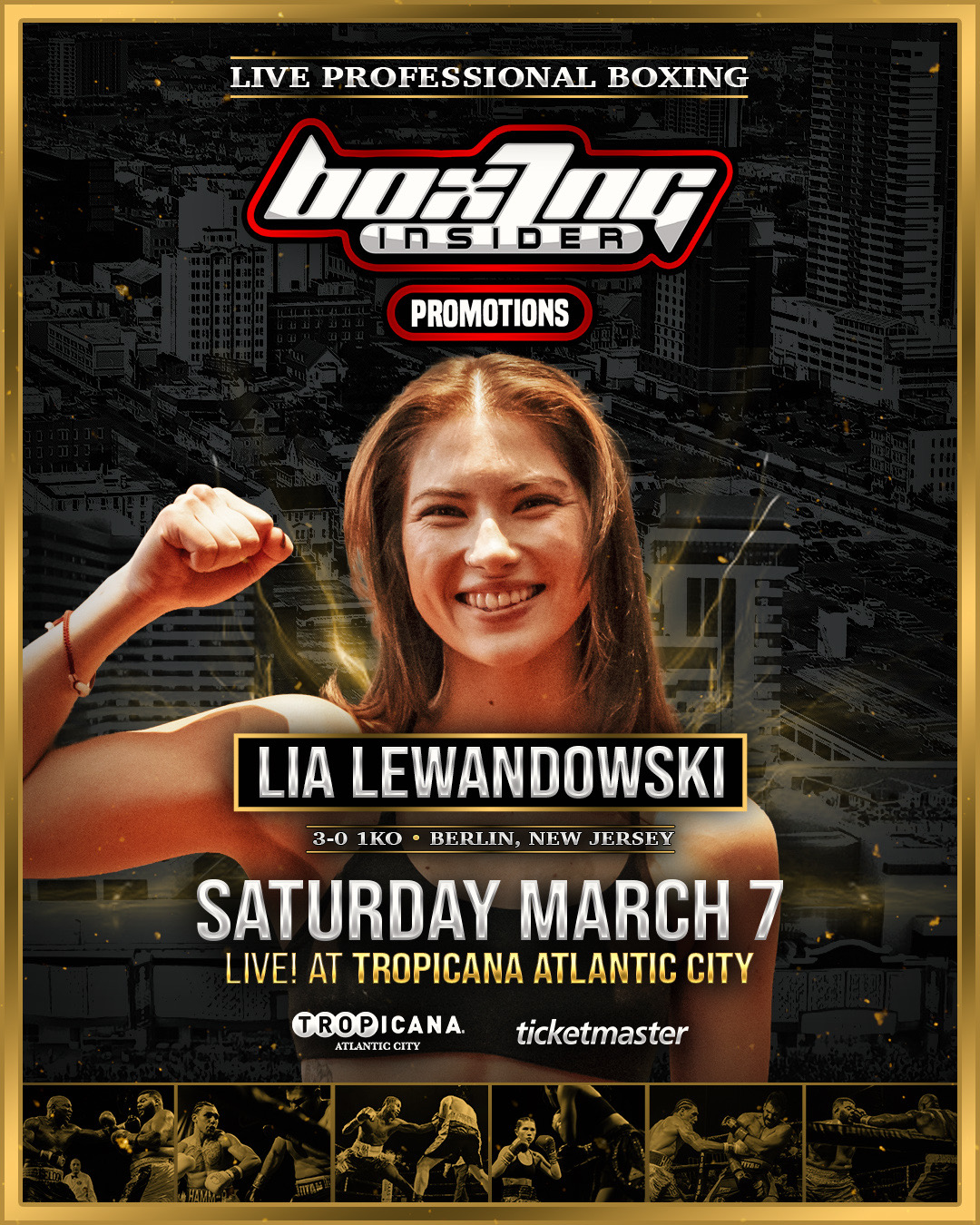
The infrastructure has changed — there are no longer fight clubs in every borough hosting cards every night of the week — but the culture persists. New York remains one of the most important markets in professional boxing. Fighters still dream of headlining at MSG. Promoters like Boxing Insider Promotions, along with the major networks and streaming platforms, continue to bring professional boxing to the New York metropolitan area.
What New York gave boxing was never just about the fights. It was a regulatory framework that shaped the sport worldwide, a media ecosystem that turned fighters into household names, a network of gyms and clubs that developed talent from the streets up, and an audience — passionate, knowledgeable, demanding — that held boxing to a standard no other city could match. That legacy is permanent, woven into the fabric of both the sport and the city.
From the underground athletic clubs of the 1890s to the bright lights of Barclays Center, New York City has been boxing’s hometown for more than a century. And for as long as two people lace up gloves and step into a ring, the city’s claim to that title will remain undisputed.
For more boxing history, check out our complete guides to The Top Boxing Venues of All Time, Boxing Weight Classes Explained, and Boxing Rules & Scoring: The 10-Point Must System.