In Part One this series called it a Cold War and mapped the two sides, the machine and the vault. In Part Two it followed the money into the multi-fight contracts and said the machine had run into the one weapon the old world still had, the contracts. That was August. This is October, and the vault is not just holding anymore. It is hitting back, and it is landing.
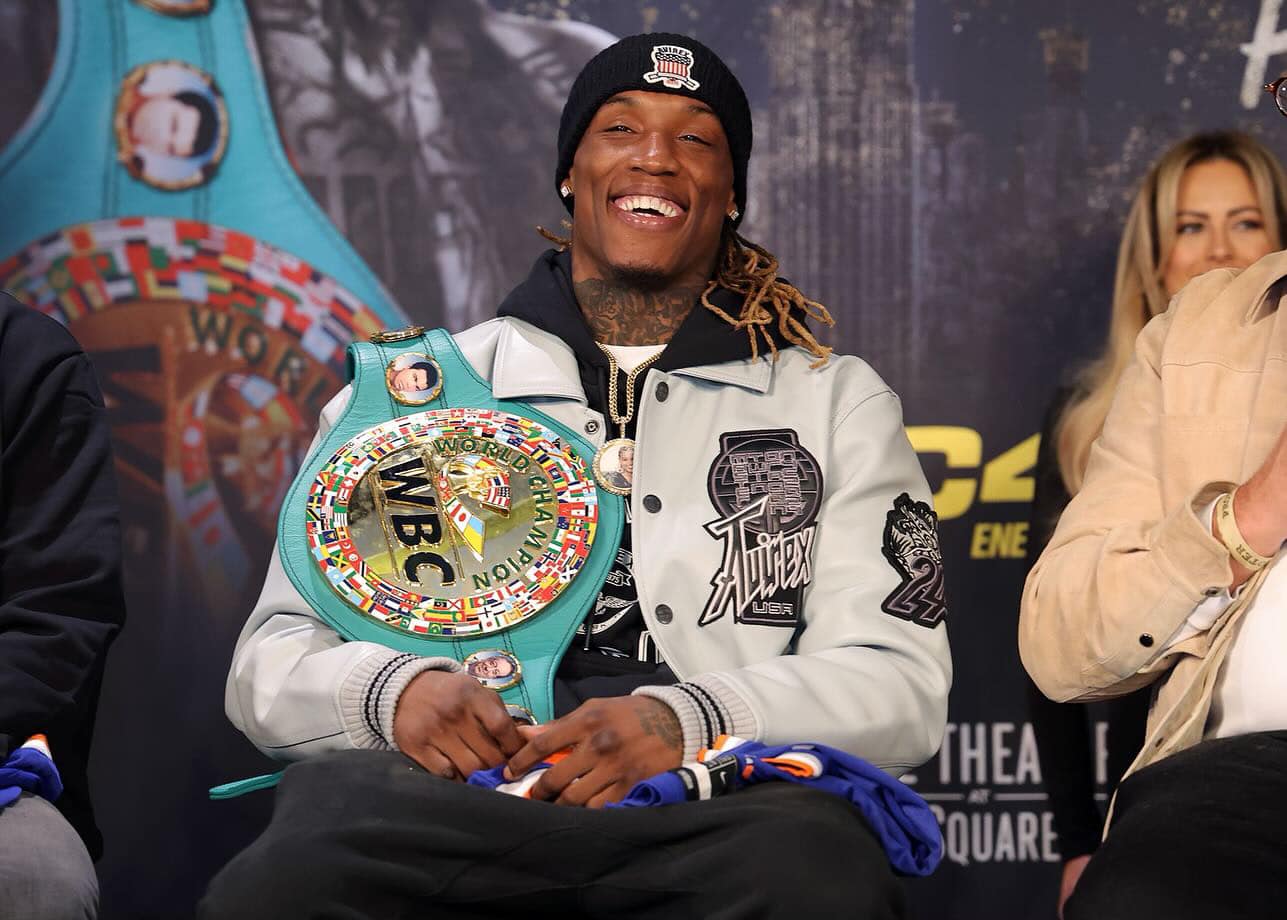
Start with the fighter. Shakur Stevenson signed with Zuffa Boxing on July 9. Dana White called it a massive signing. Stevenson never fought for the company. On Monday he posted a video to his YouTube channel and ended it.
“I’ve been in camp for like eight weeks preparing for fights that I was told was going to happen and have not happened,” Stevenson said. “I’m not mad at anyone, I’m not pointing no fingers. But upon all of these issues and things that have been going on, I’ve requested to be released from Zuffa Boxing. Now over the weekend, my request has been granted. I’m officially a free agent.” Then the part that should get everyone’s attention. “I’m starting my own promotional company.”
Zuffa confirmed the release to Dan Rafael, who reported that Stevenson’s contract had possible opponents written into it with purses attached to each one, and that some of those names were welterweights, including Devin Haney. Haney was the fight. Haney did not sign with Zuffa. Zuffa nearly had him around the time it signed Stevenson, and he went to DAZN instead.
To be fair to the company, the fight did not die for lack of trying. The Haney talks broke down over weight and rehydration terms, and the two fighters spent the aftermath blaming each other on social media. Zuffa also had an in-house alternative in Jose Valenzuela, who signed with Zuffa, moved down to lightweight, won twice and called Stevenson out. Stevenson did not take that fight. From where Zuffa sits, it offered what it had. From where Stevenson sits, the fight written into his deal never got made. Both things are true, and the result is the same. Three months after the biggest signing in the company’s short history, the fighter walked out the door without a punch thrown.
Now the promoter. Bob Arum is back on his feet with a new knee, and he gave two interviews this week, one to Fight Hub TV that Bad Left Hook wrote up, and one ahead of Navarrete and Foster that is circulating as a clip. Read together they are the most complete thing anyone has said about the Zuffa model, because the man has been making fights since 1966 and he was not talking about Shakur. He was talking about where the money comes from.
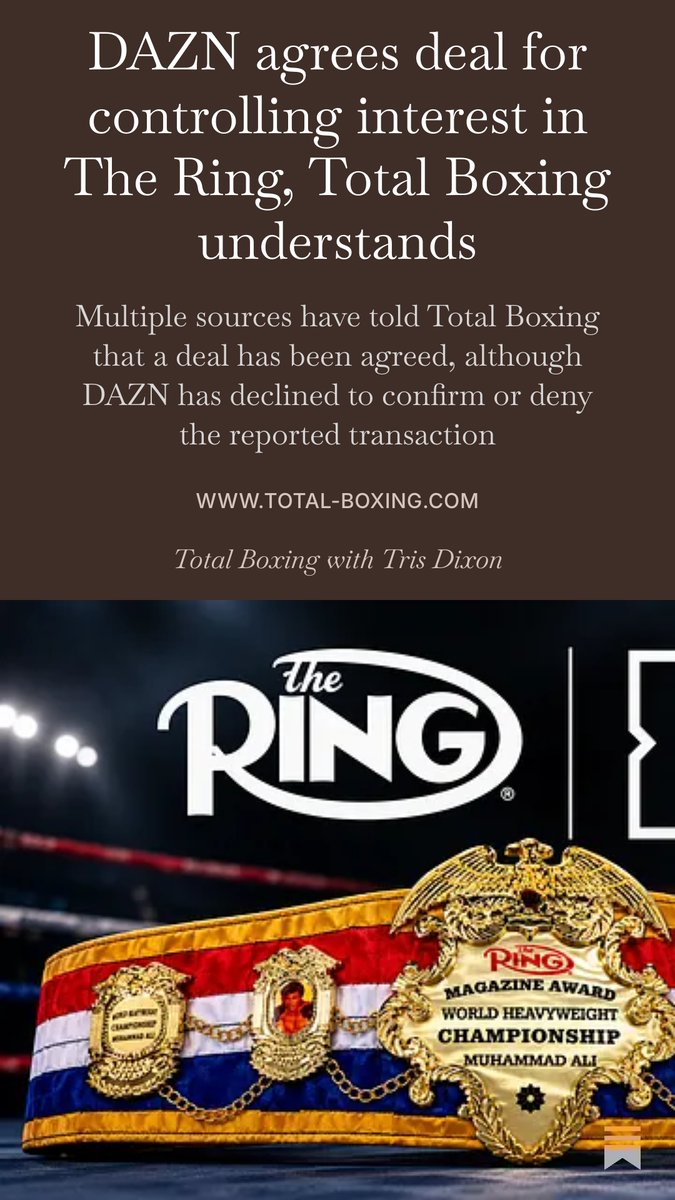
“When you look at Zuffa, they are hoping to do what they’re doing with Saudi money and the Saudis have poured a lot of money into the sport and for a while were backing Zuffa, so Zuffa felt emboldened to offer big money to good fighters like Shakur Stevenson,” Arum told Fight Hub. “Now, apparently the Saudis, Turki and Sela have gotten the word from up high in Saudi Arabia, ‘hey, this money is not going to be unlimited, you’ve got to cut down,’ or there’s no money. I don’t know what they’ve told them. So the Saudis are clearly pulling back and who knows if they’re going to be involved in boxing after this year. They’ve already, apparently, sold Ring Magazine to DAZN.”
The Ring sale is reported, not confirmed, and Oscar De La Hoya has already weighed in on it. But the point Arum built on top of it is the one that matters. “If the Saudi money isn’t there, Zuffa is not going to spend its own money to promote fights because they have announced to their shareholders that they would not do that. And if they start doing it, then they leave themselves open to a major shareholder suit.”
On Stevenson specifically: “Once they realized there was no money coming from the Saudis to fund a $15 million fight deal, then what do you do? If you can get out of that contract, you get out of it. Did they get out, did it cost them any money to get out? I don’t know. But, again, to pay Shakur $15 million, financially it’s not viable.”
In the clip he put it even more bluntly. “You can’t have a contract with a fighter to pay him fifteen million dollars no matter who he’s gonna fight and hope to do it profitably. It just won’t work. So they had a contract with Shakur and they mutually agree to break the contract, but the contract never made any sense. I mean, fifteen million dollars, where’s it gonna come from? I mean, at the end of the day, if it’s gonna be a business, the numbers gotta make sense.”
They did announce it to their shareholders. They have said it on three straight earnings calls. Zuffa Boxing is owned 60 percent by Sela and 40 percent by TKO. In February, TKO president and COO Mark Shapiro laid out the structure for analysts. “The way we structured the joint venture with our partners in Saudi Arabia, Sela specifically, is that they fund it. We have no funding obligation. We’re going to build firm value.” TKO collects a $10 million annual management fee for running the promotion and another $10 million per super fight. On that same call Shapiro addressed the Benn purse directly, saying the reported $15 million “is not TKO going out of pocket.” By the second quarter call this summer, CFO Andrew Schleimer put it even more plainly. “We’re here to build something, but we have no funding obligations, and we don’t take financial risk. It’s really opportunity cost of time and materials.” That is the public company’s own description of the deal. The purses come from the majority partner. TKO runs the shop and collects a fee. Arum is not guessing at the structure. He is reading it back to them, and he is right that a public company that told Wall Street it takes no financial risk cannot quietly start taking some.
For the record, TKO disputes the part about the money drying up. After the Saudi Public Investment Fund pulled its backing from LIV Golf this spring, Shapiro told analysts on the first quarter call that his partners had confirmed “that will not be the case with TKO” and called their commitment to TKO’s properties in 2026 and beyond unwavering. So you have the promoter saying the backer is pulling back and the managing partner saying the backer is all in. What is not in dispute is who pays. If the majority partner spends less, the model has nowhere else to get the money, because the minority partner told Wall Street it will not put any in.
Arum also answered the question Dana White keeps asking, which is whether Zuffa has done a good job. “What does it mean to have done a good job? If somebody gave me a barrel of money to put on fights, would I be doing a good job? Sure. But anybody would be doing a good job. I mean, give Oscar this kind of money, give Eddie this kind of money. So it’s not a question of a good job, the question is can they make matches having a limited budget that is limited by the financial viability of the fight, not what somebody from the outside is pouring into it.”
Then there is the other lawsuit. In the clip, Arum went back to a warning he first gave in March 2025, before Zuffa had run a single card. “Their core business is the UFC. And the UFC fighters throughout the years have claimed that UFC was a monopoly, and they’ve settled one case for three hundred eighty million, and there’s another case for subsequent years that’s gonna settle for even more. If Zuffa continues in boxing and spends money that it would take to promote these fights, they’re gonna sure as hell get a lawsuit from their fighters, and they can easily prove to a judge that they’re being underpaid. Because why is a boxer promoted by Zuffa getting all this money and myself in UFC not, even though we’re both headliners and so forth?”
The number is $375 million, approved by a federal judge in February 2025 in Le v. Zuffa, covering UFC fighters from 2010 to 2017. The second case, Johnson v. Zuffa, covers 2017 to the present and is still pending. Arum rounded up by five million, which at his age and his bankroll is a rounding error, but the point stands and it is a sharp one. Put the two lawsuits he described side by side and you see the box TKO built for itself. If TKO spends its own money on boxing purses, the shareholders it told otherwise have a claim and the UFC fighters have a comparison. If it does not, every big purse depends on a partner Arum says is pulling back. The no-funding-obligation structure is the answer to both lawsuits, and it only works as long as somebody else keeps writing the checks.
Arum closed the way men who have been through this before close. “I have nothing bad to say about Dana White.” And to Fight Hub: “There’s no animosity, people are doing what they feel is best for them and that’s business.”
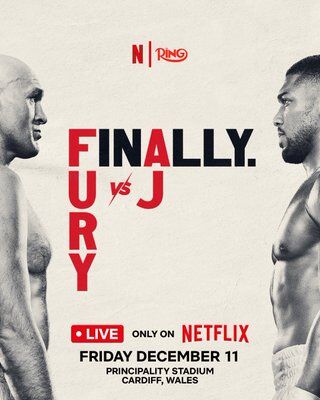
Now the heavyweight. Fury and Joshua is December 11 in Cardiff. Dana White spent the summer saying he would be promoting it and floating Las Vegas and Los Angeles as venues. The British Boxing Board of Control told BoxingScene the promoters of record are Queensberry, Matchroom and Sela. Not Zuffa. Arum, whose Top Rank shares the Fury contract with Frank Warren, said it in one breath. “Eddie is correct. Frank and I have a contract with Fury, Eddie has a contract with Joshua. Dana has a contract with nobody. But if Dana wanted to be involved with the fight, be my guest. I mean, the money is the money. The Saudis are putting up the bulk of the money in that fight.” The biggest fight in British boxing history is a vault fight, and the machine is on the outside looking in at a card it said it owned.
That is the frame for everything above, and Arum gave the clearest example of it when he explained why Haney and Stevenson never happened. “The fight fell apart, but essentially it fell apart because DAZN had promised Haney a certain amount of money, Zuffa had promised Shakur a certain amount of money, and it wasn’t a match because that money didn’t exist in the fight.” Two sides, two guarantees, one fight that could not pay both. That is the Cold War in a sentence. The vault locked up Haney, the machine locked up Stevenson, and the contracts cancelled each other out.
Put it all together. The fighter with the specified-opponent contract left because the opponents were never delivered. The promoter who has outlasted every rival since the Johnson administration says the purses were never going to be paid by anybody except a backer he says is pulling back. And the megafight that was supposed to be the marketing for everything underneath it went to the old promoters, on the old contracts, in the old country.
This is what Part Two meant when it said the machine ran into the contracts. The contracts looked like the vault’s defense. It turns out they are the vault’s offense too. Fury and Joshua were locked up before Zuffa could get to them. Haney was locked up by DAZN. And the one contract Zuffa did write, with named opponents and named purses, was the contract that could not be executed, because the named opponents did not have to show up.
Eddie Hearn said something last week about Conor Benn that reads differently now. “They’ll give him an opponent he doesn’t want to fight, because he’s on a lot of money for a comeback fight. I know how they work. See ya.” The assumption inside that line is that the machine controls the opponent. Stevenson just showed what happens when it does not. Matchroom’s Frank Smith filmed Hearn dancing and captioned it with a question about White’s body of work. That is the vault gloating, and the vault has earned a little gloating this week.
Arum has one more thing to say about the vault, and it should keep anyone on that side from gloating too long. He has watched outside money come into boxing before, and he remembers how it went. “Remember, Haymon came in when he had that deal with the mutual fund with hundreds of millions of dollars, and all he accomplished was pissing it away.” His read on what happens when this money goes the same way: “The market then settles and fighters fight for what’s available and we get some very good fights that still go on and life continues.” That is not a prediction that the old promoters win. It is a prediction that the purses come down for everybody.
None of this means Zuffa is finished in boxing. Arum himself said it in the clip. “If they’re going to spend their money, then, like everybody else, they can put on good fights.” Jai Opetaia is still there. Benn is still there on a five-fight deal. Paramount is still paying, reportedly around $100 million a year on a five-year deal for a dozen cards, and that broadcaster just got a lot bigger. The question Arum put on the table is whether a company that promised its shareholders no risk can run a promotion in a sport where the money is leaving, and whether the backer who made the first year possible is still writing the checks that made the model work.
“How it’s going to come out after this, I don’t know,” Arum said. “I have an idea but again, it’s just an idea and not worth talking about.” Nobody outside the building knows either. But for the first time since this Cold War started, the old world is not just holding its vault. It kept the heavyweights, it kept Haney, and it just got its best fighter back without a fight. The machine still has the platforms. This month the vault had the contracts, and the contracts won.