
Los Angeles didn’t just produce boxing champions — it built a pipeline that fed the sport for decades.
From the golden era of the Olympic Auditorium to the sold-out cards at the Forum and Staples Center, LA’s fight scene has been as deep and relentless as any city on Earth. The fighters who came out of this city — from the barrios of East LA to the streets of South Central to the gyms of Pomona and Oxnard — carried a style that was equal parts Mexican warrior tradition and Southern California flash.
This is the complete guide to the best boxers from Los Angeles and the greater LA area.
Oscar De La Hoya
No fighter in LA history transcended the sport the way Oscar De La Hoya did. Born and raised in East Los Angeles, De La Hoya won Olympic gold at the 1992 Barcelona Games at just 19 years old — the only American boxer to win gold at those Games — and turned professional with a level of hype the sport hadn’t seen since Sugar Ray Leonard.
De La Hoya captured world titles in six weight classes, from super featherweight to middleweight, compiling a professional record of 39-6 (30 KOs). His fights against Julio Cesar Chavez, Pernell Whitaker, Felix Trinidad, Shane Mosley, and Fernando Vargas weren’t just bouts — they were cultural events that routinely drew over a million pay-per-view buys and packed arenas from Las Vegas to El Paso.
What made De La Hoya unique was his crossover appeal. He was on magazine covers, talk shows, and billboards in a way no boxer had been before. But he could fight. His left hook to the body was one of the best weapons in boxing, and his combinations were textbook.
After retiring, De La Hoya founded Golden Boy Promotions, which became one of the two most powerful promotional companies in boxing alongside Top Rank. He went from being LA’s greatest fighter to being one of the sport’s most influential power brokers.
Key fights: Chavez I (TKO 4), Trinidad (L, controversial), Mosley I (L), Mosley II (W), Mayweather (L), Pacquiao (TKO 8 loss)
Shane Mosley
Sugar Shane Mosley grew up in Pomona, just east of LA, and became one of the most naturally gifted fighters of his generation. His hand speed was elite — arguably the fastest hands in welterweight history — and his power was sneaky, accumulating damage with volume rather than single shots.
Mosley won world titles in three weight classes (lightweight, welterweight, junior middleweight) and finished with a record of 49-10-1 (41 KOs). His first-round destruction of Fernando Vargas in their 2006 rematch remains one of the most vicious finishes in welterweight history.
His two fights against De La Hoya were LA boxing royalty — East LA vs Pomona, two Southern California kids who trained in the same gyms and knew each other’s games inside out. Mosley won the first convincingly, and the second was close enough to argue either way.
Key fights: De La Hoya I (W), De La Hoya II (L), Vargas I (W KO 6), Vargas II (W TKO 1), Mayweather (L), Pacquiao (L)
Fernando Vargas
El Feroz was the youngest junior middleweight champion in boxing history when he won the IBF title at age 21, and he was the embodiment of the East LA fighting spirit — aggressive, proud, and utterly unwilling to take a step backward.
Born in Oxnard and raised between there and LA, Vargas compiled a record of 26-5 (22 KOs). His career was defined by blockbuster fights against the best of his era — De La Hoya, Trinidad, Mosley, and Winky Wright. He didn’t win all of them, but he showed up for every one and left everything in the ring.
Vargas represented at the 1996 Olympics at just 18 years old and turned pro immediately after. His wars with Mosley — particularly the devastating first-round knockout loss in their rematch — became part of LA boxing lore.
Key fights: Trinidad (TKO 12 loss), De La Hoya (TKO 11 loss), Mosley I (TKO 6 loss), Mosley II (TKO 1 loss), Wright (L)
Manny Pacquiao (Adopted by LA)
While Pacquiao was born in the Philippines, his American home base was Los Angeles. He trained at Freddie Roach’s Wild Card Boxing Club in Hollywood for the majority of his career, and his biggest fights were staged out of the LA market. The Filipino community in LA adopted him as their own, and his presence transformed Wild Card into one of the most famous gyms on the planet.
Pacquiao won world titles in eight weight classes — a record that may never be broken — and finished with a record of 62-8-2 (39 KOs). His speed, angles, and southpaw power made him virtually unbeatable during his prime years from 2006 to 2011, when he dismantled Oscar De La Hoya, Ricky Hatton, Miguel Cotto, and Antonio Margarito in succession.
His rivalry with Juan Manuel Marquez produced four fights, each more dramatic than the last, culminating in Marquez’s devastating sixth-round knockout in their fourth meeting.
Key fights: Barrera I (W TKO 11), Morales I (L), Morales III (W TKO 3), De La Hoya (W TKO 8), Hatton (W KO 2), Cotto (W TKO 12), Marquez IV (KO 6 loss), Mayweather (L)
James Toney
Born in Grand Rapids, Michigan but relocated to LA as a teenager and trained under the legendary Eddie Futch, Toney became one of the most skilled pure boxers of the 1990s. His defensive mastery, shoulder roll, and counter-punching ability were second to none in the middleweight and super middleweight divisions.
Toney won the IBF middleweight title with a stunning upset of Michael Nunn in 1991, then moved up to super middleweight and cruiserweight. His record of 77-10-3 (47 KOs) spans four decades of professional boxing.
His most famous fight may be his 1994 showdown with Roy Jones Jr., where Jones used his superior speed to outpoint Toney in a tactical masterpiece. Toney later moved to heavyweight and fought for the title, losing to John Ruiz.
Key fights: Nunn (W TKO 11), Jones Jr. (L), Jirov (W TKO 9), Holyfield (L), Ruiz (L)
Bobby Chacon
Schoolboy Bobby Chacon was a featherweight and junior lightweight champion from Pacoima in the San Fernando Valley. His record of 59-7-1 (47 KOs) only tells part of the story — Chacon’s fights were wars, and his personal life was marked by tragedy that made him one of boxing’s most sympathetic figures.
His 1982 fight against Rafael “Bazooka” Limon for the WBC junior lightweight title is considered one of the greatest fights of the 1980s. Chacon won by TKO in the 15th round in a back-and-forth battle that left both fighters battered. He was inducted into the International Boxing Hall of Fame in 2005.
Carlos Palomino
Born in Mexico but raised in Westminster (Orange County, greater LA), Carlos Palomino held the WBC welterweight title from 1976 to 1979 and compiled a record of 31-4-3 (19 KOs). A U.S. Army veteran who learned to box in the military, Palomino’s disciplined style and precise left hand made him one of the best welterweights of the late 1970s.
He defeated Armando Muniz twice and John Stracey to win the title, then made seven successful defenses before losing to Wilfred Benitez. Palomino was inducted into the International Boxing Hall of Fame in 2004.
Erik Morales (LA Adopted)
Born in Tijuana but deeply embedded in the LA fight market, Erik Morales fought extensively for the massive Mexican and Filipino fan bases in Southern California. His trilogy with Marco Antonio Barrera and his three fights with Manny Pacquiao were staged for those audiences.
Morales won world titles in four weight classes and finished with a record of 52-9 (36 KOs). His first fight against Barrera at the Mandalay Bay in 2000 is widely considered one of the greatest fights in boxing history.
David Benavidez
The current face of LA boxing, David Benavidez grew up in Phoenix but has deep ties to the LA Mexican-American boxing community and fights out of the Southern California market. At just 20 years old, he became the youngest super middleweight champion in boxing history when he defeated Ronald Gavril in 2017.
Benavidez holds a record of 29-0 (24 KOs) as of early 2026, and his aggressive, volume-punching style has made him one of the most exciting fighters in boxing. His pursuit of a fight with Canelo Alvarez dominated boxing headlines for years.
His younger brother, Jose Benavidez Jr., also fights professionally, making the Benavidez family one of LA boxing’s most prominent.
Ryan Garcia
Love him or not, Ryan Garcia from Victorville (San Bernardino County, greater LA) became one of boxing’s biggest names through a combination of genuine talent and social media savvy. His left hook is devastating — as proven by his shocking knockdown and victory over Devin Haney — and his hand speed ranks among the fastest in the sport.
Garcia’s career has been turbulent outside the ring, but his popularity brought millions of new fans to boxing through platforms like YouTube and Instagram. He represents a new generation of LA fighter who builds an audience both inside and outside the ring.
The Honorable Mentions
LA’s boxing depth extends well beyond the names above.
Art Aragon — “The Golden Boy” before De La Hoya, Aragon was an LA boxing star in the 1950s who packed the Olympic Auditorium and lived a life straight out of Hollywood. Genaro Hernandez — WBA super featherweight champion from LA who compiled a 38-2-1 record before tragically passing from cancer at 45. Paul Gonzales — Olympic gold medalist at the 1984 LA Games who became a symbol of East LA’s boxing tradition. Victor Ortiz — Kansas-born but LA-based welterweight who won the WBC title and was part of several memorable fights, including his controversial loss to Mayweather. Vergil Ortiz Jr. — Grand Prairie, Texas native who trains in LA under Robert Garcia and is one of the most dangerous young welterweights in boxing. Seniesa Estrada — One of the top women fighters in boxing, East LA native, and a pioneer for women’s boxing in the LA market.
The Venues That Made LA Boxing
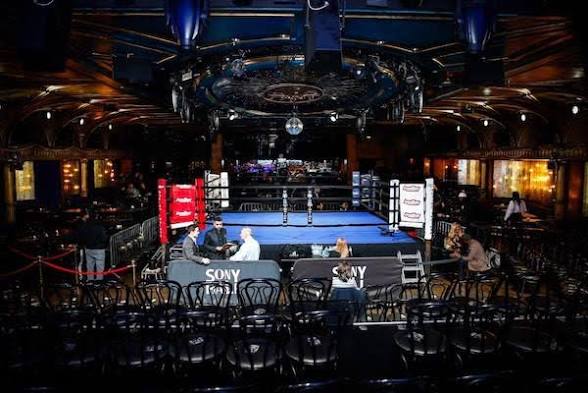
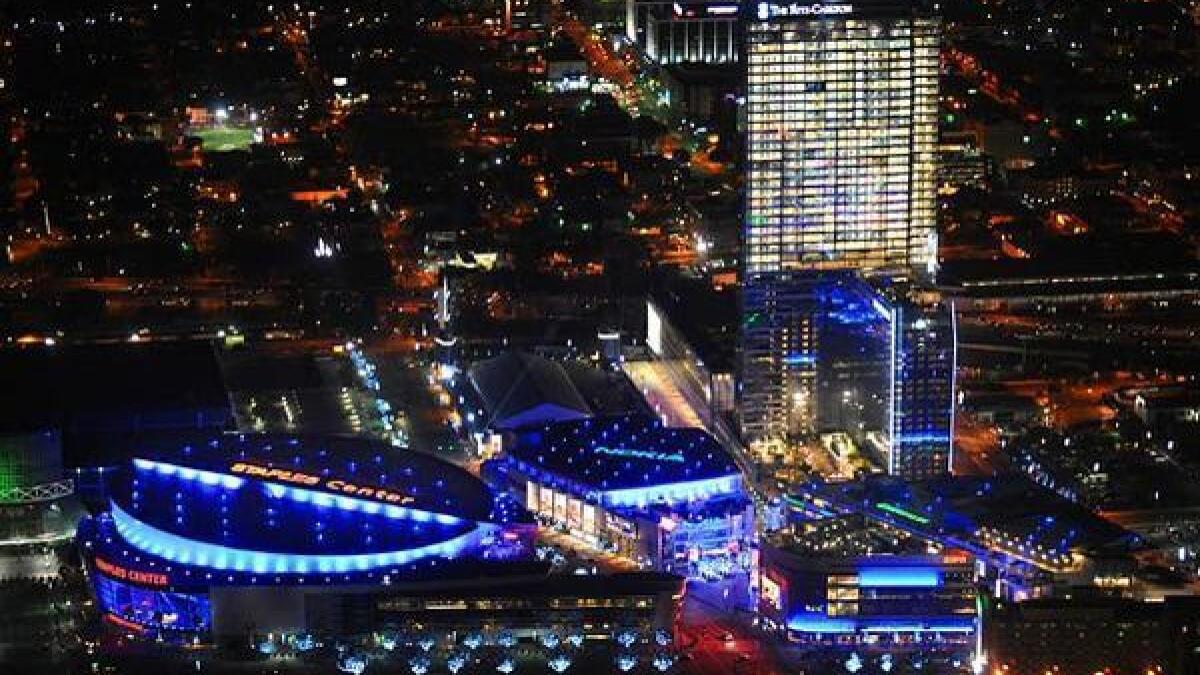
The Olympic Auditorium — The cathedral of LA boxing from the 1920s through the 1980s. Every great LA fighter fought here. It hosted thousands of fight cards and was the home of weekly televised boxing that brought the sport into American living rooms. The Forum (Inglewood) — Hosted major championship fights through the 1970s and 80s and has seen a revival in recent years. Staples Center / Crypto.com Arena — The modern home of LA’s biggest fights. StubHub Center (now Dignity Health Sports Park, Carson) — A more intimate outdoor venue that became the home of club-level championship fights and prospect showcases.
The LA Boxing Legacy
What makes LA unique in boxing isn’t just the champions — it’s the ecosystem. The city’s massive Mexican-American population created a fan base that could sell out arenas for fighters other markets wouldn’t draw for. The proximity to Hollywood brought media attention and celebrity involvement. The gym culture — from Wild Card to Ten Goose to the Church Street Gym — produced world-class trainers like Freddie Roach, Robert Garcia, and Joe Goossen.
LA boxing isn’t just a city producing fighters. It’s an industry, a culture, and a tradition that continues to shape the sport today.
For more in our city series, see our guides to the best boxers from Brooklyn, Philadelphia, Detroit, Puerto Rico, Manhattan & Harlem, and Newark & New Jersey.