by Eric Bottjer
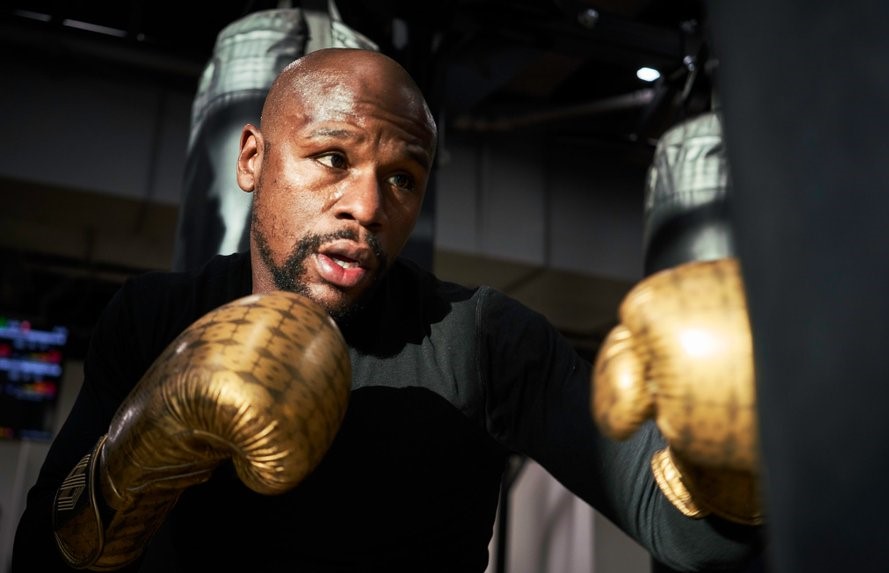
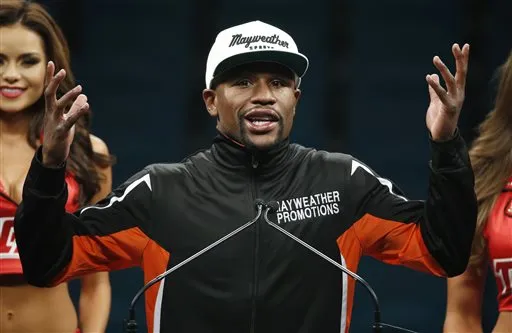
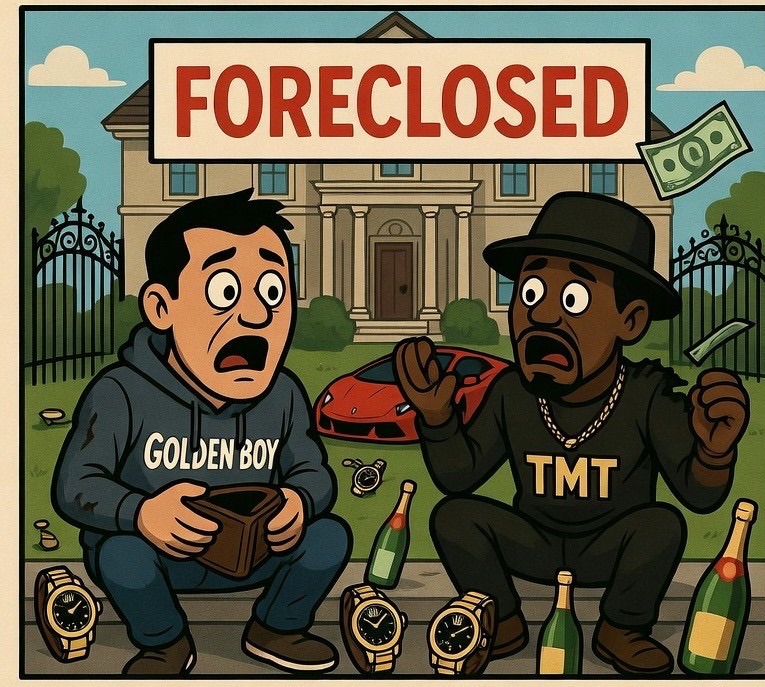
The rumors, fanned for years by a combination of jealousy and circumstantial evidence, are true. Floyd Mayweather Jr. is broke. In a way, perhaps, that many of us would like to be broke – he still lives in a Vegas mansion, still wears designer clothes and watches, still drives six-figure sports cars. But nobody files the lawsuit he did yesterday who isn’t having steep money issues. This 25-page Hail Mary blames longtime manager Al Haymon and former Showtime Boxing executive Stephen Espinoza for diverting $340 million of Mayweather’s gross earnings of $1.14 billion into various destinations, none of which were Mayweather’s bank accounts.
The Mayweather money speculation has been a free parlor game for years. Is he or isn’t he broke. Or, perhaps, going broke. Mayweather himself teased the slim portion of the public who cared about his finances, posting videos and screenshots of stacked cash, designer jewelry and a garage full of luxury cars(more than 100 – white ones in Miami, black in Las Vegas). He owns more than 100 watches, one of which cost him $18 million.
The investment value of his items is a mixed (designer) bag. The watch collection has real value. Should he liquidate that, Floyd will come out ahead financially. But the cars will gut him. A firesale there would net him about 50 percent of what he paid. Maybe.
Of course, none of these purchases were made as investments. If insecurity was currency, Mayweather would remain forever wealthy. He loves to post winning gambling tickets on social media. Mayweather bets up to seven figures per wager on team sports. The posts seem less a celebration of a win and more a message to those criticizing his spending habits. Anyone with any experience wagering on team sports knows that amateurs lose money in that endeavour.
The pics of his gambling tickets brought head shakes, as did his habit of traveling with hundreds of thousands of dollars in cash in a designer back, to be stacked in public in front of, well, witnesses. In December, courtside at an NBA game, Mayweather, sitting next to Jay-Z, theatrically reached into a red bag and pulled out a stack of cash and began counting it. Thewitness in this case – Jay-Z – didn’t react. He’s worth $2.5 billion, twice as much as Mayweather grossed in his entire career.
Last February, Mayweather announced he had purchased 62 Manhattan apartment complexes. No partners, he claimed. “It’s all about power moves,” he bragged. “Guess what? You can do the same.”
No, you can’t (unless you’re Jay-Z). The smallest, cheapest apartment buildings in Upper Manhattan run more than $2 million. Larger ones easily shoot past $10 million. Meet those figures in the middle ($6 million), multiply that by 62, and Mayweather wanted folks to believe on his Instagram post he had invested – with no partners – $402 million in Manhattan real estate.
Business Insider magazine decided to do a feature on the transactions, a potential feel-good story about a wealthy American athlete wisely investing his earnings to create generational wealth that would benefit his family into the next century. What made the story more special is that this athlete was a black American boxer, whose century-plus history of its’ most accomplished athletes often end up nearly as impoverished as when they began.
Business Insider did get its story, but it was a sad, puzzling one. None of the 62 buildings Mayweather claimed to have bought were actually sold. And none of them had sales pending, to Mayweather, or anyone else. The truth was that Mayweather had invested an undisclosed sum into the portfolio that presently owned those buildings. He was not the sole owner, or even the majority owner.
When the magazine’s reporter asked Mayweather for comment, he was directed to speak to James McNair, who helps Mayweather with his business ventures. However, when the reporter later heard past interviews with McNair, he realized that the man he had interviewed was not McNair. Later repeated efforts to interview the real McNair failed.
Mayweather has filed a lawsuit against Business Insider for $100 million. The magazine stands by its’ story, simply pointing to public records regarding Mayweather’s property claims.
Last year revealed that Mayweather’s money issues were, in fact, fact. He took out a $54 million loan at 9 percent interest. He has two commercial properties facing foreclosure and owes the government unpaid taxes on his Las Vegas strip club (Mayweather settled a $22.2 million dept to the IRS for personal back taxes in 2017). He owes a Nigerian media firm $3 million, and a U.S. court has authorized repossession of some of his luxury cars to settle that debt.
In his Showtime lawsuit, Mayweather hired California celebrity attorney Bobby Samini, a 55-year-old graduate of USC and the Ohio State University Moritz College of Law who gained prominence representing former Los Angeles Clippers ownerDonald Sterling in lawsuits against the NBA, TMZ and Sterling’s former girlfriend (TMZ got its case dismissed and Sterling was banned from the NBA and forced to sell his team).
Samini and Mayweather claim Haymon diverted $340 million over a decade of Mayweather’s career to accounts Mayweather was unaware of. The suit also states it is seeking at least double that amount, pointing out Mayweather lost speculative earnings from that missing money; i.e., he would have invested that money to at least double that amount over the same time period (that claim will raise a few eyebrows amongst those familiar with Mayweather’s investment habits). While Haymon is painted as the architect of this alleged theft, he is not a defendant in the lawsuit, which names Showtime Networks, Inc., and its former head of sports programming, Stephen Espinoza.
Ironically, a Mayweather boxing rival also has financial woes. It was revealed last week that Oscar De La Hoya defaulted on a $27 million loan tied to his Los Angeles office building, with $23 million still owed (Oscar is attempting to renegotiate the debt). Golden Boy Promotions long-term deal to provide shows to DAZN ended last month and has not been renewed. The company’s cash cow, Ryan Garcia, has said he’s leaving Golden Boy after his Feb. 21 match with Mario Barrios. The company has ceased signing new talent.
In May 2007, Oscar and Floyd met in Las Vegas in a “super-fight,” with the men earning then-record purses of $58 million (Oscar) and $25 million (Floyd). Mayweather won and moved to record purses for Manny Pacquiao ($180 million) and Connor McGregor ($280 million). Even with Mayweather’s spending habits, it was hard to imagine him going broke.
But the possibility of millionaire (and now billionaire) boxers going broke is always there. The history of boxing’s biggest money makers rarely strays from rags-to riches-to rags. Mike Tyson recovered and is doing fine now. His famous dance partner, Evander Holyfield, also grossed $400 million. Like many of his brethren, he vowed to keep his wealth. Holyfield filed for bankruptcy in 2012, sold his Georgia mansion at a loss of $7.5 million and auctioned his memorabilia from his boxing career later that year.
It didn’t have to be so. When Holyfield fought the pair of Tyson fights that earned him $40-plus million, his advisor/attorney Jim Thomas encouraged Evander to invest a portion of that money in low-risk, long-term assets that would set him and his family for life. Holyfield declined, telling Thomas, “You think too small.”