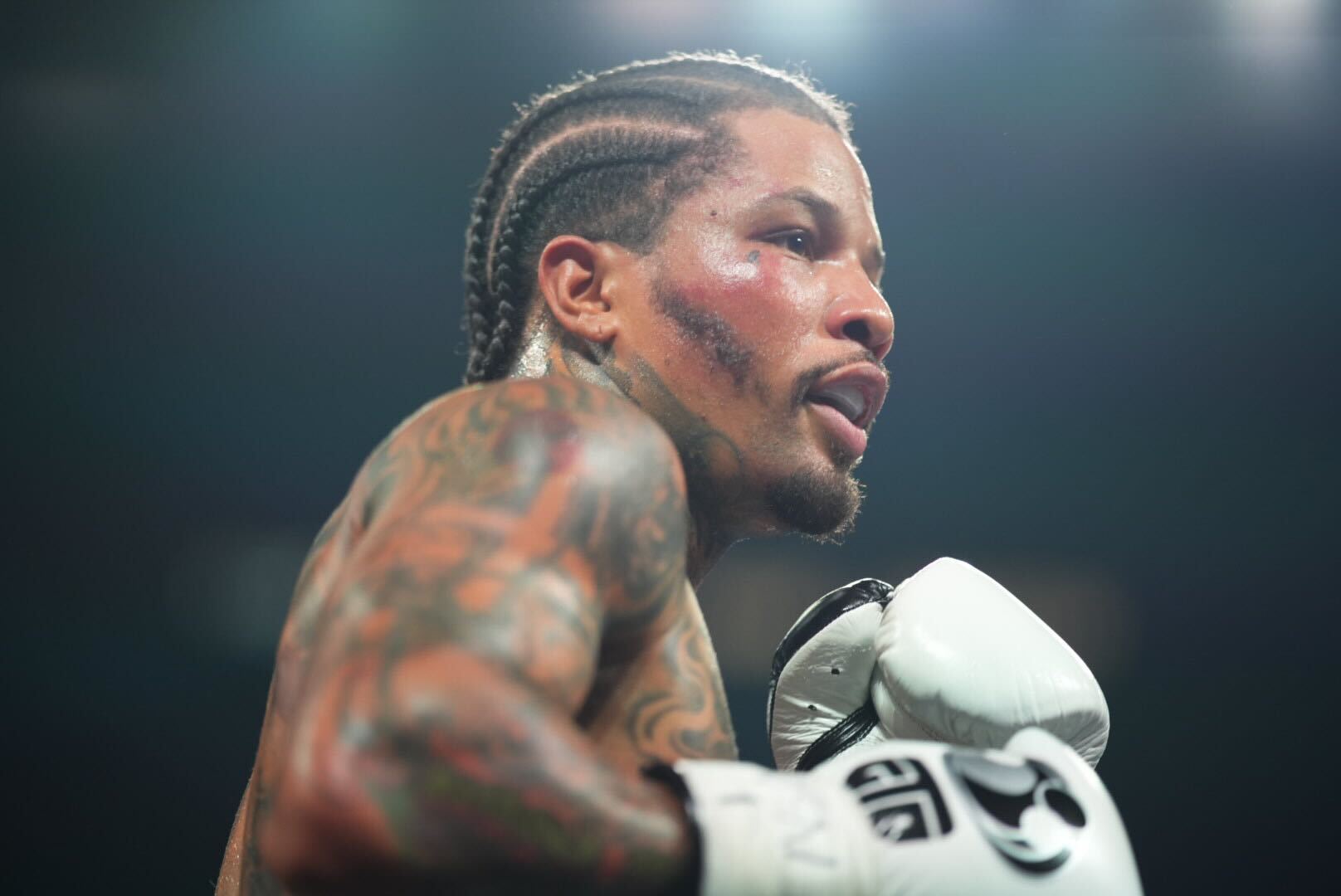
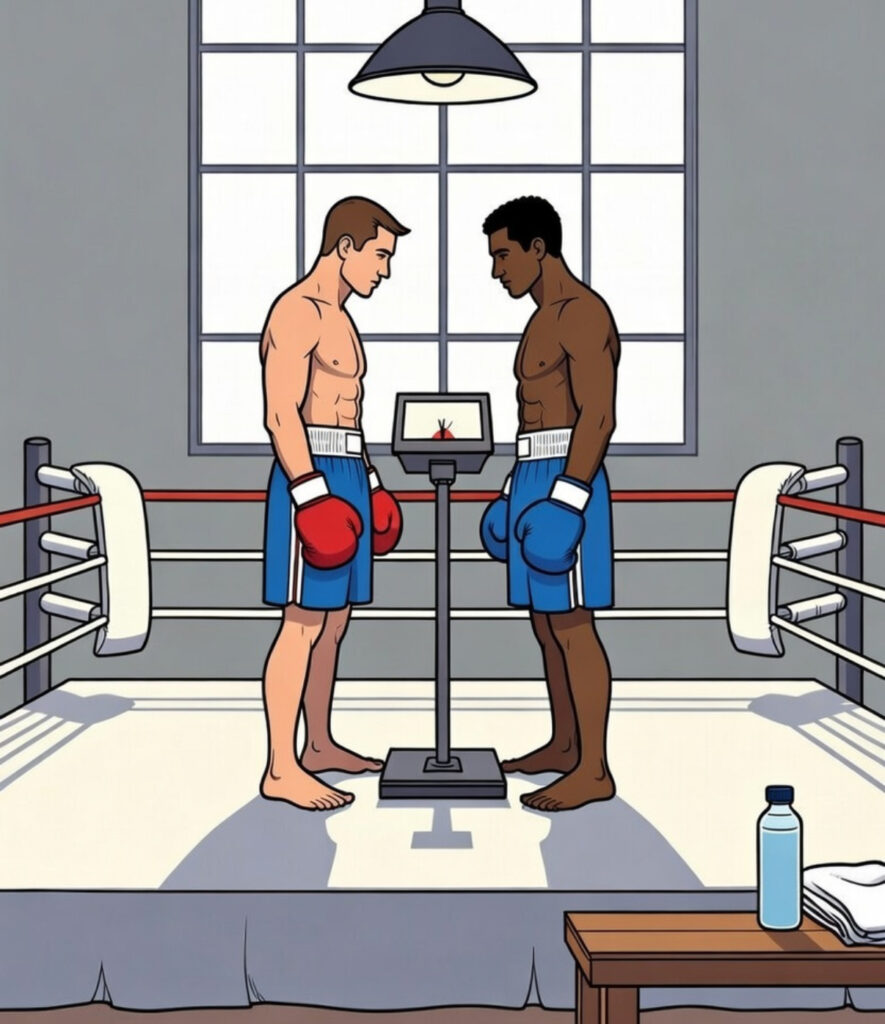
Everything you need to know about boxing’s weight divisions — why heavyweight was once the most prestigious title in all of sports, what the Original Eight glamour divisions mean, and how TKO Boxing plans to take the sport back to its roots.
Why Weight Classes Exist
In boxing’s bare-knuckle era, there were no divisions. A 160-pound technician could find himself standing across from a 230-pound slugger with no recourse but to fight or forfeit. The results were predictable — and often dangerous. Weight classes were introduced to protect fighters and ensure competitive integrity, creating a sport where skill, speed, and strategy could matter as much as raw size.
The principle is simple: power in boxing is closely tied to mass. A significant weight advantage can turn a competitive contest into a mismatch. Weight classes level the playing field, giving fighters of all sizes a path to championship glory.
The Original Eight: Boxing’s Glamour Divisions
Before the alphabet soup of sanctioning bodies and the proliferation of “super” and “junior” divisions, boxing operated with just eight weight classes. These were formalized by the National Sporting Club (NSC) of London in 1909 and further standardized by the 1920 Walker Law in New York, which established the New York State Athletic Commission (NYSAC).
These are known as the “Original Eight,” the “Classic Eight,” or the “Glamour Divisions” — and they remain the most prestigious and widely recognized categories in the sport:
| Division | Weight Limit | Iconic Champions |
|---|---|---|
| Heavyweight | Unlimited (over 200 lbs) | Muhammad Ali, Joe Louis, Mike Tyson, Lennox Lewis |
| Light Heavyweight | 175 lbs (79.4 kg) | Archie Moore, Roy Jones Jr., Ezzard Charles |
| Middleweight | 160 lbs (72.6 kg) | Sugar Ray Robinson, Marvin Hagler, Bernard Hopkins |
| Welterweight | 147 lbs (66.7 kg) | Sugar Ray Leonard, Floyd Mayweather Jr., Manny Pacquiao |
| Lightweight | 135 lbs (61.2 kg) | Roberto Durán, Joe Gans, Gervonta Davis |
| Featherweight | 126 lbs (57.2 kg) | Willie Pep, Salvador Sánchez, Prince Naseem Hamed |
| Bantamweight | 118 lbs (53.5 kg) | Carlos Zárate, Éder Jofre, Naoya Inoue |
| Flyweight | 112 lbs (50.8 kg) | Jimmy Wilde, Pancho Villa, Roman “Chocolatito” González |
These eight divisions produced the most legendary names in boxing history. When fans talk about “the heavyweight champion of the world” or a “welterweight war,” they’re invoking a lineage that stretches back over a century.
Manny Pacquiao — the only octuple champion in boxing history — won world titles in four of the glamour divisions (flyweight, featherweight, lightweight, and welterweight), a feat that underscores how central these original classes remain to boxing’s identity.
The Full Modern Landscape: 17 Weight Classes (and Counting)
As boxing evolved through the 20th century, the gaps between the original eight were seen as too large. A fighter who was too big for welterweight (147 lbs) but too small for middleweight (160 lbs) had no natural home. The solution was the creation of “tweener” divisions — typically designated with “super,” “junior,” or “light” prefixes.
Today, the four major sanctioning bodies (WBA, WBC, IBF, and WBO) recognize 17 standard weight classes:
| # | Division | Also Known As | Weight Limit |
|---|---|---|---|
| 1 | Minimumweight | Strawweight / Mini Flyweight | 105 lbs (47.6 kg) |
| 2 | Light Flyweight | Junior Flyweight | 108 lbs (49 kg) |
| 3 | Flyweight ★ | — | 112 lbs (50.8 kg) |
| 4 | Super Flyweight | Junior Bantamweight | 115 lbs (52.2 kg) |
| 5 | Bantamweight ★ | — | 118 lbs (53.5 kg) |
| 6 | Super Bantamweight | Junior Featherweight | 122 lbs (55.3 kg) |
| 7 | Featherweight ★ | — | 126 lbs (57.2 kg) |
| 8 | Super Featherweight | Junior Lightweight | 130 lbs (59 kg) |
| 9 | Lightweight ★ | — | 135 lbs (61.2 kg) |
| 10 | Super Lightweight | Junior Welterweight | 140 lbs (63.5 kg) |
| 11 | Welterweight ★ | — | 147 lbs (66.7 kg) |
| 12 | Super Welterweight | Junior Middleweight | 154 lbs (69.9 kg) |
| 13 | Middleweight ★ | — | 160 lbs (72.6 kg) |
| 14 | Super Middleweight | — | 168 lbs (76.2 kg) |
| 15 | Light Heavyweight ★ | — | 175 lbs (79.4 kg) |
| 16 | Cruiserweight | — | 200 lbs (90.7 kg) |
| 17 | Heavyweight ★ | — | Unlimited |
(★ = Original Eight / Glamour Division)
The naming conventions are not standardized across sanctioning bodies. What the WBC calls “super lightweight,” the WBA may refer to as “junior welterweight.” The weight limits, however, are consistent across all four major organizations.
Heavyweight: The Most Prestigious Title in Sports
No championship in any sport has carried the cultural weight of the heavyweight title. For most of the 20th century, the heavyweight champion of the world wasn’t just the best boxer — he was arguably the most famous athlete on the planet.
Why Heavyweight Stands Alone
The heavyweight division has no upper weight limit. It never has. That open-ended nature is part of what makes it mythic — the heavyweight champion is, in the simplest and most primal terms, the baddest man alive. No asterisks, no weight advantages to explain away. You beat everyone they put in front of you, regardless of size.
That simplicity gave heavyweight boxing a grip on mainstream culture that no other division — and arguably no other title in any sport — has ever matched. The Super Bowl, the World Series, the FIFA World Cup final — all massive events. But for decades, a heavyweight title fight transcended sport entirely. It was a global event that stopped traffic, divided nations, and defined eras.
The Lineage
The heavyweight championship carries a lineage that reads like a history of the 20th century itself:
John L. Sullivan was the last bare-knuckle champion and the first gloved champion, a celebrity so enormous in the 1880s and 1890s that he was recognized on every street in America. Jack Johnson broke the color barrier in 1908, becoming the first Black heavyweight champion and enduring vicious racism for the audacity of being the best. Joe Louis held the title for nearly 12 years and became a symbol of American strength during World War II — his 1938 knockout of Max Schmeling was treated as a victory for democracy over fascism.
Muhammad Ali transformed the title into something even bigger. Ali wasn’t just a fighter — he was a poet, a political lightning rod, a conscientious objector who was stripped of his title for refusing the Vietnam draft, and a three-time heavyweight champion whose fights against Joe Frazier and George Foreman remain the most watched and discussed bouts in boxing history. The “Thrilla in Manila,” the “Rumble in the Jungle” — these weren’t just fights. They were cultural moments that transcended the sport entirely.
Mike Tyson brought a terrifying electricity back to the division in the late 1980s. His early knockouts made him the most must-see attraction in sports. Lennox Lewis unified the belts and brought a technical brilliance that is still underappreciated. The Klitschko brothers dominated the 2000s and 2010s with a clinical efficiency that, while not always thrilling, demonstrated an unprecedented level of sustained excellence.
More recently, Tyson Fury and Oleksandr Usyk revitalized heavyweight boxing, with Usyk becoming the first undisputed heavyweight champion since Lennox Lewis in 1999 — a feat that took a quarter century to repeat.
Has Heavyweight Lost Its Crown?
There’s a real conversation to be had about whether the heavyweight title still holds the position it once did. Several factors have chipped away at its dominance: the fragmentation of titles across four sanctioning bodies made it unclear who the “real” champion was for years at a time. The rise of UFC and MMA captured a younger demographic that might have gravitated toward boxing a generation earlier. Pay-per-view pricing pushed casual fans away. And the lower weight classes — particularly welterweight, super middleweight, and lightweight — have arguably produced more exciting, talent-rich competition in recent years.
But there’s a counter-argument: when heavyweight boxing delivers, nothing else in sports comes close. The Fury-Usyk saga, the Anthony Joshua era, the Saudi Arabia mega-events — these moments still generate global attention on a scale that a super featherweight title fight simply cannot. The heavyweight title may have lost its monopoly on the sports spotlight, but it remains the single most recognizable championship in combat sports. And every time a truly great heavyweight emerges, the division reclaims its throne.
The question going forward isn’t whether heavyweight can still be the biggest title in sports — it’s whether the sport’s power brokers will create the conditions for it to matter the way it used to.
The 18th Division: WBC Bridgerweight — A Footnote or the Future?
Worth mentioning but far from settled: in November 2020, the WBC introduced the Bridgerweight division for fighters between 200 and 224 lbs, named after six-year-old Bridger Walker who saved his sister from a dog attack. The WBA followed suit in December 2023. However, the IBF and WBO have refused to adopt it, and the division has struggled to attract elite talent — Deontay Wilder and Oleksandr Usyk both declined invitations to represent the class, preferring to stay at heavyweight where the prestige and paydays live.
The bridgerweight’s biggest problem is telling: its most notable champion, Lawrence Okolie, won the WBC title and then immediately vacated it to campaign at heavyweight. That says everything about where the division currently stands in the sport’s hierarchy. Kevin Lerena holds the WBC belt and Muslim Gadzhimagomedov the WBA version, but until major names commit to the weight class — and the IBF and WBO recognize it — bridgerweight remains a fringe experiment rather than a legitimate 18th division.
TKO Boxing: Going Back to the Original Eight?
Perhaps the most significant development threatening to reshape the entire weight class landscape is the arrival of TKO Boxing — the new promotion launched in early 2025 by Dana White, WWE president Nick Khan, and Saudi Arabia’s entertainment chief Turki Alalshikh, operating under TKO Group Holdings (the parent company of UFC and WWE).
The Vision
White has been vocal about his plan to strip boxing back to its roots. According to reports, TKO Boxing is targeting somewhere between 8 and 12 weight divisions — a dramatic reduction from the current 17 (or 18 with bridgerweight). Each weight class would have one champion and one belt, mirroring the UFC model that White built over two decades.
“It’s all going to go away,” White told ESPN. “There’s going to be one belt. It’ll be like the UFC. The model is the model that we have. WBC, IBF, WBA, etc., etc. — they will deal with those traditional promoters that are out there that exist right now. We’re not going to do that. We’re going to have the basic weight classes that started everything.”
White’s pitch is directly aimed at the frustration casual fans have always felt with boxing: too many belts, too many organizations, too many “champions,” and no easy way to know who is truly the best. By reducing divisions and crowning one undisputed champion per class, TKO aims to restore clarity and meaning to the word “champion.”
What It Could Mean
If TKO follows through on the Original Eight approach — or something close to it — the implications are enormous:
For fighters: Those currently holding titles in “tweener” divisions (super lightweight, super welterweight, super middleweight, etc.) would either need to move up or down to fit into the classic weight classes. This could create fascinating matchups but also leave some fighters in difficult positions physically.
For the sanctioning bodies: The WBC, WBA, IBF, and WBO would lose relevance within TKO’s ecosystem. Sulaimán has publicly said he’s not concerned, but the creation of a parallel system that ignores traditional sanctioning bodies entirely would be unprecedented.
For the bridgerweight: A division that’s already struggling for legitimacy would almost certainly not survive in a system designed around simplicity and the Original Eight. If TKO’s model gains traction, the bridgerweight experiment could be over before it truly began.
For fans: Fewer weight classes means deeper talent pools within each division, which means better matchups, clearer rankings, and a genuine path to identifying the best fighter at each weight.
The Big Question
Whether TKO can actually deliver on this vision remains to be seen. Boxing is a decentralized sport without a single governing body, and the existing promoters, sanctioning organizations, and networks have enormous financial incentives to maintain the status quo. But with Saudi investment, the UFC/WWE infrastructure, and White’s track record of building a centralized combat sports empire, TKO represents the most credible challenge to boxing’s fractured structure in decades.
The Debate: How Many Weight Classes Does Boxing Actually Need?
The tension between the Original Eight and today’s 17+ divisions reflects a fundamental disagreement in the sport:
The case for fewer divisions centers on clarity, prestige, and competitive depth. When there were eight divisions and one champion per weight, everybody knew who the champion was. Titles meant something. Every division was stacked with talent because there were fewer places to hide. The argument goes that adding classes simply diluted the talent pool and created more “world champions” without creating more great fighters.
The case for more divisions is rooted in fighter safety and competitive fairness. The gap between 147 lbs (welterweight) and 160 lbs (middleweight) is 13 pounds — a significant difference that can turn a skilled fighter into an undersized victim. The “super” and “junior” classes exist because many fighters naturally fall between the classic limits. Forcing them to cut dangerous amounts of weight or fight significantly bigger opponents isn’t good for the sport or for fighter health.
The reality is that both sides have a point. The problem isn’t necessarily the number of weight classes — it’s the number of belts. Four sanctioning bodies, each with a champion, interim champion, “regular” champion, “franchise” champion, and various regional titles at each weight, is what truly creates confusion. You could have 17 weight classes and still have clarity if there were only one recognized champion per division.
How Weigh-Ins Work
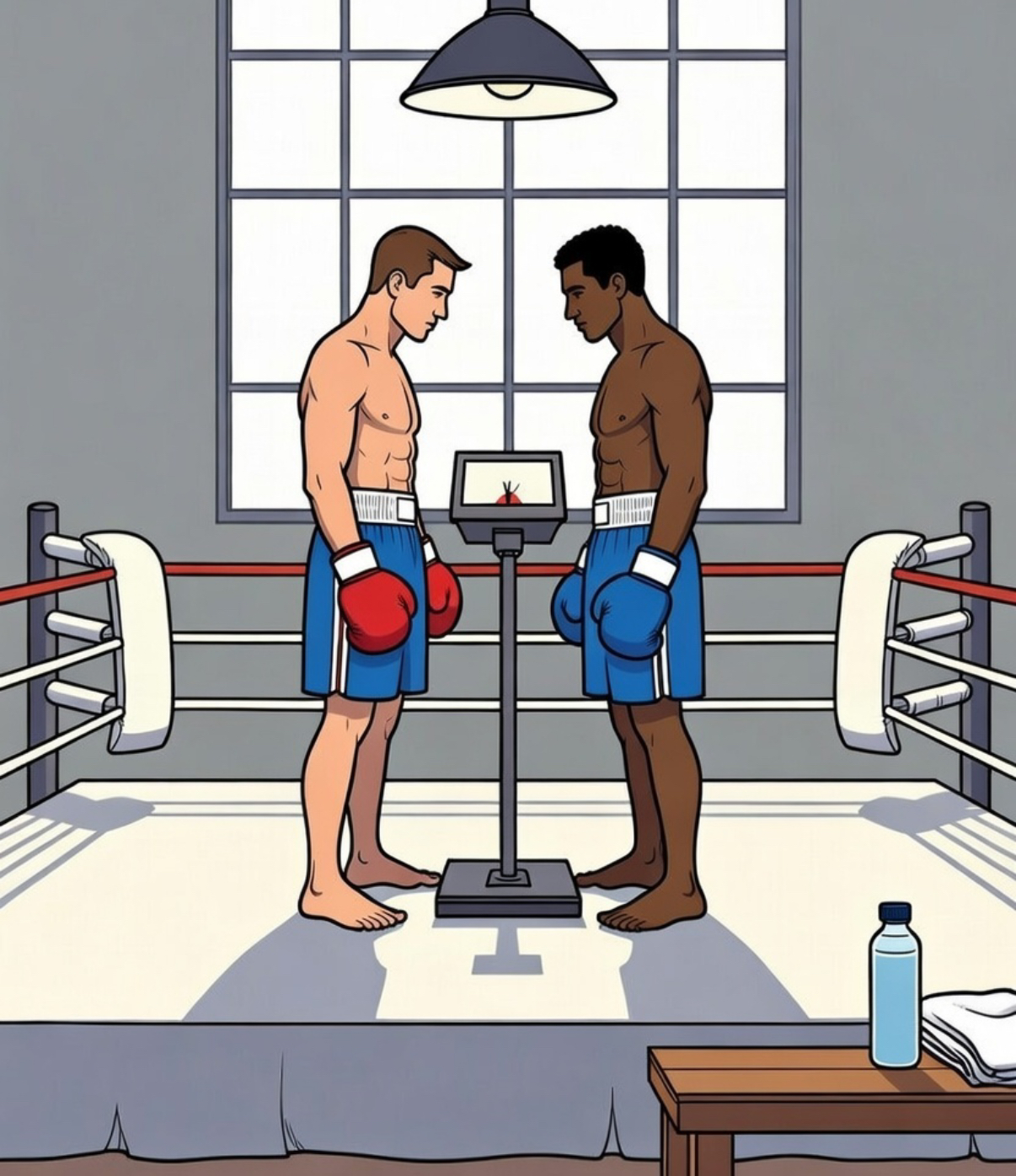
Weight classes only matter if they’re enforced, and that job falls to state athletic commissions — not the sanctioning bodies, not the promoters, and not the fighters’ camps. In the United States, each state’s athletic commission oversees and conducts the official weigh-in, certifies the results, and determines what happens if a fighter misses weight. Internationally, the local boxing commission or regulatory authority serves the same function.
The Day-Before Weigh-In: State commissions typically require fighters to weigh in the day before the bout. Commission officials supervise the process, verify the scales, and record the official weights. If a fighter is over the limit, the commission determines how much time — usually a few hours — they have to shed the excess, often through dehydration in steam rooms or hot baths.
What Happens When a Fighter Misses Weight: This is where the commission’s authority matters most. If a fighter cannot make the contracted weight, the commission may allow the bout to proceed as a non-title catchweight fight, impose financial penalties (often a percentage of the offending fighter’s purse goes to their opponent), or cancel the fight entirely. The specific rules vary by jurisdiction — Nevada, New York, New Jersey, California, and Texas each have their own regulations, which is why the same situation can play out differently depending on where a fight is held.
The IBF’s Second Weigh-In: The International Boxing Federation is unique among sanctioning bodies in requiring a second weigh-in on the morning of the fight, conducted in coordination with the local commission. Fighters must weigh no more than 10 lbs above the division limit at this check. If they fail, the fight can proceed but the IBF title will not be at stake.
Rehydration and the Push for Reform: Between the official weigh-in and fight night, most fighters rehydrate aggressively to recover as much weight as possible. It’s not uncommon for a fighter who weighed in at 147 lbs to step into the ring the following night at 160+ lbs. This practice has drawn increasing scrutiny, and some commissions are now exploring same-day weigh-ins or hydration testing to address the safety concerns. The California State Athletic Commission has been among the most proactive in pushing for reform in this area.
The Bottom Line
Boxing’s weight class system has evolved dramatically from its eight-division origins to today’s sprawling landscape of 17+ classes, four major sanctioning bodies, and a dizzying array of titles. The WBC’s bridgerweight experiment represents the latest expansion of that system, while TKO Boxing’s arrival signals what could be the most significant contraction in generations.
Whether the sport moves back toward the simplicity of the Original Eight or continues to add divisions remains one of boxing’s most consequential ongoing debates. What’s certain is that weight classes — however many there end up being — will continue to sit at the foundation of what makes boxing work: the principle that the best should fight the best on as level a playing field as possible.
Essential Links & Resources
The Four Major Sanctioning Bodies
- World Boxing Council (WBC): wbcboxing.com — Founded 1963 in Mexico City. Currently recognizes 18 weight classes (including bridgerweight). President: Mauricio Sulaimán.
- World Boxing Association (WBA): wbaboxing.com — The oldest sanctioning body, originally founded as the National Boxing Association in 1921. Adopted bridgerweight in December 2023.
- International Boxing Federation (IBF): ibf-usba-boxing.com — Founded 1983. Maintains 17 weight classes. Notable for its unique second-day weigh-in policy for title fights.
- World Boxing Organization (WBO): wboboxing.com — Founded 1988 in Puerto Rico. Maintains 17 weight classes.
Regulatory Bodies & Commissions
- Association of Boxing Commissions (ABC): abcboxing.com — The umbrella organization for state and tribal athletic commissions across the U.S. and Canada. Oversees unified rules, official certification programs, medical standards, and the Boxer’s Bill of Rights.
- ABC Unified Rules: abcboxing.com/unified-rules
- ABC Documents & Standards: abcboxing.com/documents — Includes minimum medical requirements, referee guidelines, federal ID applications, and sample bout contracts.
- New Jersey State Athletic Control Board (NJSACB): njoag.gov/sacb — Established in 1985, the NJSACB regulates all contests and exhibitions of unarmed combat in New Jersey, including boxing, kickboxing, and MMA. Notably, the board developed the original Unified Rules of MMA that were later adopted by commissions nationwide. Event schedule and results: NJSACB Event Schedule.
- Nevada State Athletic Commission (NSAC): The most prominent state commission in boxing, overseeing fights in Las Vegas.
- New York State Athletic Commission (NYSAC): Historically one of the most important regulatory bodies in the sport, dating back to the 1920 Walker Law.
- California State Athletic Commission (CSAC): Has been among the most proactive commissions on weigh-in reform and fighter safety.
Federal Law
- Professional Boxing Safety Act of 1996 / Muhammad Ali Boxing Reform Act: The federal legislation that established minimum safety standards and anti-corruption measures for professional boxing in the United States. Full text available via the ABC website.