Boxing Ring Size and Dimensions: Why They Matter
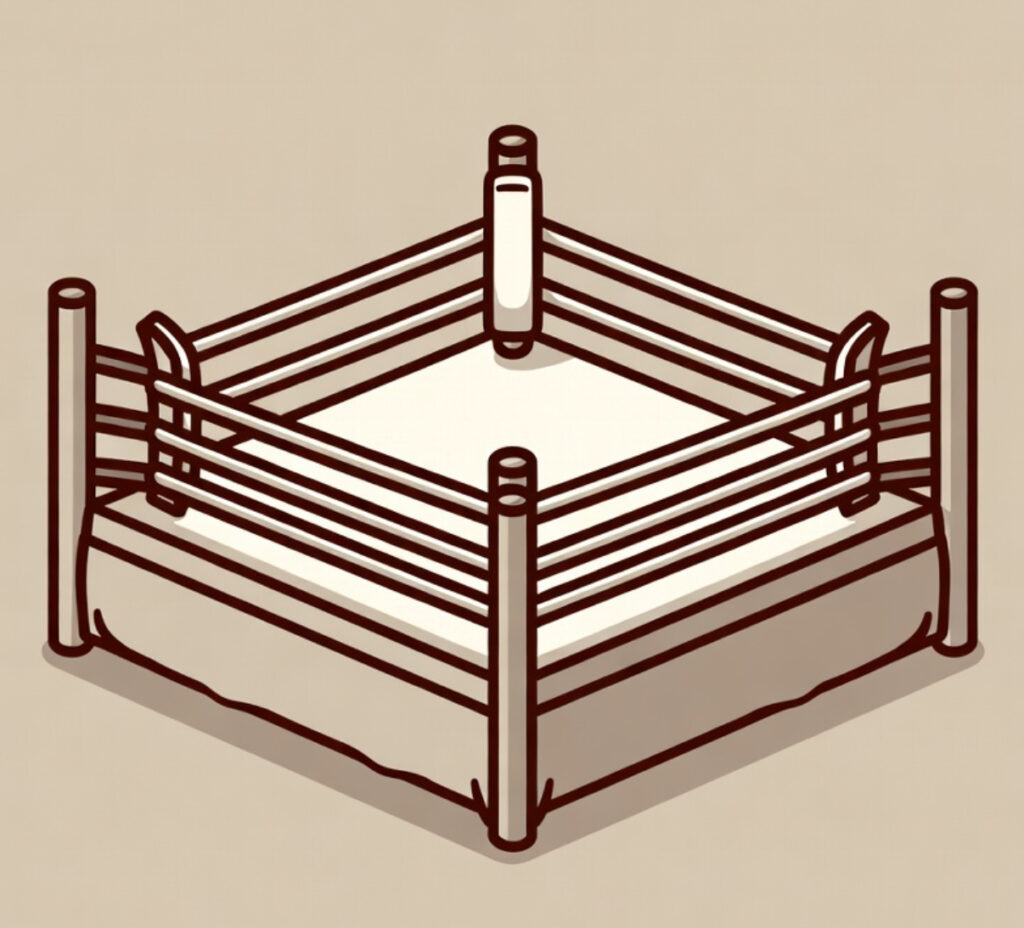
A professional boxing ring is a square platform between 16 and 20 feet on each side, measured inside the ropes. The standard size for major professional bouts is 20 feet by 20 feet. The ring floor sits 3 to 4 feet above the ground, is padded with at least 1 inch of foam or felt, and is enclosed by four ropes strung at heights of approximately 18, 30, 42, and 54 inches.
Despite the name, a boxing “ring” hasn’t been round since the bare-knuckle era. The square shape became standard in the 1800s when organized rules replaced the informal circles that spectators used to form around fighters.
Standard Dimensions
The exact measurements vary by commission and sanctioning body, but here’s what’s standard across professional boxing:
| Dimension | Standard |
|---|---|
| Ring size (inside ropes) | 16 ft × 16 ft to 20 ft × 20 ft |
| Platform height | 3–4 feet above ground |
| Ring apron (outside ropes) | 2 feet minimum |
| Rope count | 4 ropes |
| Rope heights | 18″, 30″, 42″, 54″ (approximate) |
| Padding thickness | 1 inch minimum |
| Canvas | Non-slip surface stretched over padding |
| Corner pads | Required on all 4 turnbuckle posts |
Why Ring Size Matters More Than You Think
Ring size is one of the most underrated tactical factors in boxing. A 20-foot ring gives a mobile, defensive fighter room to move, circle, and keep distance. A 16-foot ring compresses the action, making it harder to run and easier for pressure fighters to cut off the ring and force exchanges.
This is why ring size negotiations are a real thing at the elite level. A fighter like Floyd Mayweather, who relied on movement and angles, benefited from a larger ring. A fighter like Gennady Golovkin, who stalked opponents and relied on cutting off the ring, wanted the ring as small as the commission would allow. The negotiation over ring size before a major fight is a tactical chess match that happens weeks before the first bell.
At the Tyson Fury–Deontay Wilder trilogy, ring size was a discussed factor. Wilder’s power was most dangerous when he could catch opponents in close quarters, while Fury’s footwork and feints played better with more real estate. Even a 2-foot difference in ring dimensions can meaningfully change how a fight unfolds.
Gym Rings vs. Fight Night Rings
Most boxing gyms use 16-foot or even 14-foot rings for sparring and training. The smaller space forces fighters to work on the inside, develop their defense in tight quarters, and build comfort in exchanges. It’s not uncommon for a fighter who trains in a small gym ring to feel like they have unlimited space when they step into a 20-foot ring on fight night.
If you’re looking at boxing gyms and wondering why the ring looks small, that’s by design. Trainers want their fighters comfortable in the pocket, not reliant on having room to run.
QUICK FACTS
- Standard professional ring: 16–20 feet square, measured inside the ropes
- Major title fights typically use a 20 ft × 20 ft ring
- Platform height: 3–4 feet above the ground
- 4 ropes at approximately 18″, 30″, 42″, and 54″
- Ring size is negotiated by fighter camps before major bouts
- Smaller rings favor pressure fighters; larger rings favor movers