
For 45 years, HBO was boxing. From George Foreman flattening Joe Frazier in Kingston, Jamaica, on January 22, 1973, to Cecilia Braekhus defending her undisputed welterweight crown in a quiet Carson, California, arena on December 8, 2018, no brand in any sport carried more weight than those three letters. HBO didn’t just broadcast boxing. It was the sport’s prestige address — the place where champions were crowned, legends were made, and careers went to die if you weren’t good enough.
Then it was gone. And nothing has replaced it since.
But what if something could? What if the most ambitious new force in boxing — Zuffa Boxing, backed by Dana White, TKO Group Holdings, and Saudi Arabia’s Sela — didn’t just build a new boxing brand from scratch, but dusted off the most storied name the sport has ever known?
This is speculative, yes. But on March 2, Paramount CEO David Ellison announced that HBO Max and Paramount+ — the exclusive broadcast home of Zuffa Boxing — will merge into a single streaming platform. That changes the math considerably.
The Legacy That Never Got a Proper Successor
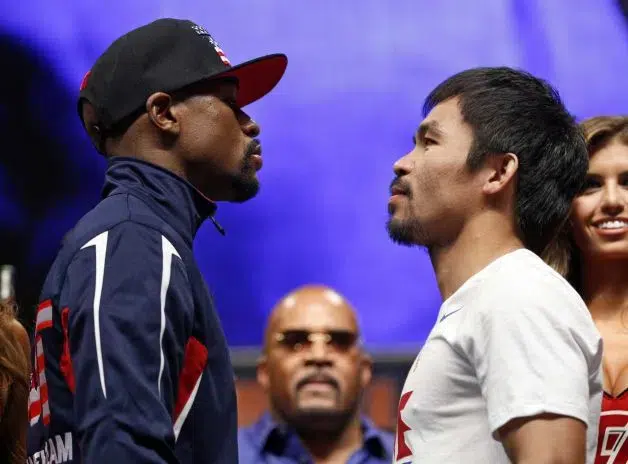
HBO aired more than 1,100 fights over its run. It launched the modern pay-per-view era with TVKO in 1991. It gave the world Hagler-Hearns, Tyson-Douglas, De La Hoya-Trinidad, Mayweather-Pacquiao, and hundreds of other nights that defined eras. Jim Lampley, Larry Merchant, Emanuel Steward, Max Kellerman, Roy Jones Jr. — the broadcast booth alone was a Hall of Fame roster. As ESPN’s Dan Rafael detailed in his farewell retrospective, the depth of HBO’s contribution to the sport is almost impossible to overstate.
And then there was Boxing After Dark.
Launched on February 3, 1996, with Marco Antonio Barrera stopping Kennedy McKinney in an unforgettable 12-round war at the Forum in Inglewood, California, Boxing After Dark — or BAD, as it was known — served a different purpose than HBO World Championship Boxing. It was the proving ground. The place where hungry fighters with something to prove went to war under the lights, often delivering performances that surpassed the main events they were meant to support.
Gatti-Ward. Morales-Barrera. Tua-Ibeabuchi. Vargas-Trinidad. The fights that defined BAD weren’t title unifications or pay-per-view spectacles. They were wars between fighters who understood that this was their shot — their chance to prove they belonged on the bigger stage. If you performed on Boxing After Dark, HBO World Championship Boxing was next. If you didn’t, you were going back to the undercards.
That pipeline — developmental platform to championship stage — is exactly what boxing lost when HBO walked away. And it’s exactly what Zuffa Boxing is trying to build from the ground up.
The Corporate Road That Could Make It Happen
Here’s where it gets interesting, because the corporate landscape hasn’t just shifted — it has collapsed the distance between Zuffa Boxing and the HBO brand to almost nothing.
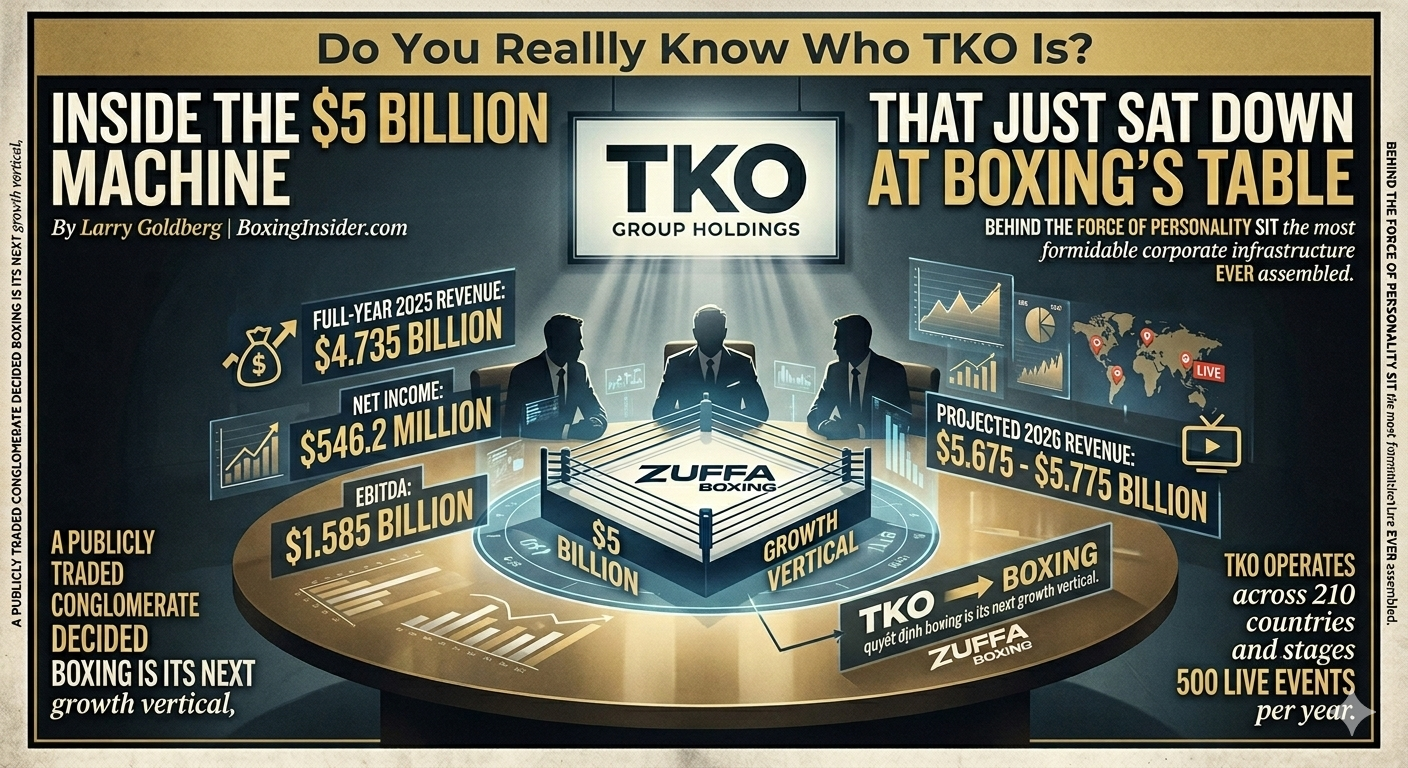
HBO is owned by Warner Bros. Discovery. Zuffa Boxing’s exclusive broadcast partner is Paramount+, through a long-term media rights deal with Paramount Skydance. Last week, Paramount Skydance formally agreed to acquire Warner Bros. Discovery in a deal valued at roughly $111 billion. And on Monday morning — literally today — Paramount CEO David Ellison announced the company plans to merge HBO Max and Paramount+ into a single streaming service.
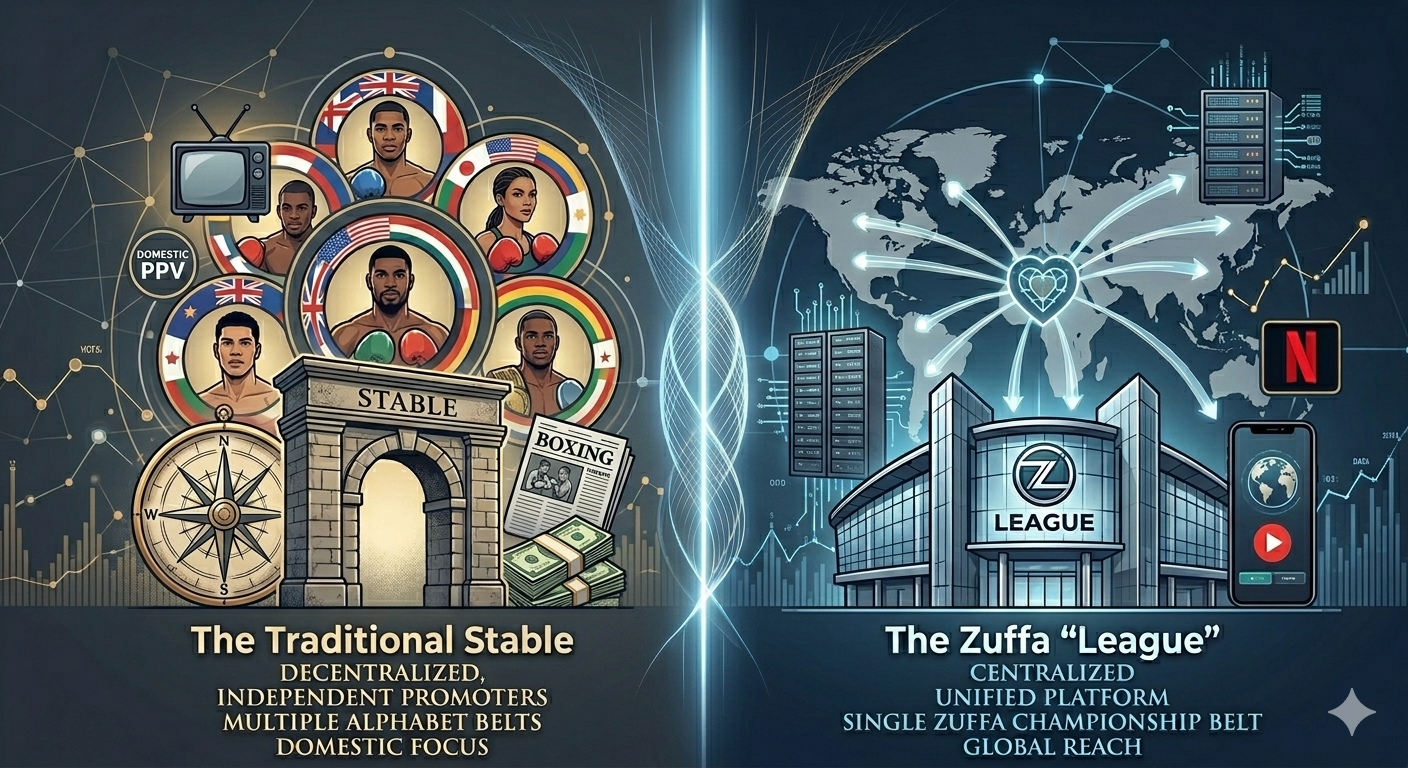
Read that again. The platform where Zuffa Boxing already has an exclusive broadcast deal and the platform that carries the HBO brand are becoming the same platform. The combined service would have roughly 200 million subscribers worldwide, immediately positioning it as a serious competitor to Netflix’s 325 million. Zuffa Boxing’s fight cards — already contracted to air on Paramount+ — would exist inside the same streaming ecosystem as every piece of HBO intellectual property, including HBO Boxing’s 45-year archive.
Ellison was careful to emphasize that the HBO brand would retain its identity within the merged service. As Variety reported from the investor call, Ellison said he wants HBO to “operate with independence” and that “HBO should stay HBO.” According to sources familiar with Paramount’s plans, HBO is likely to function as a sub-brand within the larger combined platform — a premium tier or branded content hub, similar to how the Star brand operates within Disney+ in international markets.
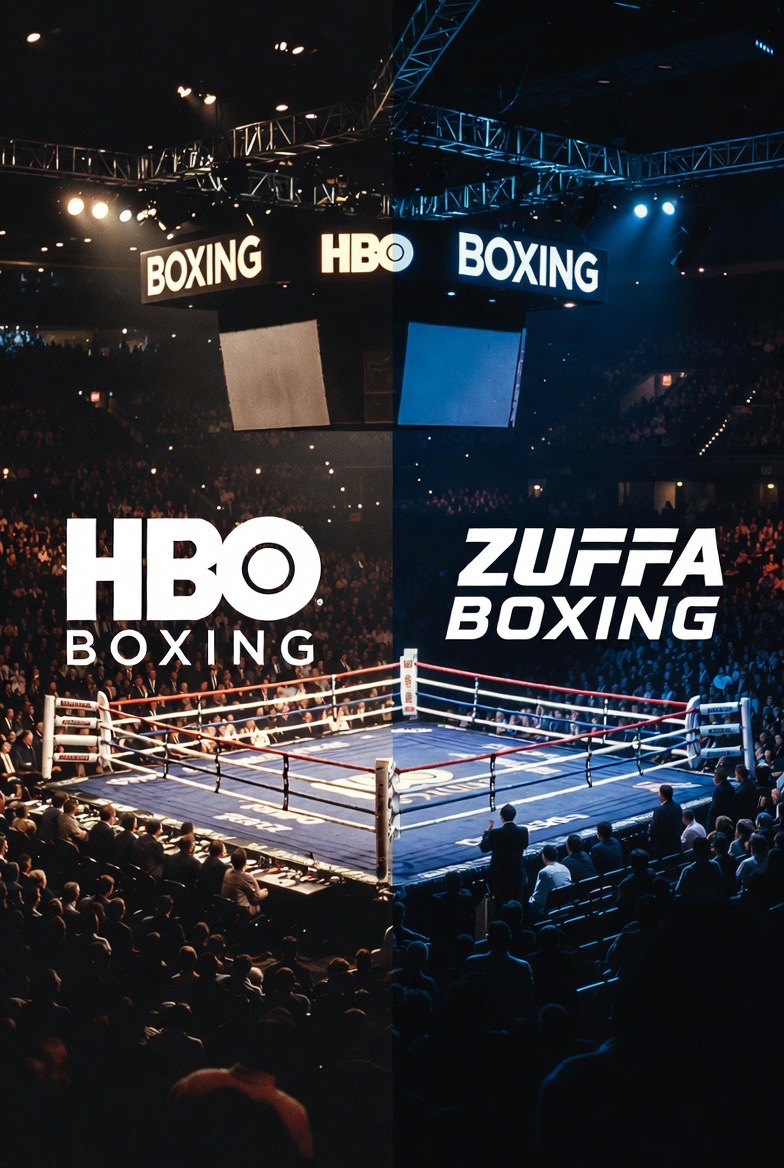
That structure is precisely what would make an HBO Boxing revival feasible without requiring anyone to relaunch HBO as a standalone sports broadcaster. Zuffa Boxing’s events could be branded under the HBO Boxing banner as a content vertical within the merged streaming service — the same way HBO’s prestige dramas and documentaries would carry the HBO label within whatever the combined platform is ultimately called. The boxing wouldn’t need its own channel. It would need its own brand identity within the channel that already exists.
Warner Bros. Discovery has already demonstrated that the HBO Boxing intellectual property still has perceived market value. The company revived the HBO Boxing name as a free ad-supported streaming channel showcasing classic fights on Tubi and Amazon Freevee. If the brand is worth dusting off for an archive channel, what’s it worth as a live programming banner backed by the most heavily funded promotion in boxing?
The pieces aren’t just sitting on the same board anymore. They’re being assembled into the same box.
What a Revived Boxing After Dark Could Look Like
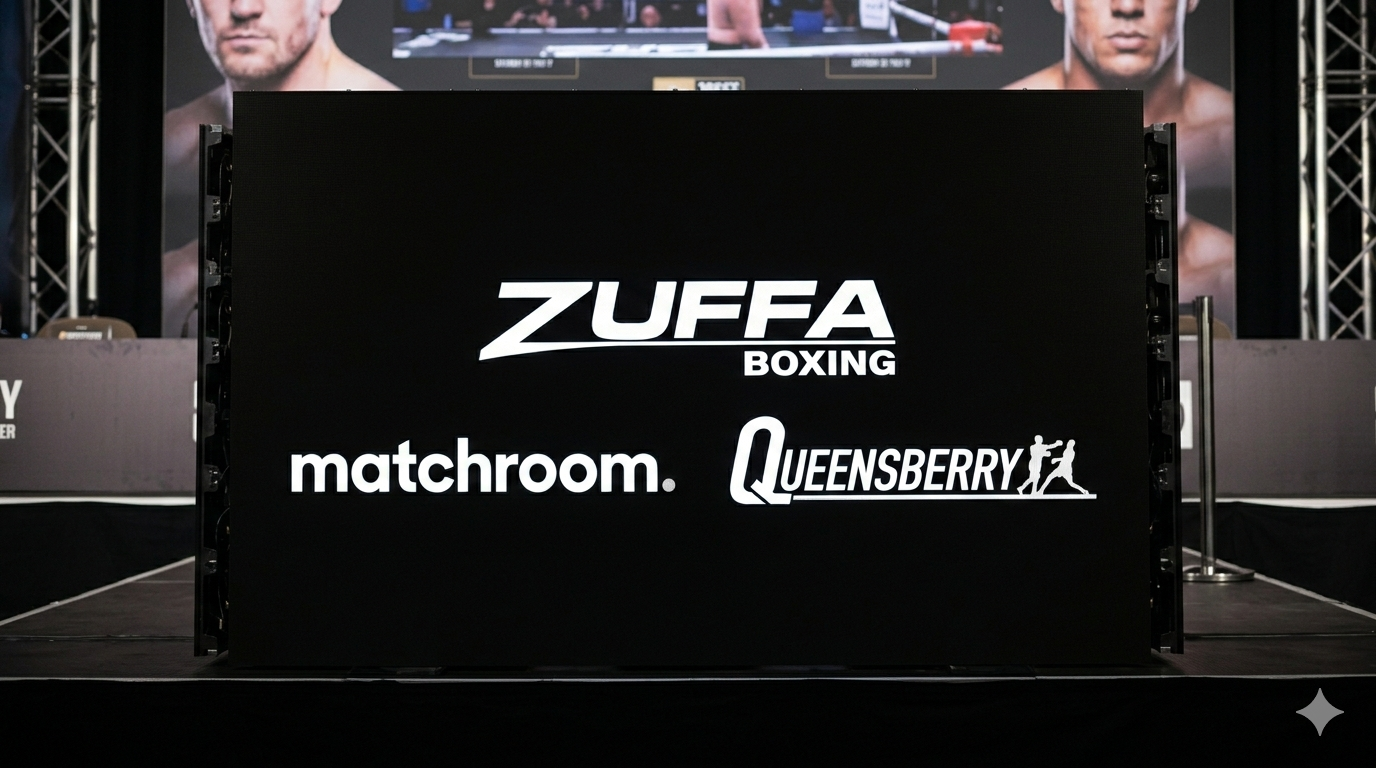
Zuffa Boxing has announced plans to stage 12 to 16 events in 2026 across eight weight divisions, with up to four marquee super fights per year. The roster is building rapidly — Jai Opetaia, Callum Walsh, Conor Benn, Efe Ajagba, Jose Valenzuela — and the promotion has already begun dismantling the established British promotional landscape by signing away top talent from both Matchroom and Queensberry.
Dana White has spoken openly about applying the UFC’s developmental model to boxing. In a September 2025 interview with The Ring Magazine’s Max Kellerman — himself a former HBO Boxing After Dark broadcaster — White described a vision of building future stars through competitive matchmaking: signing young, hungry fighters, matching them tough, and letting the cream rise.
That is, almost word for word, the original mission statement of Boxing After Dark.
The scenario practically writes itself. Zuffa’s marquee events — the Opetaia title fights, the Benn showcase bouts, the eventual super fights between established names — would air under the HBO World Championship Boxing banner on the merged streaming platform, with selected events simulcast on CBS. Below that, a revived Boxing After Dark would serve as the proving ground for Zuffa’s prospects and contenders. Competitive 50-50 matchups between rising fighters across eight divisions, broadcast to a potential audience of 200 million subscribers on a regular schedule, building audiences and creating stars the way BAD once did.
Picture it: a Friday night card from the Meta Apex in Las Vegas, branded as HBO Boxing After Dark, featuring three or four tightly matched fights between unbeaten prospects. No blown-out mismatches. No 30-0 fighters padding records against opponents brought in to lose. Just fighters with something to prove, knowing that a breakout performance means a shot on the next HBO World Championship Boxing card.
The presentation would matter enormously. One of the enduring criticisms of modern boxing broadcasts — across ESPN, DAZN, and every other platform — is that none of them have replicated the production quality that HBO brought to the sport. The opening montages. The storytelling packages. The gravity of the broadcast booth. HBO made a Tuesday night fight between two middleweights nobody outside the sport had heard of feel like an event. That production ethos, married to Zuffa’s promotional machine and the UFC’s proven ability to build fighters into household names, could be transformative.
The Commentary Table
Any revival of HBO Boxing would need to address the broadcast booth, and this is where the connections get particularly compelling. Max Kellerman, who spent 15 years as HBO’s lead analyst and was there for the final broadcast in December 2018, is now working with The Ring Magazine — which is owned by Turki Alalshikh, Zuffa Boxing’s co-founder and financial engine. The connection already exists.
Kellerman alongside a play-by-play voice with television presence and a rotating cast of former champions as analysts would immediately evoke HBO’s golden era while establishing something new. The UFC has already demonstrated it can create broadcasting stars — Joe Rogan, Daniel Cormier, Jon Anik — so there’s institutional knowledge within TKO Group Holdings about how to build a broadcast team that becomes part of the brand identity.
And then there’s the documentary side. HBO’s 24/7 series, which debuted in 2007 for De La Hoya-Mayweather, won Emmy Awards and redefined how boxing was promoted. It wasn’t a hype show. It was genuine storytelling — intimate, cinematic access to fighters in the weeks before the biggest nights of their lives. With Paramount+’s streaming infrastructure and the UFC’s content production capabilities, a revived 24/7 format would be a natural complement to the live boxing programming.
Why It Would Work — And Why It Might Not
The argument for reviving HBO Boxing is straightforward: brand recognition. In a fragmented media landscape where boxing is scattered across ESPN+, DAZN, Amazon Prime Video, and Fox Sports, the HBO Boxing name would immediately cut through the noise — especially now that it would exist within a combined streaming platform reaching 200 million subscribers across more than 100 countries. Casual fans who haven’t watched a fight since Mayweather-Pacquiao in 2015 know what HBO Boxing means. It’s the one brand in the sport that transcends the hardcore audience.
Zuffa Boxing is building its operation on the premise that boxing needs a central brand identity the way the UFC dominates MMA. Attaching that effort to a name with 45 years of history and cultural weight would accelerate that process significantly. It’s the difference between building a brand from zero and inheriting one that already means something to millions of people. And with Ellison’s team already touting the combined sports portfolio — TNT Sports merged with CBS Sports, bringing March Madness, the NFL, MLB, NHL, NASCAR, and more under one roof — boxing under the HBO banner would slot naturally into what is shaping up to be the most sports-loaded streaming platform in the market.
The counterargument is more practical. Even within a merged streaming service, Paramount Skydance may want to protect the HBO label as a prestige brand reserved for scripted programming and documentaries. Casey Bloys and the HBO content team have spent years building a reputation around series like Game of Thrones, Succession, and The White Lotus. Attaching the HBO name to live boxing again means accepting the reputational risk of the sport’s inherent unpredictability — cancellations, controversial decisions, failed drug tests, all the chaos that comes with promoting professional fighting. The reason HBO left boxing in the first place was partly that the sport no longer aligned with the network’s brand direction. Whether Ellison’s team sees boxing as additive or dilutive to the HBO brand will determine whether this scenario moves from plausible to real.
There’s also the question of whether Dana White and Nick Khan would even want to operate under someone else’s brand name. White has built his career on owning and controlling every element of his promotions. Zuffa Boxing is his brand, his league, his vision for what boxing should be. Layering the HBO name on top of that could introduce brand confusion or dilute the identity White is working to establish.
The Nostalgia Factor Is Real
There’s a reason boxing fans still talk about HBO. It’s not just nostalgia for the fights — it’s nostalgia for a time when the sport had a clear, identifiable home. When a boxing fan turned on HBO on a Saturday night, they knew exactly what they were getting: world-class production, meaningful matchups, and the sense that what they were watching mattered. That feeling has been absent since December 2018.
When HBO announced it was leaving boxing, the sport lost more than a broadcast partner. It lost its cultural anchor. The fights kept happening. Some of them were great. But the sense that there was one place where the biggest moments would unfold — that was gone, and nobody has gotten it back.
Zuffa Boxing, with its financial backing, promotional infrastructure, and ambition to remake the sport from the ground up, is the first entity since HBO’s departure with both the resources and the stated intent to become boxing’s dominant platform. Whether that platform would benefit from carrying the HBO name is a question of strategy. But the emotional appeal is undeniable.
Imagine hearing the words “HBO Boxing After Dark” before a Zuffa prospect card in 2027. Imagine a new generation of fighters understanding that performing on that stage means something — that the ghosts of Barrera-McKinney, Gatti-Ward, and Morales-Barrera are watching. Imagine Jim Lampley, 82 years old, walking back to ringside one more time to pass the microphone to the next generation.
Nobody in a boardroom has announced this. No deal memo exists. But the corporate architecture is being built in real time, the brands are converging onto the same platform, and the people who would need to say yes are already in business together. Sometimes the best ideas in sports don’t require imagination — they just require someone to look at what’s already in front of them.