
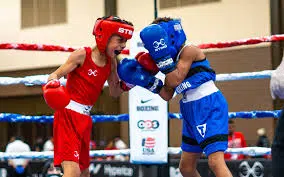
If your kid has been shadow boxing in the living room, mimicking fighters on TV, or just has more energy than you know what to do with — boxing might be the answer. But if you’re like most parents, your first reaction is some version of: isn’t that dangerous?
Fair question. Here’s the honest answer: youth boxing done right — through a registered gym with certified coaches, proper equipment, and structured programs — is one of the safest, most disciplined, and most beneficial activities a kid can do. Youth boxing done wrong — two kids with no training throwing punches at each other in a backyard — is how people get hurt.
This article is about doing it right. Through USA Boxing, the national governing body that oversees amateur boxing in the United States and produces every Olympic boxer this country sends to the Games.
This is not a guide to kids fighting unsupervised. If your child is interested in boxing, they belong in a registered gym with a certified coach. Period.
USA Boxing: The Structure
USA Boxing is the national governing body for Olympic-style amateur boxing in the United States, recognized by the United States Olympic & Paralympic Committee (USOPC). Every amateur boxing competition in this country operates under USA Boxing rules. Every Olympic boxer who represents Team USA comes through this system.
USA Boxing organizes youth boxing into structured age divisions with specific rules, protective equipment requirements, and competition formats designed for developing athletes — not for entertainment. Safety isn’t an afterthought in this system. It’s the foundation.
The Age Divisions
Prep Division (Ages 8-14) — This is where kids start. The Prep program is broken into three sub-divisions:
- Pee Wee: Ages 8, 9, and 10. Eight-year-olds can only compete against 8- and 9-year-olds.
- Bantam: Ages 11 and 12.
- Intermediate: Ages 13 and 14.
The range of ages in any Prep competition cannot be more than two years apart. A 10-year-old will never be matched against a 14-year-old. The rules are built to keep kids competing against other kids their own size and age.
Junior Division (Ages 15-16) — More competitive. Longer rounds. Athletes in this division are developing serious skills and many are working toward national-level competition.
Youth Division (Ages 17-18) — The most competitive youth category. Many athletes at this level have extensive competition experience and are working toward Olympic Trials invitations.
The Safety Rules for Youth
USA Boxing takes youth safety seriously. Here’s what’s required:
- Headgear is mandatory in all youth, junior, and prep competitions. No exceptions. USA Boxing or IBA-approved headgear only — training headgear is not permitted in competition.
- Mouthpiece required. Non-negotiable.
- Groin protector required for boys.
- Hand wraps required under gloves.
- Gloves are provided by the event organizer for sanctioned competitions — boxers don’t bring their own competition gloves. This ensures every pair meets USA Boxing specifications.
- Medical examination required before competition. A ringside physician must be present at every sanctioned event.
- Competitors are matched by age, weight, and experience. A novice with zero bouts is not put in the ring with a kid who has 15 fights. The matching process considers total bouts and winning percentage.
- Rounds are shorter for younger divisions. Prep bouts can be up to three rounds of up to two minutes, with discretion given to organizers and coaches to adjust based on age and experience.
The entire system is designed around one principle: these are developing athletes in their most important years, and their safety comes first.
What Kids Actually Do in a Boxing Gym
Parents who’ve never been inside a boxing gym picture two kids punching each other in the face. That’s not what youth boxing training looks like. Most of what kids do in a boxing gym has nothing to do with hitting another person.
A typical youth boxing class:
- Warm-up (10-15 minutes): Jump rope, calisthenics, running, dynamic stretching. Boxing warm-ups are full-body workouts on their own.
- Skill work (15-20 minutes): Footwork drills, learning punches on the heavy bag, mitt work with the coach, shadow boxing. This is where technique is built — how to stand, how to move, how to throw a proper jab without hurting your wrist.
- Bag work (10-15 minutes): Hitting the heavy bag with combinations. Builds coordination, timing, and conditioning.
- Conditioning (10 minutes): Bodyweight exercises — push-ups, sit-ups, squats, burpees. Boxing gyms build functional fitness without needing any equipment beyond the kid’s own body.
- Cool down and stretching (5 minutes).
That’s an hour. Notice what’s missing? Sparring. Most youth boxers don’t spar for weeks or months after they start. Good coaches build skills on the bag and the mitts long before they ever put two kids in the ring together. And when sparring does happen, it’s controlled — headgear, mouthpiece, protective equipment, a coach supervising every second, and the understanding that this is skill development, not a fight.
What Boxing Teaches Kids
Every parent who puts their kid in boxing notices the same changes. Not just physical — behavioral.
Discipline. Boxing gyms have structure. You show up on time. You listen to the coach. You do the work. There’s no negotiating, no shortcuts, and no participation trophies. Kids who struggle with authority in school or at home often thrive in the gym because the expectations are clear and consistent, and the reward for meeting them — getting better — is immediate and visible.
Confidence. Not the kind that comes from being told you’re special. The kind that comes from learning something hard, failing at it, and then mastering it through repetition. A kid who can throw a proper combination, who can jump rope for three minutes without stopping, who can stand in front of a heavy bag and work — that kid carries themselves differently. They’ve earned something.
Respect. Boxing gyms have a culture of respect that’s earned, not demanded. Coaches are addressed properly. Equipment is put away. Older fighters look out for younger ones. Kids learn to respect their coaches, their training partners, and themselves. The best boxing gyms function like extended families.
Self-control. This is the one that surprises parents the most. Boxing doesn’t make kids more aggressive — it gives aggressive kids an outlet and teaches them to control it. A kid who learns to throw a punch in a controlled environment, who learns that there are rules and consequences, who learns that strength without discipline is useless — that kid is less likely to get in fights at school, not more.
Physical fitness. In an era where childhood obesity rates are climbing and screen time is replacing outdoor play, boxing is one of the most complete full-body workouts available. An hour in a boxing gym burns more calories than almost any other youth sport and builds strength, coordination, cardiovascular endurance, and flexibility simultaneously.
Resilience. Boxing is hard. Kids get tired. They get frustrated. They miss the timing on the speed bag for the tenth time in a row. They get hit during sparring and have to decide whether to quit or keep going. That moment — the choice to keep going — is where character is built. It transfers to everything else in life.
How to Find the Right Gym
Not every gym is right for kids. Here’s what to look for:
USA Boxing registered gym. This is the baseline. A gym registered with USA Boxing operates under their rules, their safety standards, and their coach certification requirements. You can search for registered gyms at usaboxing.org.
Certified coaches. USA Boxing requires coach certification that includes SafeSport training — the USOPC’s program for preventing abuse, bullying, and harassment in youth sports. Ask about certifications. A good coach will be happy to show them.
Separate youth program. Look for gyms that have dedicated youth classes, not just kids mixed in with adults. The training should be age-appropriate with coaches who understand child development.
Culture and environment. Visit the gym. Watch a class. Pay attention to how the coach interacts with the kids. Are they teaching or yelling? Is the environment encouraging or intimidating? Do the kids look engaged or scared? Trust your gut. A good youth boxing program feels like a combination of a sports practice and a mentorship program.
PAL (Police Athletic League) programs. Many cities have PAL boxing programs that provide free or low-cost boxing training for youth in the community. These programs have been a pipeline for amateur and professional boxing talent for decades and they often serve communities where access to organized sports is limited. Ask your local PAL chapter if they offer boxing.
Community center programs. YMCAs, Boys & Girls Clubs, and community recreation centers sometimes offer youth boxing or boxing fitness programs. These tend to be more fitness-oriented than competition-focused, which can be a good entry point for younger kids or kids who aren’t sure about competing.
The Gear Your Kid Needs
For training at a gym, the equipment list is short and affordable:
Hand wraps (youth size, 108 inches). Protects small hands and wrists. Two pairs so one can be in the wash. $8-12 per pair.
Training gloves (youth sizes, 8-12oz). Sized for smaller hands. Everlast and Title both make quality youth gloves in the $25-50 range. The gym may provide gloves for beginners — ask before you buy.
Mouthguard. Boil-and-bite from any sporting goods store works. $5-15. Custom-fitted from a dentist is better if your kid gets serious. Required for any sparring.
Jump rope (sized for their height). $10-15.
Boxing shoes (optional). Not needed right away. Regular sneakers are fine for training. If your kid starts competing, boxing shoes provide better traction and ankle support. $40-80 for youth sizes.
If your child progresses to sparring and competition:
Headgear (USA Boxing approved). Required for all youth competition. Must have the USA Boxing or IBA approved label. $40-80. Title and Everlast make approved youth headgear.
Groin protector. Required for boys in competition. $20-40.
Competition uniform. Tank top and trunks or shorts, typically provided or specified by the gym for competition.
Total startup cost for training: $50-100. That’s less than most youth sports when you factor in the equipment, league fees, and travel costs of soccer, hockey, or football.
USA Boxing Registration
To compete in any USA Boxing sanctioned event, your child needs to be registered with USA Boxing. Registration includes:
- Annual membership (expires December 31 each year, regardless of when registered)
- USA Boxing passbook — a record of all sanctioned bouts
- Insurance coverage — USA Boxing membership includes secondary accident insurance for sanctioned events and training at registered gyms
- SafeSport compliance for athletes over 18 and all coaches/officials
Your gym’s coach can walk you through the registration process. It’s straightforward and done online through the USA Boxing website.
Minimum age to register: 8 years old. There is no competitive boxing for children under 8 in the USA Boxing system. If a gym is putting kids younger than 8 in the ring to spar or compete, that’s a red flag.
What About Injuries?
Parents deserve a straight answer on this. Boxing involves physical contact and there is inherent risk.
Here’s the context: a 2019 study published in the British Journal of Sports Medicine found that youth boxing had lower injury rates per 1,000 hours of participation than youth soccer, basketball, football, and ice hockey. The majority of injuries in youth boxing are minor — bruises, bloody noses, hand soreness. Serious injuries are rare, particularly in the Prep and Junior divisions where headgear is mandatory, rounds are short, and competition is closely supervised.
The protective equipment, medical oversight, matching protocols, and round limitations in USA Boxing’s youth program exist specifically to minimize risk. Is it zero risk? No. No sport is. But a registered USA Boxing program with certified coaches and proper equipment is a controlled environment — the opposite of kids fighting unsupervised.
The most common injuries in youth boxing aren’t from getting hit — they’re from improper hand wrapping and wrist support during bag work. That’s a coaching issue, not a sport issue. Another reason why the right gym matters.
The Conversation to Have With Your Kid
Before signing up, talk to your child about what boxing actually is:
- It’s training, not fighting. Most of what you do is conditioning, skill work, and bag work — not hitting other people.
- It’s hard. You will get tired. You will get frustrated. You will want to quit some days. That’s normal and that’s part of it.
- If you spar, you will get hit. It’s not like the movies. It’s controlled, it’s supervised, and your coach will never put you in a situation you’re not ready for. But contact is part of the sport.
- Boxing is an individual sport. There’s no team to hide behind. Your effort is your effort. You get out what you put in.
- Respect the gym. Respect the coach. Respect your training partners. This isn’t a place to show off or bully anyone.
If your kid hears all that and still wants to do it — find a gym, sign them up, and watch what happens. You’ll probably be surprised.
One More Thing
Some of the greatest boxers in history started as kids in gyms just like the one down the street from you. Muhammad Ali walked into a boxing gym at 12 years old. Mike Tyson was 13. Sugar Ray Leonard was 14. Oscar De La Hoya was 6. Floyd Mayweather grew up in a boxing family and was in the gym before he could read.
Those are extreme examples. Your kid probably isn’t going to the Olympics. But the discipline, the confidence, the physical fitness, the respect, and the resilience they’ll build in a boxing gym? That’s worth more than any trophy.
Find a registered gym. Talk to the coach. Let your kid try a class. And keep them off YouTube trying to do this in the backyard.
Resources:
- USA Boxing — Find a Gym — Official gym finder and registration
- USA Boxing Rulebook — Complete rules and competition guidelines
- Title Boxing — Youth Equipment — Youth gloves, headgear, and protective gear
- Everlast — Youth Boxing — Youth gloves and training equipment
What Every Boxer Needs in His Gear Bag: Essential Checklist for Training and Sparring
The Best Boxing Gloves and Gear: A Complete Buying Guide
How to Use a Heavy Bag: The Best Piece of Fitness Equipment You Can Own