By Eric Bottjer
“They must have said something like, ‘I’ll ease off, I’ll miss with shots, I won’t load up.’ Because if Joshua hits him clean once, in the right place, he could break his jaw, knock him out cold, put him in a bad state” – Barry McGuigan, two weeks before Joshua-Paul
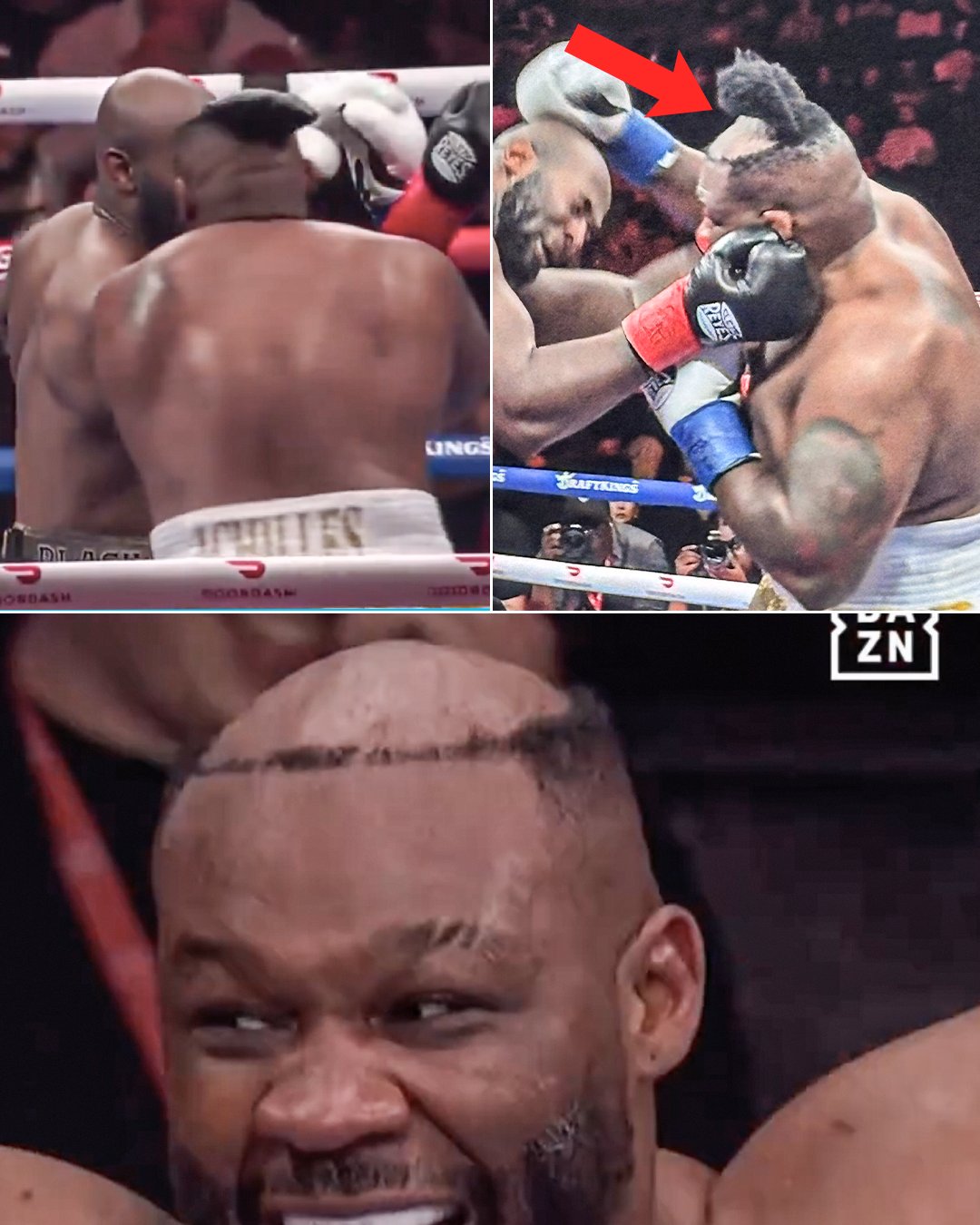
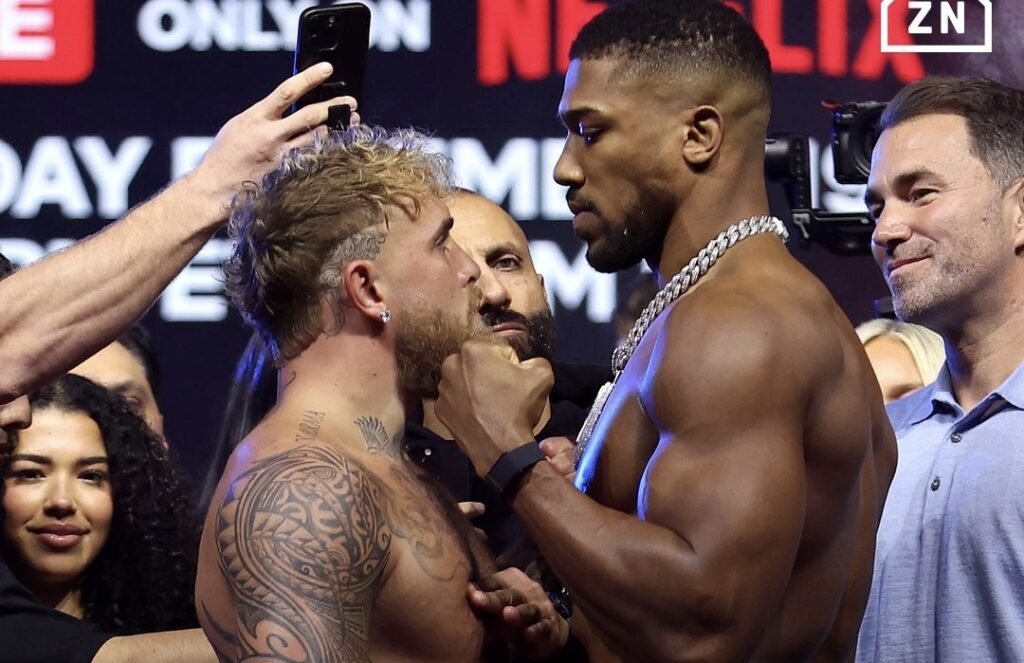
The boos began early, before the first round ended. Jake Paul was literally and understandably running for his life. Anthony Joshua plodded after him, sometimes moving both of his arms in front of him, like a man in a dark room looking for a light switch. It looked hokey. Because it was. At one point, Paul stopped, spread his legs way too far apart (I could hear any decent amateur coach yelling, “Don’t do that!”), lean forward from the waist down (“Stop that!”) and throw two slow jabs at Joshua’s body. End of fight. Only, it wasn’t. Joshua didn’t react.
In the wresting world, this is known as a “work.” Only, in wrestling, such moments are rehearsed. I’m not suggesting Paul and Joshua or their handlers rehearsed this. I’m saying anyone with a double-digit boxing IQ saw Joshua was just going through the motions for four rounds. To his credit, Joshua had never carried an opponent until last Friday night, so he did so badly. So badly, that a crowd full of influencers – fluent in their own bullshit – saw through it quickly. Real recognizes real.
At one point, Paul threw a comical overhand right that began in Orlando and crashed against Joshua’s supposedly fragile jaw. The Most Valuable Promotions Facebook account breathlessly exclaimed, “Jake just hurt AJ OMG.” Um, no he didn’t. Paul landed six punches in the first three rounds (that’s less than one punch a minute). He could have landed 600. He was shopping at Bergdorf Goodman with a pocket full of pennies.
Joshua wasn’t much better those first three rounds. He landed 13 total shots. He was concentrating on exerting enough pressure to keep the booing crowd off his back, while simultaneously tiring Paul. The strategy worked, perhaps quicker than Joshua expected. Paul was on the canvas five times in the fourth. None were knockdowns. Jake was exhausted. AJ could have farted at that point to end the fight. But he was still in “work” mode.
AJ answered the fifth round like a fighter. And here is where Jake’s “Make-A-Wish” experience truly began. He took real shots. He bravely hung in there, at times mocking AJ. Jake Paul can’t fight, but he’s got balls. He was knocked down twice, but survived, in part because Joshua had yet to land clean.
That changed in the sixth, when a right hand broke Jake’s jaw and ended the “fight.” The violence, very real, satisfied the crowd, many of whom were basically guests (ticket sales were so poor that they were being dumped the week of the show at steep discounts).
Joshua was kind afterward (“Jake has spirit. He tried his best”), and Paul was classy, thanking the hospital staff, his family and fiancé. What they earned is almost anyone’s guess, but it certainly wasn’t the numbers thrown around liberally beforehand. Netflix does not pay anywhere near those amounts for one-offs. Whatever Joshua profited, no doubt he considered it an early retirement gift. His next match – if it’s indeed Tyson Fury – could be his last.
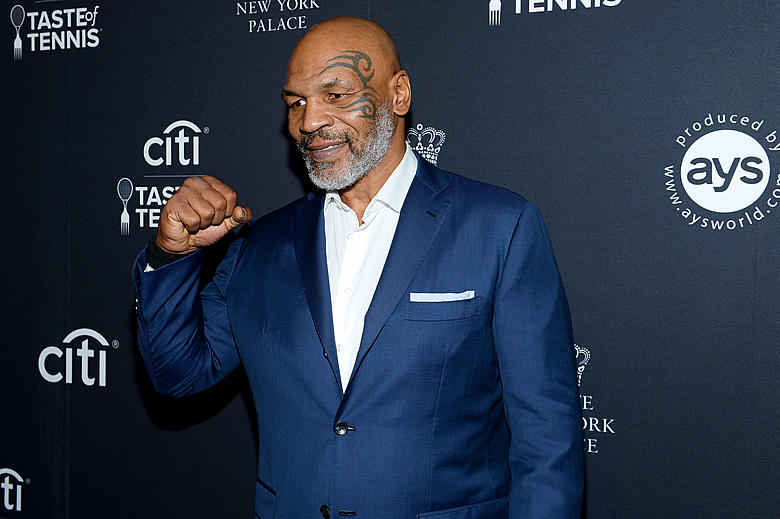
Paul wants to fight again, back at cruiserweight. Fine. But his story as a fighter has already been told: Youtuber with zero amateur experience decides to became full-time pro boxer. Actually does so. Admirably takes a path of resistance (loses to Tommy Fury; some say to Anderson Silva). Peaks with a spectacle against a 58-year-old Mike Tyson that brings more than 20 million new subscribers to Netflix.
But the Netflix execs will see that those new customers came because of Tyson (yes, Paul too, but Tyson was the spice). Nobody in the United States knows Joshua, who fought here once more than six years ago and was knocked out by an overweight, equally unknown Andy Ruiz. Netflix is in England, but about 60 percent of its population already subscribe.
As mentioned, the fight didn’t sell in Miami, just as the Tank Davis fight scheduled for November wasn’t selling either. Just as Paul’s last fight (vs. Julio Cesar Chavez Jr.) didn’t sell. Yes, Paul-Chavez did a record gate at the Honda Center, as MVP announced. But that’s going on the face value of tickets. On fight week, you could pay as low as $10 for admission (the cheapest face-value ticket was $92; i.e., that face value would be credited as $92 toward the official gate). What MVP didn’t announce was the pay-per-view buys. No mystery why that number has remained hidden (Paul’s previous pay-per-view effort – vs. Mike Perry in July 2024 – was 67,000 buys at $64.99 a pop, with the option of bunding a discounted DAZN subscription. One safely assumes the Chavez fight didn’t reach that number).
MVP’s co-founder, Nakisa Badarian (now announced before Jake Paul’s name when, for example, MVP itself was announced on Friday night), stated afterward, “Jake Paul lasted a lot longer than anyone said he was going to. I think he might have won a round or two, maybe even three (he didn’t – all three judges had the match a shutout, as did anyone with good eyesight and boxing knowledge) … The reality is, Jake lost because of the size difference, not because of the skill difference.”
To give this context, the author of that statement said this in August: “Once you lie, and it becomes clear you’ve lied, you’ve lost all credibility.” To take him at his word, he believes Jake Paul and Anthony Joshua are equally skilled. Which means he knows zero about boxing. And could contribute to Jake Paul being hurt worse in the future. Or, he’s lying (that’s not a criticism – we all lie).
The reality is, Jake Paul has developed into a decent club fighter, an 8-round Midwest cruiserweight. If Paul or Badarian think otherwise, they are lying to themselves (which is understandable, as they have created quite a cocoon). Jake’s sparring partners have to hold back, at least the ones who can fight (this is fact, no opinion). His WBA rating as #14 in the world as a cruiserweight is based on economics.
MVP is an ace promotions company, in a galaxy far far away from other boxing promoters in terms of, well, promoting. But there’s that pesky word “boxing” that comes before “promotions” and in order to succeed in boxing, you need the best product to promote.
Friday’s show was tedious, to be polite. The best fight of the night was after the main event, when Badarian and his buddy, Lou Dibella, sparred on X, trying to answer the question: When two guys who always think they’re the smartest guy in the room occupy the same room, who wins?
MVP’s commitment to boxing is impressive: 28 events in less than three years. And in that time period, they’ve developed one male boxer: Jake Paul (they have made an admirable venture into women’s boxing and paid record purses to Katie Taylor and Amanda Serrano). Now Jake is off for at least one year. Let’s see what his appetite is for boxing by the end of 2026 – both as a fighter and a promoter.
If Badarian eclipses Paul as the face of MVP, let’s see if he starts respecting the fans, as dumb as he thinks they are. Because if you piss on them and mansplain to them afterward that they’ve just witnessed a competitive event, you’re going to have to give away a lot more tickets.
The author worked freelance for MVP from 2023-2025