By Larry Goldberg
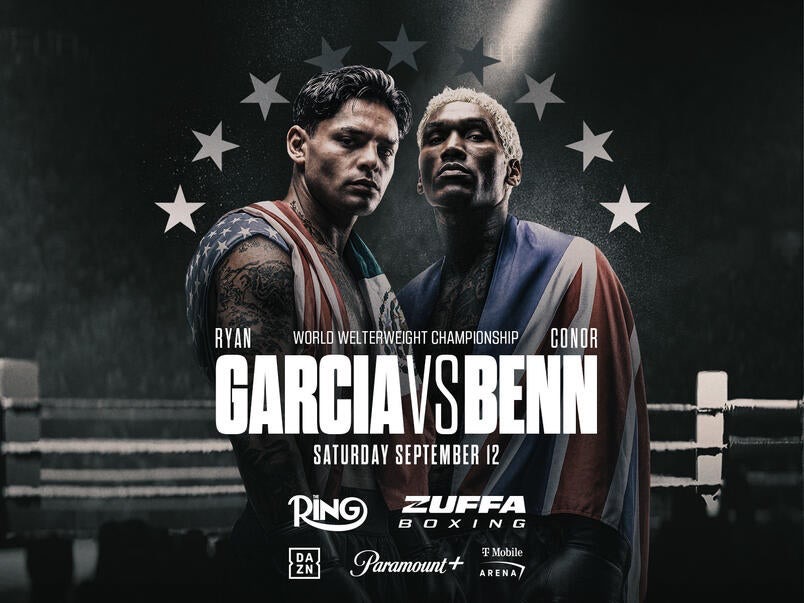
On Saturday, September 12, they share a Las Vegas card, co-promoting the biggest fight of the year. It took nine years of open warfare, a challenge to fight on the Canelo undercard, a steroid accusation, and two cease-and-desist letters to get here. This is the whole story.
Boxing has manufactured feuds and it has real ones. Manufactured feuds end at the ticket window. Real ones survive years when there is no money in hating each other, and by that test, Dana White versus Oscar De La Hoya is the realest feud in combat sports. They have gone after each other’s business, each other’s judgment, and each other’s demons, across nine years, with lawyers involved as recently as June. This week they are business partners. Understanding how strange that is requires the full history.
Act One: The Circus Letter, 2017
The strange part is that they started friendly. White has said the two always got along, and he showed up at Golden Boy fights. Then Floyd Mayweather agreed to box Conor McGregor, and the relationship died in public. De La Hoya published an open letter urging boxing fans to boycott the crossover spectacle, arguing the mismatch could do lasting damage to the sport. He called it a circus. It was a defensible position with one enormous problem: De La Hoya was promoting Canelo Alvarez against Gennady Golovkin that September, originally aimed at the same window, and months earlier he had spoken glowingly about matching Canelo with McGregor himself.
White noticed. He spliced the two De La Hoya clips together, put them on social media, and called him “two-faced” for blessing a crossover fight when Golden Boy stood to profit and condemning one when it did not. De La Hoya announced on SportsCenter that he was taking the high road, then, from the high road, told ESPN “that fight is going to suck,” told TMZ he would beat Dana’s ass if it came to that, and by weigh-in day had fired off a profane tweet about the event, deleted it, and watched White gleefully screenshot it for posterity. The fight did 4.3 million buys. The grudge outlived the weekend.
Act Two: Golden Boy MMA, 2018
A year later, De La Hoya did the one thing guaranteed to make it personal. He got into MMA, and he did it with Dana White’s people. Golden Boy MMA’s first and only event was Chuck Liddell against Tito Ortiz, a trilogy fight between two UFC legends in their late forties. White had personally talked Liddell into retirement eight years earlier after a string of knockout losses. De La Hoya’s counter was that no one gets to tell a fighter when to retire, and that the UFC paid its fighters, in his word, crap.
On November 24, 2018 at The Forum in Inglewood, the 48-year-old Liddell was knocked out in the first round. White detonated. On the UFC Unfiltered podcast he spent ten minutes on De La Hoya, defending his retirement advice with the line “it’s friendship, you f—ing cokehead,” and spent the following weeks calling him “Oscar De La Weirdo” like it was a government name. When De La Hoya kept up the underpayment claims on television, White went full accountant, leaking Liddell’s and Ortiz’s actual UFC purses to Yahoo, millions per fight, and calling him “a liar and a phony.” It remains one of the rare times Dana White has voluntarily put UFC purses on the record, and it took Oscar De La Hoya to make it happen.
De La Hoya’s response was the best escalation of the whole feud. He challenged White to an actual boxing match, telling The Luke Thomas Show: “Let’s get in the ring. Three rounds. Let’s do this!” He offered to stage it on the Canelo undercard on Cinco de Mayo, spot White fifty pounds, and, in the single nastiest flourish either man has produced, give Dana five months to get off the juice first. A Hall of Fame boxer offering a weight advantage and a detox window in the same breath. White said he would fight him any day of the week. It never happened. Golden Boy MMA never ran a second show.
The fire banked but never went out. Through the following years the two kept sniping from a distance, White taking jabs at De La Hoya from UFC podiums as late as the fall of 2024, De La Hoya returning fire in interviews whenever White’s name came up. It stayed background noise, right up until White made it foreground.
Act Three: Zuffa Boxing Makes It a War, 2025-2026
White stopped visiting boxing and moved in. Zuffa Boxing launched with TKO’s infrastructure, Turki Alalshikh’s money, a Paramount+ pipeline, and an appetite for every big-name free agent in the sport. For De La Hoya, this was no longer a rival sport’s loudmouth. This was an invasion of his business by a man who believes promoters like him are the problem, armed with a model designed to prove it.
De La Hoya became Zuffa’s loudest critic, and not just on podcasts. This April he took it to Washington, testifying before the Senate Commerce Committee against the Muhammad Ali American Boxing Revival Act, the TKO-backed bill that would let a promoter also function as a governing body, controlling rankings and title access. He told the committee it would put corporate profits first and fighters second, and named Zuffa and TKO as the intended beneficiaries. BoxingInsider covered the hearing in full. White returned fire below the belt, taking shots at De La Hoya’s finances and his tabloid past. Then Zuffa signed Conor Benn to a reported $15 million deal, and the collision became unavoidable, because the fight Benn wanted belonged to Ryan Garcia, the WBC welterweight champion, and Garcia belonged to Golden Boy.
When Zuffa tried negotiating with Garcia’s camp directly, Golden Boy sent a cease-and-desist accusing it of interference, and DAZN followed with its own letter asserting broadcast rights. In June, De La Hoya told Fight Hub TV “whenever Zuffa Boxing gets involved, it’s always a f— up.” The fight looked dead in a ditch of legal letters and nine years of contempt.
Then Turki Alalshikh picked up the phone. Within weeks, the impossible happened: Garcia vs. Benn put White and De La Hoya in business together, their logos side by side on the same poster. The first press conference at Fanatics Fest nearly turned into a brawl between the fighters, and the picture told the story of the partnership: Dana White ran the room and personally shoved Benn back, while De La Hoya’s presence began and ended with the logo on the poster. Oscar has since confirmed he will share the stage with White before fight night. When it happens, it will be the first time in nine years the two have stood at the same podium on purpose.
Why This One Never Dies
Strip away the insults and the feud is structural, which is why it has outlasted every apology window. De La Hoya is the fighter who became a promoter, the living argument that boxing’s traditional system, with all its chaos, produces men like him. White is the promoter who thinks boxing’s traditional system is the disease, and that promoters, sanctioning bodies, and mandatories should be replaced by a league he controls. Oscar took that argument to the United States Senate. Dana is trying to win it with a bill, a broadcast deal, and a roster. They are not two men who dislike each other. They are two theories of the fight business, and only one of them can be right.