By Larry Goldberg
The medical table was never the point of this bill. We got one anyway. It is not perfect, and every state can finish the job.
Before anything else: this column is not about contracts. It is not about the UBO, or certifications, or who owns a title. Those arguments have had a year and plenty of people fighting them. This is about the medicals, and only the medicals.
And a word about why. I have promoted twenty-one cards, nine of them in New Jersey, which means nine rounds of questions from an office inside the Attorney General’s building about paperwork, physicians, imaging, and whether a fighter should be cleared at all. Anyone who has been through that develops strong opinions about what a medical standard is actually for. These are mine.
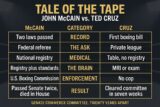
The Muhammad Ali American Boxing Revival Act cleared the Senate Commerce Committee on Wednesday. It was written to settle a business argument. Nobody drafted it to save anyone’s brain. And buried inside it is the first federal medical floor for professional boxing in thirty years, which almost nobody on either side spent a minute discussing.
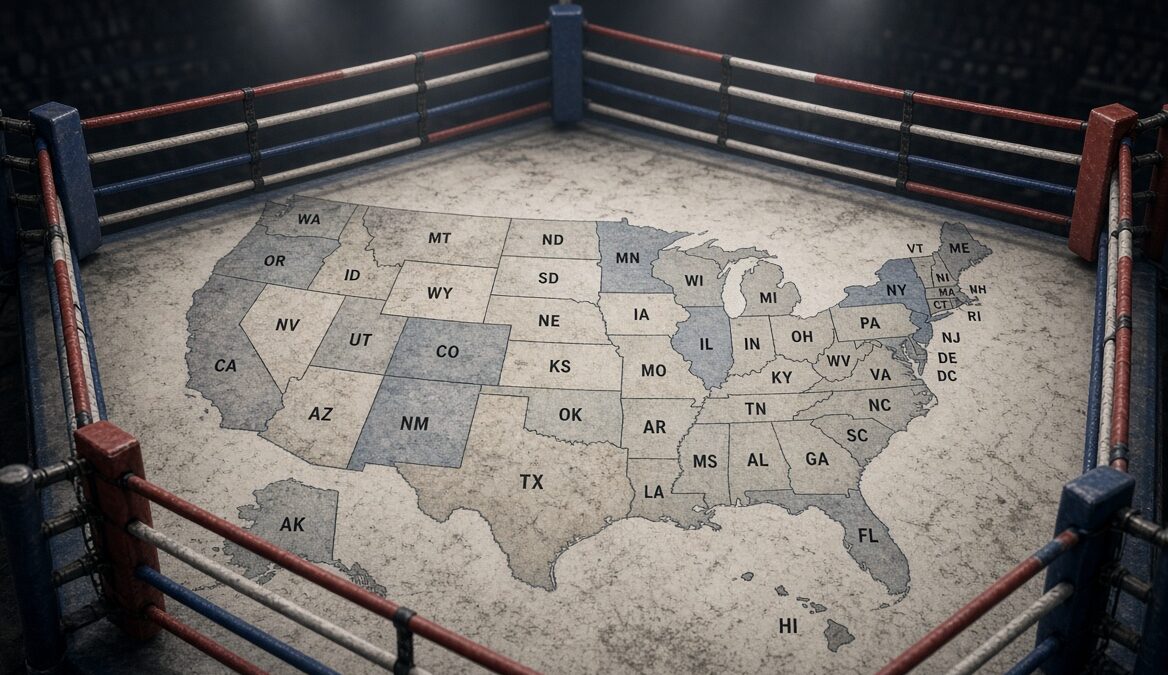
Boxing in this country is haves and have-nots. New York, New Jersey, California, and Nevada already live above anything in this bill, with a short list of others close behind. Too many of the rest ask for a physical and a blood test and call it a day, and that describes nearly every state running active club cards. This bill does not change a thing in the strong states. What it does is raise the floor in the states that needed it raised.
That is a start. It is not a finish, and the part that finishes it was never going to come from Washington.
What the bill actually writes is a federal medical floor covering every professional boxer in every state. Not UBO fighters. Not championship fights. Everyone, on every card, in every jurisdiction. A physical with blood work, a dilated eye exam, an EKG, antibody testing, brain health examinations, all with validity periods attached, and more required over 40. We priced that table out in March. That floor should become law.
The critics called it window dressing. It is not. The EKG is real, and it is the test that finds a heart problem before a fighter ever hears the first bell, in states that have never once asked for one. The dilated eye exam is real, and detached retinas end careers and eyesight. The blood work is real. The physical is real. None of that is decoration, and in the states that have required none of it, it is the difference between a fighter being looked at and a fighter being waved through.
Is it perfect? No. The under-40 brain imaging line still says MRI or a neurologic exam, there is no national registry, and the floor stops at the word boxing. That argument is on the record and there are two places left to fix it, the Senate floor and conference with the House. But moving the needle and moving it perfectly are different things.
The committee fight is over.
And consider what that year in Washington was actually about. The fights that moved text were over the UBO and over contracts: who owns the fighter, who owns the belt, how long a deal runs, when he can talk to somebody else. The layer that decides whether a man is fit to get hit in the head that night barely moved. New York applies the same medical rules to a title fight at Madison Square Garden and a club show in Rochester. The promoter changes, the money changes, the television changes, the rules do not. A UBO will not change how that machine operates. It never could. The machine is the state.
Which is the more useful thing to talk about now.
A federal floor is a floor. It is the minimum a state may do, not the maximum, and nothing in this bill stops any commission from requiring more. Which raises the question nobody in this sport is asking: what does your state actually require?
Almost nobody can answer that, including a lot of the people who fight there.
So that is where this goes next. State by state, using each commission’s own published rules. What that state requires today. What the strongest states require. Where the gap is. And who has the authority to close it, because in many states this is a rule and not a statute, which makes the path a lot shorter than people assume. We will not get to all fifty, and some of them do not need it. The ones running real cards with thin rules are the ones worth the time.
We are starting with Florida and Texas.
Not because they are the worst. Because they are the biggest targets that matter. Both run serious volume. Both are destination states for cards that could be run elsewhere. Florida’s executive director currently leads the Association of Boxing Commissions, which makes what Florida requires a national question rather than a local one.
These pieces will use each state’s published rules, not anecdotes from one bad card. What the rule says, what the rule next door says, and why the difference exists.
And the haves are the proof the rest of it is possible. Nobody handed New Jersey its system. Nobody handed New York its magnet standard. New York rebuilt its protocols after Magomed Abdusalamov was cleared in eighteen minutes after a fight at Madison Square Garden, took a cab to the hospital, and was left paralyzed. New Jersey built its system over decades inside the Attorney General’s office, one rule at a time. California and Nevada did their own versions. Nobody in Washington handed them any of it. They decided on their own that the minimum was not enough.
The country is not California and New Jersey, and it was never going to be. Those are big states with big commissions, full-time staff, and the volume to justify it. A commission running four cards a year does not have that, and expecting Congress to close the distance was never realistic. This bill does not close it. It moves the bottom, which is the only part Congress was ever going to be able to do.
There is a warning in the history, though. The Professional Boxing Safety Act of 1996 set a federal physical examination requirement, and plenty of commissions treated that floor as a ceiling and never moved again. That is the likeliest outcome here too. Once this becomes law, every commission in America will be meeting the federal minimum by definition, and a lot of them will stop there and call it compliance.
The tool to do better already exists. The Association of Boxing Commissions writes model rules and the Association of Ringside Physicians publishes medical guidance. What has been missing is a reason for a commission director to fight for the budget. Now there is one. A model medical code built above the federal floor gives a director something to hand a promoter or a state legislature: this is not extra, this is what staying above the minimum looks like. That argument did not exist before there was a minimum to point at.
And the first tier of it does not have to be New York. Start from the federal floor, since every state will be meeting it anyway, and then add the things the floor leaves out. Require actual imaging at licensure, valid for several years, so the annual brain health box cannot be satisfied with an office visit alone. Put an acuity number on the eye exam instead of a signature. Require imaging after a knockout. That is three additions to a table the state already has to run, it is closer to what the ringside physicians already recommend than to Madison Square Garden, and it is a document a director can hand a legislature without being laughed out of the room.
One more thing, because the cost objection is coming and it deserves an answer. Somebody pays for the medicals. In the states that require them, it gets negotiated between the promoter, the manager, and the fighter like everything else on a card. A good manager delivers his fighter with the paperwork done. A promoter who wants that fighter either covers it or pays a smaller purse.
Now run that backward. In a state that requires nothing, the fighter does not save that money. He gets the same purse he was always getting. The savings stay with whoever booked the card. That is worth remembering every time someone says a real standard would price fighters out of the sport.
But do not let me pretend the change is free either. Licensure costs are front-loaded. The scan and the labs come due before a contract is signed, and a four-round fighter who cannot float several hundred dollars does not negotiate a bigger purse. He takes the cheapest lawful option instead. Which is exactly why the word in the federal table matters as much as the money does. If the fighter is the one paying, the floor gets met with the cheapest test that satisfies it, and right now the cheapest test that satisfies it is an office visit.
The bill still has to be scheduled on the Senate floor and reconciled with the House. After that, a fighter’s protection depends entirely on which state his promoter picked.
Every state has to finish the job in its own way. A four-card commission is not going to become New York, and nobody should ask it to. But every one of them can do more than the minimum, and every one of them already has the authority.
A billion-dollar company spent a year pushing a structure. We spent it reading the medical table. The structure fight is over and the structure won, and none of that touches whether a man gets looked at before he fights. That part outlasts all of it, and it is the part still on the table.
Florida is first.
Larry Goldberg is the publisher of BoxingInsider.com and a licensed boxing promoter in New Jersey and New York.