By Larry Goldberg
Two contracts, one belt, and a form. Under two thousand dollars.
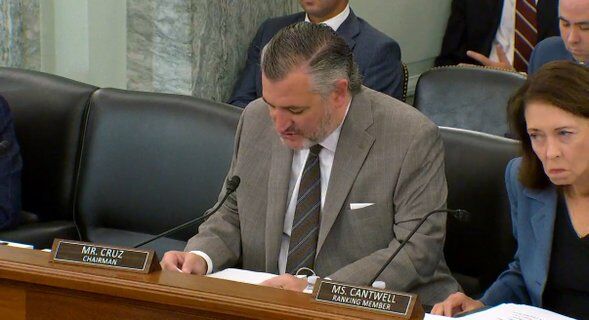
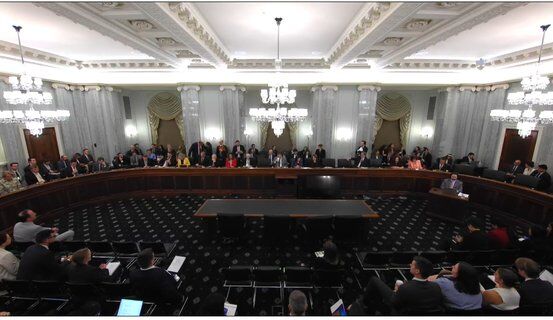
The Senate Commerce Committee advanced the Muhammad Ali American Boxing Revival Act on Wednesday with the definition of a Unified Boxing Organization untouched. The UBO is the exception at the center of this bill: a structure that lets one private entity sign fighters, rank them, and hang its own belts, which is exactly what the 2000 Ali Act was written to keep apart. So let me walk through, step by step, what my own company would have to do to become one.
First, what the bill actually requires. A unified boxing organization is “an association, a league, or a centralized industry organization in the private sector” that organizes a professional boxing match “in a system in which a boxer under contract with such association, league, or centralized industry organization competes against another such boxer pursuant to unified rules,” and that “implements a system for title belts for boxers under contract.”
Two things. Contracted fighters facing each other under unified rules. And belts.
Boxing Insider Promotions is a New Jersey corporation. I am licensed in New Jersey and New York. I promote a few club shows a year in Atlantic City because I love the sport, and I have never signed a fighter to a promotional contract in my life. Every bout I make is fight by fight. That is a choice, and it is the reason I do not currently qualify.
So here is the checklist.
Step one: sign two fighters. Not a stable, not a roster. Two. The statute says a boxer under contract competing against another such boxer, so the minimum viable UBO is two guys with contracts. I could make those calls this afternoon and have signatures by Friday. The original Ali Act treated exclusive promotional lock-in as the problem it was written to solve. This definition makes lock-in the price of admission. To satisfy a federal statute, the promoter who refuses to tie fighters down has to start tying fighters down.
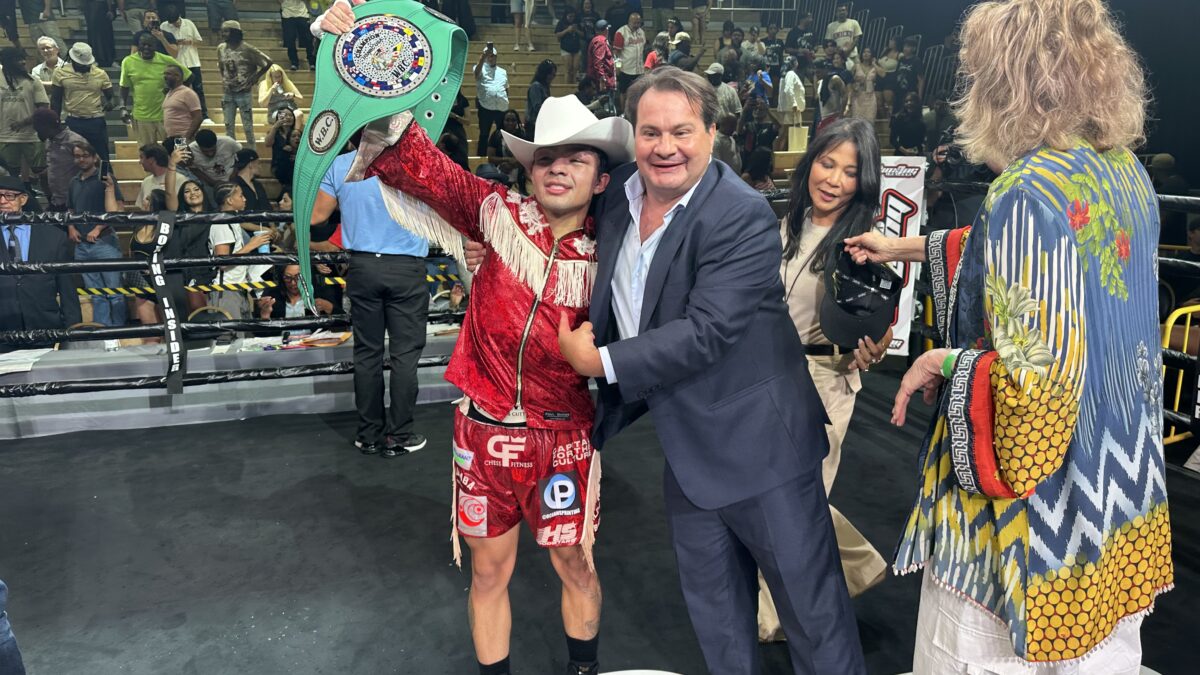
Step two: buy belts. A custom championship belt runs a few hundred dollars from any of a dozen manufacturers and ships in two weeks. The bill says implement a system for title belts. It does not say what a title means, who ranks the contenders, or how a champion is determined. No independent ranking standard, no outside recognition required, no sanctioning fee. The definition even says a UBO “may rely upon, utilize, or recognize” titles and rankings from an independent organization, so I can hang my own belt or borrow somebody else’s ranking and still clear the statute. Here is what the honest version costs. In July 2025, Andy Dominguez beat Byron Rojas for the vacant WBC US Silver junior flyweight title on my card in Atlantic City. The sanctioning invoice came to $2,725: a $1,200 sanctioning fee, $300 for boxer’s insurance, $1,150 for the belt itself, and $75 shipping. On top of that, a $750 supervisor’s fee plus travel, lodging, and per diem. I paid all of it, and in exchange an organization outside my company set the rules, approved the matchup, and put its name on the result. Under this bill I could have skipped every dollar of it, bought a belt online, and called him the Boxing Insider champion. Same fighter, same card, same night.
Step three: file three facts. On the day I claim UBO status, I send the Federal Trade Commission and the Association of Boxing Commissions my state of incorporation, my business address, and my website. That is the filing, and the bill lets me satisfy it with a public webpage instead.
That is the whole process of becoming one. Two contracts, a belt order, and a form. Cost of the door: under two thousand dollars, about a week, most of it waiting on shipping.
The conditions that attach to UBO status are real, and I want to be straight about them. Contract caps and a negotiation window, though those cost me nothing since I do not sign fighters. A firewall against my own people managing my fighters, which I already live under. An extra physician and an ambulance at every event, which New Jersey and New York already require. Supplemental exams for fighters over 40, which New Jersey already requires. An annual ratings filing if I run rankings. The genuinely new items are an independent third-party anti-doping program and access to training and rehabilitation facilities, and I could buy both. Which is the quiet point here. Almost everything the federal bill would demand of a UBO, the two strictest commissions in the country already demand of me. The conditions are not what keeps a club promoter out of this structure. Nothing keeps a club promoter out of this structure.
The obvious answer to all this is that nobody serious would form a two-man UBO, and that those conditions are the real filter. But every one of them binds you after you are already in. Look at what the door itself asks. Nothing about capital. Nothing about how long you have operated. Nothing about whether you can guarantee a purse, or a medical, or an insurance policy. No federal approval from any regulator, because there is no regulator in the definition at all. The state commission still has to license the show. It does not get to decide whether I am a UBO. A club promoter in Atlantic City clears the same bar as a multibillion-dollar company. That is not a loophole somebody missed. That is the sentence as written.
It is worth noting that the sport next door has run this exact model for thirty years with no federal floor at all. This bill imports the model into boxing without importing a gate.
I am not starting a UBO. I do not want one, I could not run one at scale, and the sport does not need another belt. The letter we sent the committee asked for a door with a high bar: years of continuous operation at real scale, demonstrated financial strength to cover purses and medicals and insurance, and a regulator holding audit authority, subpoena power, and the ability to revoke certification. One company clears that bar today. I do not, and I should not.
The bill is not law. The definition is one sentence. Somebody should write a second one.
Larry Goldberg is the publisher of BoxingInsider.com and a licensed boxing promoter in New Jersey and New York.