
By Larry Goldberg
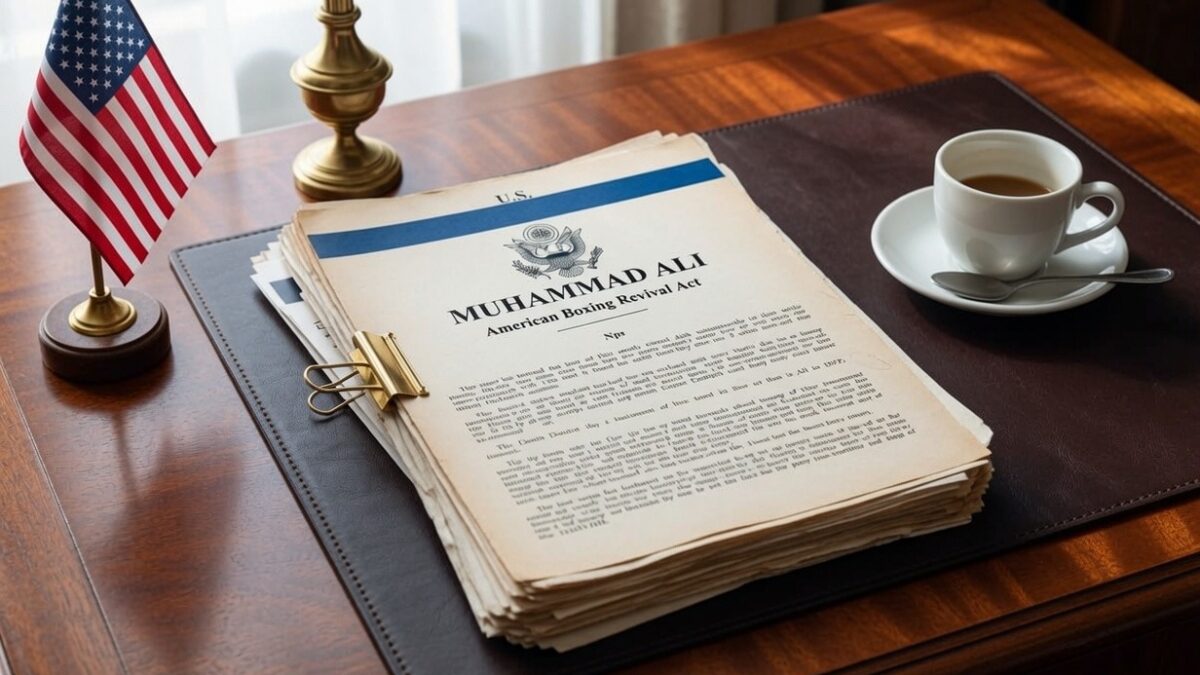
The Senate Commerce Committee marks up the Muhammad Ali American Boxing Revival Act on Wednesday morning. Monday’s cruiserweight ruling is the perfect case study for what the markup is really about.
Here is what the WBC announced Monday, in its own words. The Board of Governors declared the cruiserweight world title vacant. It elevated interim champion Michal Cieslak to full world champion. It confirmed sanctioning of Cieslak’s mandatory defense against David Benavidez, reported for December 12 in the Phoenix area. And it ordered that the winner of Saturday’s Mikaelian v. Opetaia bout, which is Jai Opetaia after he broke the never-stopped Noel Mikaelian in nine rounds, becomes mandatory to the Cieslak-Benavidez winner.
The statement also says something worth taking at face value. The WBC made numerous attempts to bring all parties together, and the Board chose the course of action most compliant with its own prior orders. I believe that. Anyone who has dealt with the WBC knows they answer the phone, they hold the hearings, and they follow their rulebook. Within the system the WBC operates, Monday’s ruling is internally consistent. Benavidez was properly installed as mandatory in May. Mikaelian was ordered to defend, took a different fight instead, and the rulebook says what it says. Cieslak held the interim belt, and elevation is what interim belts are for.
So here is the question I keep getting asked, with the markup two days away. What would the McCain rules have done differently here?
Nothing. And that is the finding that should interest the committee.
The Muhammad Ali Boxing Reform Act of 2000, Senator John McCain’s law, is the only federal statute that governs sanctioning organizations. People assume it regulates how titles are awarded, defended, and stripped. It does not. McCain’s bill went after coercive contracts, opaque rankings, and promoter disclosure. Title mechanics were left to the sanctioning bodies on purpose, and that was the right call then and now. The federal government has no business deciding who is a champion. What it can do is make sure the process that produces champions is transparent, that a fighter knows why his standing changed, and that he has somewhere to appeal. That is exactly what McCain wrote. Publish objective written ratings criteria. Notify a boxer when his rating changes and explain it on request. Maintain an appeals process. Disclose sanctioning fees.
The problem is not the language. The problem is that in twenty-six years the Federal Trade Commission has never meaningfully enforced a word of it. The WBC, to its credit, runs a more transparent operation than the statute demands. Its rulings are published, its reasoning is public, and Monday’s statement walked through the logic point by point. The federal government asks less of the sanctioning bodies than the WBC volunteers on its own.
But look at what the system, through no fault of any single organization, produced. Mikaelian says he agreed to the Benavidez fight immediately, waited more than sixty days, and never received a contract. His promoter, Don King, insists a million-dollar offer was made and fired a cease-and-desist at TKO trying to stop the Opetaia fight. A champion had to choose between waiting on paperwork that never came and taking the biggest fight of his life. He took the fight, and the rules took the belt. Nobody broke a rule. The rules themselves left him no good option, and the one federal mechanism that could have helped him, the appeals process McCain put in the law, has no enforcement behind it, no deadline attached to it, and no arbiter anyone has ever met. That is not a WBC problem. That is a Congress problem, and it has been one since 2000.
For the record, Congress did flirt with going further this year. The House version of this bill, passed in March, capped every organization at one championship per weight class and restricted interim titles. The Senate deleted that entire section, and this column will not mourn it. Federal title caps were the wrong tool. Washington micromanaging belts trades one set of problems for another, and the bodies that have run championships for decades understand their own architecture better than a statute ever will. The deletion was defensible. What is not defensible is deleting the title rules and also leaving the McCain framework toothless, because then the fighter is left with nothing on either end.
This is why Monday matters in Washington. Senator Cruz’s bill creates unified boxing organizations that operate outside the sanctioning body system entirely, with their own rankings and their own championships. The pitch for the UBO is that this specific bind, a champion stuck waiting on a contract that never arrives while his belt hangs in the balance, is far less likely inside a closed league, and that is fair. Readers of this series know I conceded the UBO in my open letter to Senator Cruz last week, and Monday shows why the concession was honest. But let’s be precise about what a UBO fixes. It removes the standoff between a sanctioning body and a promoter because it is both at once. It does not remove the incentives to stall a fighter, bury him in the rankings, or hold him to a mandatory nobody wants. The difference is vertical integration, not the absence of bad behavior. Which is exactly why McCain’s language matters more inside this bill, not less.
So here is the ask, and it is a modest one. Keep McCain’s framework, extend it to everyone who runs rankings and awards titles, UBO included, and finally enforce it. The Senate draft already moves in that direction, with compliance reviews and an appeal avenue for fighters around the ratings process. Good. Now give the appeals process a deadline and a working arbiter, so the next champion in Mikaelian’s position has somewhere to go besides a press release. Twenty-six years ago Congress wrote the right words. It has never once made them mean anything.
Mikaelian said it best before Saturday’s fight. He has to make a living. He has to fight. He cannot wait forever. No fighter should have to choose between his belt and his career because the paperwork stalled.