By Larry Goldberg
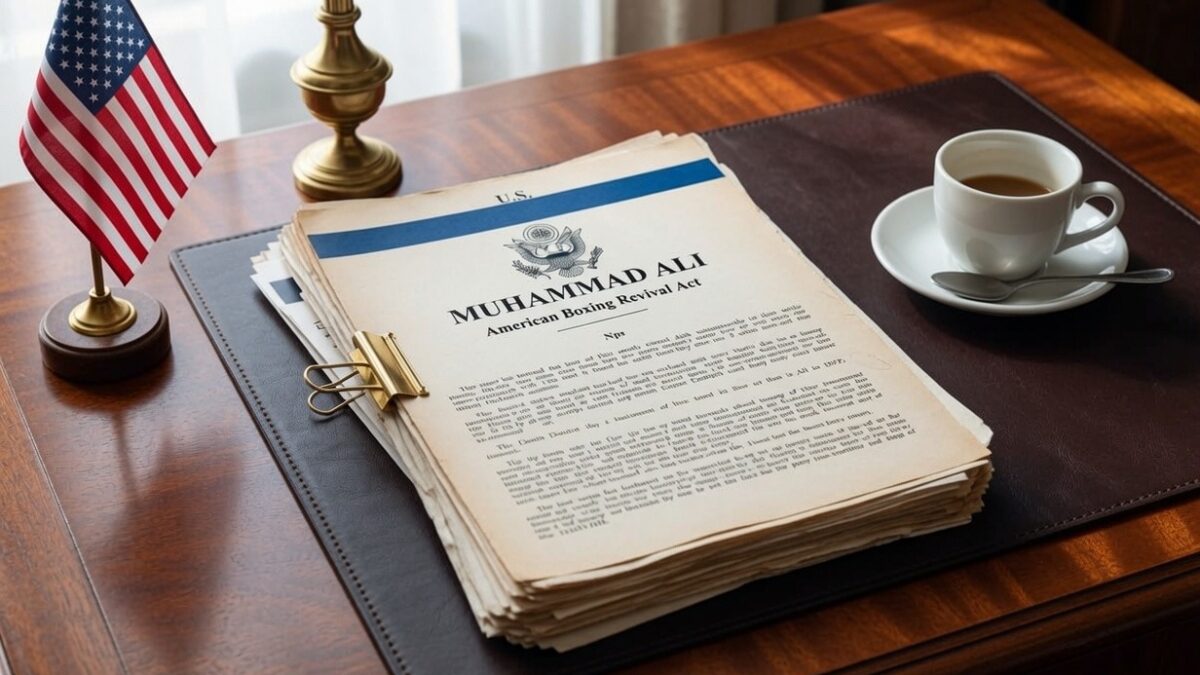
The Ali Revival Act reached the mainstream this week, and the mainstream found exactly what the trade press has been arguing about for a year: money.
Playboy published a seven-minute read on the bill built around Ari Emanuel’s 2025 podcast line that the Ali Act hurt boxing, with combat sports lawyer Erik Magraken and Oscar De La Hoya on the record against the legislation. Magraken’s verdict on the bill’s title was that “the only thing it’s going to revive is boxer exploitation.” De La Hoya described the UBO structure as a lure, generous terms up front hiding a bad deal in the fine print. The argument is the one the opposition has made since the first draft: a company overpays to get talent in the door, gains market control, and then the option clauses and pay suppression follow.
That piece landed the same day the union that builds the ring wrote Senate leadership to support the bill, on the grounds that it brings production jobs back to American arenas. So in one week the national conversation about this legislation now has three sides. TKO wants the league. The unions want the jobs the league would generate. The opposition wants to stop the league before it owns the fighters. Every one of those positions is about money, and every one of them is a legitimate fight to have.
Here is what none of them mentioned. The bill’s brain health table lets a fighter under 40 skip imaging entirely if a doctor performs a neurological exam instead, because of one misplaced word. Most states require no imaging at all. There is no national registry, so a fighter denied a license in New Jersey can drive to the next state and get one. There is no concussion protocol in any combat sport, and nobody regulates the gym, where most of the damage happens. Not one of the institutions that wrote to Congress this week, for the bill or against it, put a sentence about any of that in front of a senator.
That is not a criticism of the unions or the opposition. IATSE represents stagehands, not fighters. The MMAFA and the promoters fighting the UBO are fighting the right fight for the fighter’s career. But there is a reason the safety provisions of this bill have no lobbyist: there is no revenue in a brain scan. The only people who pay for the medicals are club promoters, and the only people who benefit are fighters nobody has heard of. Nobody hires a Washington firm for that.
So the money fight will get settled, one way or another, by people with money. The safety fight will get settled by whoever bothers to write the sentences, and that work is happening in exactly one place in this sport, on the state level, in the commissions that actually run it. New Jersey already wrote the model. The question for the Senate is whether anyone in the room is reading it, while everyone else argues about who owns the boxer.
More on that next week.