By Larry Goldberg
The Senate Commerce Committee is expected to take up amendments to the Ali Revival Act after the August recess. Before they write another word, they should look at the one state that already got this right.
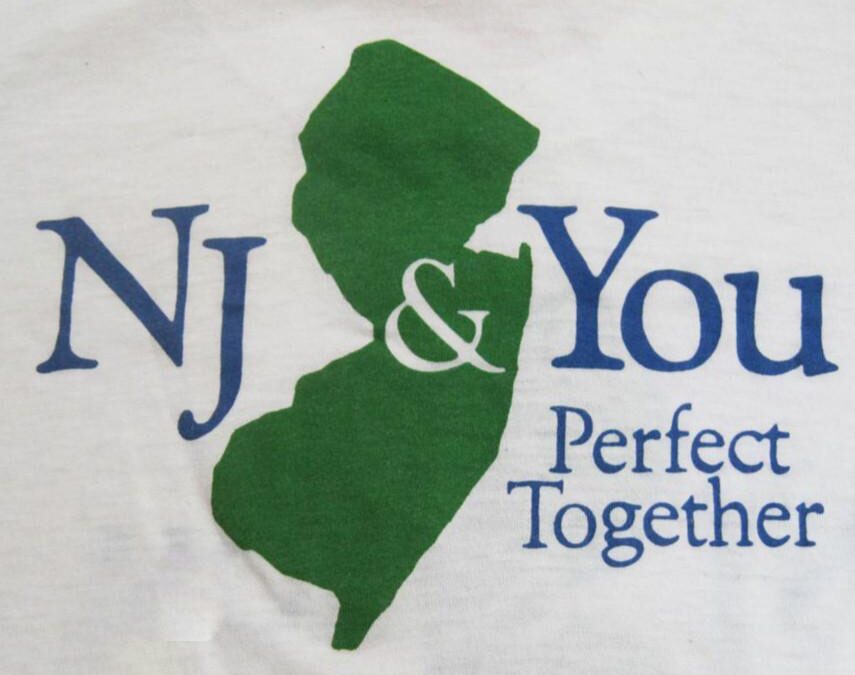
New Jersey and You, Perfect Together. That was the tourism slogan the state ran for years. I am dusting it off, because I promote boxing under New Jersey’s rules every show I run, and I want to show you what that actually means compared with the rest of the country.
Some people discussing this legislation can be accused of being malcontents, arguing to hurt one side or the other. I am doing something simpler. I am comparing the rules I follow to the rules everyone else gets away with. New Jersey is the model. Here is why.
Start with the medicals. To fight in New Jersey, a boxer needs brain imaging. A comprehensive blood panel covering six required tests. An EKG. A dilated eye exam. A full physical, all documented on the state’s own forms. I am writing part of this column from a hospital, where I have spent days watching doctors depend on CT imaging to make life and death decisions. It is not exotic technology. It is standard of care. And here is what should embarrass everyone in Washington: the scan being run next to me right now would not even count under the federal bill, because the bill only says MRI. CT does not appear in the brain health table at all. New Jersey accepts a CT of the brain. The doctors keeping people alive in this building depend on CT. But the legislation meant to protect fighters does not recognize it. That is what happens when nobody who actually runs shows is in the room when the bill gets written. And as I documented earlier in this series when I broke down what the federal bill requires medically and what it costs, 45 states in this country, according to the Association of Boxing Commissions’ survey of commission medical requirements, do not require a head exam for every fighter. Some fighters in those states will take punches to the head professionally without anyone ever looking inside their skull. Shame on every single one of those jurisdictions. And the current bill does not fix it. As written, the federal standard lets a fighter under 40 satisfy federal brain health law with a neurological exam instead of a scan. The “or” is the loophole, and I have already shown how one sentence fixes it. A doctor watches a fighter touch his nose, checks the box, and the scan that would have caught something never happens.
Before anyone tells me the New Jersey standard is too expensive, let me be honest about the cost, because I have published the invoices. A complete set of fight medicals runs somewhere between $800 and $1,000 per fighter, with an out-of-market CT scan at a rural imaging center pushing an occasional bill as high as $1,100, but usually it stays in that range. That is real money. We manage it. It kills our margins, and it is for the best. Because the alternative, what goes on elsewhere in this country, is barbaric. Fighters taking punches to the head for a living while nobody has ever looked inside their skull. So when a promoter with a nine figure broadcast deal tells you complete medicals are a burden, ask him how the guys selling tickets in Atlantic City manage it. The cost argument is not an argument. It is an excuse.
Senator Cruz, if your committee is taking amendments after the recess, here are two free ones: make head imaging mandatory and strike the “or,” so a finger-to-nose test can never substitute for a scan. And write “CT or MRI” into the bill, because as drafted, an MRI-only standard rejects the exact imaging that hospitals across America depend on every day. New Jersey already runs this system, with a verified chain of custody from the imaging center to the commission. The model rule language exists. It will save more lives than anything else on the page.
Next, the gambling rules. New Jersey, the state that brought legalized sports betting to America, has some of the strongest anti-gambling provisions for combat sports licensees anywhere. As a licensed promoter, I cannot bet on any combat sport in the State of New Jersey. Not a UFC fight, not a boxing match, not anything where two people trade punches for money. The state that legalized betting on everything drew one hard line, and it drew it around the sport it regulates out of the Attorney General’s office. I won’t even text and drive. The rules are clear, and the licensees follow them.
Why do we follow them? Because in New Jersey, the consequences are real. Which brings me to the part that actually matters. The teeth.
New Jersey runs combat sports out of the Attorney General’s office. Find me another state that does that. I’ll wait. When a promoter in New Jersey falls out of compliance, the person asking questions is not a part-time commissioner who also runs the county fair. It is the law enforcement apparatus of the State of New Jersey. Life changing bad things can happen to a licensed promoter who cuts corners here.
Guess what. That is the system working.
Here is a story that should scare you. People have tried to submit fake medicals in this state. Forged documents. Photoshopped reports. Not the hospitals. Hospitals do not fake medicals. Shady managers trying to get their fighters cleared for a payday do. And New Jersey built a system that assumes exactly that. A photocopied results page, handed over by whoever is holding it, proves nothing, because anyone with a printer can produce one. So the document itself has to be in proper format, the full original report with the facility’s information on it, and it has to travel through a trusted liaison from the imaging center to the commission. There are audits. The state calls hospitals and verifies. If a document cannot be verified, the doctor will not clear you, and you do not fight. Period. I have had situations resolve at the last minute that kept me sweating until the doors opened. Good. That sweat is the point. The CT scan being run next to me in this hospital right now is real, but if I walked out with a photocopy of the results page, New Jersey would reject it, and New Jersey would be right to, because a loose piece of paper saying a fighter’s brain is clean is exactly what a forger would hand you. The format and the chain are what make it trustworthy. That is how seriously this state takes fighter safety.
And I can show you exactly how serious this state is, because every licensed promoter in New Jersey just got a reminder in writing. The commission sends us annotated examples of acceptable and unacceptable medical documents. Real radiology reports, marked up in red ink. A resized document: unacceptable. A report missing the facility’s address and phone number: unacceptable. Dashes and check marks where a doctor should have written actual answers: unacceptable. MyChart summaries are rejected outright. The state requires the original report. The new medical forms say DO NOT RESIZE DOCUMENT across the top of the page, in both corners, because people have tried. Physicals and dilated eye exams must be completed on the state’s own forms, the eye exam by an ophthalmologist, no substitutes. Neurological clearance forms can only be completed by a physician board certified in neurology or neurosurgery, who must certify the exam was done in person, not over video or telephone. And if a facility’s fax system alters a document, the state’s answer is simple: have the hospital send it directly to the commission. Where do all these forms go? To an email address that ends in njoag.gov. The Office of the Attorney General. Every medical document for every fighter in New Jersey flows into the state’s chief law enforcement agency. That is not a commission asking politely. That is the law watching.
Now let me single out two names. Myself and Thomas LaManna. Two club promoters who run more shows in New Jersey than anyone. Outside this state, you may not have heard of either of us, other than LaManna being in some notable fights. But here is a fact nobody can argue with. The two of us put more fighters through complete medicals, brain imaging, verified blood panels, EKGs, dilated eye exams, all audited through the commission, than the big promoters running shows in Texas, Florida, and the rest of them. The biggest names in the sport, with the biggest budgets, clear fewer fighters to a real medical standard than two club promoters from New Jersey. Sit with that.
And it is not just boxing. New Jersey regulates all combat sports under one roof, so the MMA promoters live under the exact same rules. Cage Fury and Lou Neglia have been putting fighters through the full New Jersey medical machine for years, every scan, every panel, every verified document, same as us. Alex Barbosa, Rodney Rice, and the rest of the local boxing promoters all promote under the same floor and the same ceiling, with matchmakers like Ron Katz, Renee Aiken, and my own matchmaker, the great Eric Bottjer, keeping the matchmaking honest across every card they touch. The competition between all of us is brutal. The compliance is universal. That is what a functioning market under real regulation looks like.
And to be fair, some major promoters voluntarily exceed their state’s minimums. Good for them. But a major heavyweight fight happened in a state where the only medical the commission required was a blood panel that costs about $79. Three tests. That was the entire medical gate between two heavyweights and a licensed prizefight. That is scary. And here is the honest part, the part I should not admit but will: as a promoter, that state is attractive. Seventy-nine dollars a fighter instead of a thousand is the difference between a show that makes money and a show that does not. Every promoter in America feels that pull, and that is exactly the point. The standard cannot depend on the promoter’s conscience, because the economics punish the conscience. That is the entire argument for a floor.
Now here is the part that should keep a senator up at night. Everything I just described stops at the state line. A promoter can run a show in Atlantic City or Newark under the full New Jersey medical machine, every fighter scanned, every document verified, then run the next show across the bridge in Philadelphia, where Pennsylvania requires a physical, an eye exam, and blood work. No brain imaging. Not for anyone. The same fighter can be required to prove his brain is healthy one month in Atlantic City and be waved through the next month in Philadelphia. Nothing about him changed. Only the side of the river did. And believe me, everyone in this business complains that New Jersey is too tough. They are right. It is tough. It costs more money, and promoters, myself included, would love to save money. But I would rather save lives. Or at the very least, never be the promoter whose show hurt someone a scan could have protected. That is not a knock on anyone, who can only follow the rules each state puts in front of them. It is the whole case for a federal floor in one commute.
Now cross the river in the other direction. A fighter who leaves New Jersey for New York does not escape the medical machine. He walks into a tougher one. New York does not just require a brain MRI for every fighter. It specifies the machine, a minimum 1.5 Tesla magnet, and requires five specific imaging sequences, with the results reviewed by the commission’s Chief Medical Officer before anyone is cleared. A scan showing evidence of prior brain trauma is grounds for denial of a license. Full stop. And the insurance tells you how seriously Albany takes a fighter’s brain: every promoter in New York must carry one million dollars in traumatic brain injury coverage per fighter, the highest minimum in America, on top of $50,000 in medical coverage. I know because I am licensed there too, and I pay for it. So look at the map. New Jersey and New York, tough and tougher, sharing borders with a state that requires no brain imaging at all. Three states, one region, and a fighter’s brain is worth a million dollars of protection and five imaging sequences on one side of a bridge, and a physical and an eye exam on the other. If that does not make the case for a federal floor, nothing will.
Without naming names, some major promoters, international power brokers among them, have come into this state and nearly had events cancelled because their operations could not complete New Jersey medicals and licensing on time. That should tell you everything.
There is a reason New Jersey was the first state to bless mixed martial arts, writing the unified rules that the entire sport now fights under worldwide. When you have real oversight with real consequences, you can say yes to new things, because you know you can police them. Weak commissions have to say no, or worse, they say yes and rubber stamp whatever shows up.
Earlier in this series I asked a question that nobody in Washington has answered: who is actually watching out for the fighters? In New Jersey, the answer is simple. The Attorney General is. That is the whole model in one sentence.
So for the committee staff skimming this before markup, here is what Congress can copy tomorrow:
- Mandatory head imaging for every professional boxer, CT or MRI, no substitutions, with a verified chain of custody from the imaging center to the commission, backed by audits and direct hospital verification.
- Clear anti-gambling rules for all licensees, with penalties that make compliance the only rational choice.
- Commission authority backed by real enforcement power, on the New Jersey model, where oversight runs through the state’s chief law enforcement office.
New Jersey did not write these rules as theory. They are operational today, across dozens of shows a year, and the state should offer its verification protocols as model language and technical assistance to any commission that wants them. And to the states that still do not require head exams, offered with what I admit might be a sick sense of humor: if the new federal standards feel like a burden because your current process is a rubber stamp, maybe you can hire New Jersey to run your state. I am only half joking. The Ali Revival Act, in both the House and Senate versions, keeps trying to solve boxing’s problems with new federal structures. The answer already exists, a few miles from where the Ali Act was born.
New Jersey and You. Perfect Together. Senator, come take a look.
Larry Goldberg is the founder of Boxing Insider Promotions and owner of BoxingInsider.com, established in 1998. He is a two-time New York State Boxing Hall of Fame Promoter of the Year and a licensed promoter in New Jersey and New York.