By Larry Goldberg
Two announcements landed within twenty-four hours of each other this week, and nobody involved in either one seems to have noticed the other exists.
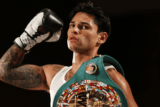
On Tuesday, Misfits Boxing announced a new main event for its September 26 card at the James L. Knight Center in Miami. Henry Cejudo, 39 years old, an Olympic wrestling gold medalist and two-division UFC champion who has never boxed professionally, will make his pro debut against Javon “Wanna” Walton. Walton is a real fighter, let’s be fair about that: a 20-year-old licensed pro at 3-0-1 with a knockout, a former amateur, signed to Jake Paul’s Most Valuable Promotions, best known to the wider world for playing Ashtray on HBO’s Euphoria. He stepped in on short notice after Cejudo’s original opponent, influencer boxer Deen the Great, withdrew with an injury.
The original booking was the circus. The replacement is a more legitimate opponent. The main event still fails the only test that matters: a 39-year-old’s professional debut against a short-notice 3-0-1 replacement, headlining a sanctioned card on DAZN.
On Wednesday morning at 10 a.m., the Senate Commerce Committee marks up S. 5188, the Muhammad Ali American Boxing Revival Act, the bill that is supposed to modernize how professional boxing in this country is regulated.
The state that will sanction the first announcement is Florida, and the Florida Athletic Commission is not just any commission. Its executive director also serves as president of the Association of Boxing Commissions and Combative Sports, the national body at the center of the state regulatory system that federal boxing law relies on. In April, that same office submitted testimony to this same committee describing Florida as “a leader in fighter health and safety,” walking through the state’s medical requirements, ringside physicians, and pre-fight testing, and telling senators the bill’s safety enhancements align with standards Florida already meets or exceeds. Florida was presented to Congress as the model. Wednesday’s markup proceeds on a record that says so. One disclosure before I go further: I promote in New Jersey and New York, and it is New Jersey I will hold up later as the standard, so you know exactly where I stand.
Nothing in that testimony about medical protocols is false, and that is precisely the gap in the argument. Head scans, bloodwork, pre-fight physicals, all of it answers one question: is this man healthy enough to be hit? It does not ask whether the fight in front of the commission should exist. Cejudo will pass every test Florida gives him. On August 22 he pinned Merab Dvalishvili in 36 seconds in a Real American Freestyle wrestling match at RAF 12 in Cleveland; he may be the most conditioned 39-year-old alive. Walton will pass every test too. And the matchup will still be what it is. No MRI measures whether a fight makes sense. That judgment is the one job medical protocols cannot do for a commission, and it is the job Florida declines to perform. Just notice where these fights keep landing: Georgia and Florida, over and over. You will not find them in New Jersey, which showed this circuit the door, and you will not find them in New York, where the application would be taken as an insult.
The bills in Congress do real things. They create a lane for UBOs, regulate promotional contracts, and set the first federal medical floor states like this have never had, though the floor’s under-40 brain line reads MRI or a neurologist’s exam, an “or” I have spent months arguing should be an “and.” But neither the House version nor the Senate version touches the layer where this fight gets approved: a state commission’s discretion to sanction whatever shows up at its door. Even the bill’s loudest corporate backer would not make this fight. TKO’s entire pitch to Congress is competitive integrity, and Dana White has spent years publicly ridiculing exactly this kind of event. Yet the legislation his company supports could not stop Florida from approving it.
Now look at who the bill elevates. The Senate text hands national certification of referees, judges, and ringside physicians to the Association of Boxing Commissions, the body I wrote in March the legislation turns into America’s de facto national boxing commission. Per the association’s own website, its officers are Florida in the president’s chair, Utah as first vice president, Nebraska as second, Oklahoma as secretary, the Citizens Potawatomi Nation as treasurer, the Mohegan Tribe as past president, and North Carolina running operations. Now look at who holds none of those chairs: New York, New Jersey, California, and Nevada. The four commissions that regulate nearly every major fight in America, with the most demanding medical standards in the sport, hold zero officer seats in the body Congress is about to write into federal law. Only five states require a brain scan for every professional fighter, California, Nevada, New Jersey, New York, and Rhode Island, and they sit as a permanent minority beneath the dozens that don’t. Florida, which requires no brain imaging to license a fighter under 40 unless the commission already suspects an injury, holds the gavel.
Which brings me to the one man who can actually fix the state in question, and here is where I part ways with the pile-on this story invites. Governor DeSantis is a genuine fight guy, and his record proves it. When the country shut down in 2020, he made Jacksonville the UFC’s home. When Dana White wanted fans back, DeSantis told him Florida had to be the first place to do it, and UFC 261 became the first full-capacity indoor sporting event in America since the pandemic began. His own Department of Business and Professional Regulation celebrated a record year of fight events and declared Florida “the fighting capital of the world.” He earned that title, and the sport owes him for it.
But that title is being spent by the commission underneath him. The Florida Athletic Commission sits inside DeSantis’s own DBPR, and its commissioners are gubernatorial appointees. Last week I published an open letter to Senator Cruz documenting a permitted card in Orlando where an unlicensed referee controlled live punches and a bout ran in the ring that never appeared on the state’s official sheet. None of this requires an act of Congress to fix. The fix is simple to describe: a commission that asks the first question about every card that comes through the door, does this belong in our state, and brain imaging in front of every license, before the damage instead of after. A governor who cares about fights could get that done in his final months in office, and Florida happens to have one. That would be the legacy move. That would make fight capital mean something more than volume.
Because there is a state that already does all of it. New Jersey regulates combat sports out of the Attorney General’s office, officials are assigned without promoter input, and whether a card deserves the state’s sanction is the first thing examined, not the last. I promote there, so I know the question comes with teeth, and I also know it is nothing personal when it comes. Nobody in Trenton is against fights. They are against the wrong ones. Until the map catches up, make New Jersey the USA.
So let me close with the arithmetic, because the whole story fits in three numbers. The ABC is the organization this bill empowers. Five states require brain imaging for every professional fighter. And four of the states holding officer chairs in that organization, Utah, Nebraska, Oklahoma, and North Carolina, are not among them. They do not require the scan, and ask yourself: when was the last time one of boxing’s marquee nights ran through any of them? That is the body being written into federal law Wednesday morning. This is the window. Fix the whole problem while it is open, because if this bill passes with the job half done, we will be begging to come back to Congress, and it took a quarter century for Congress to care this time. It might be longer before it cares again.