By Larry Goldberg
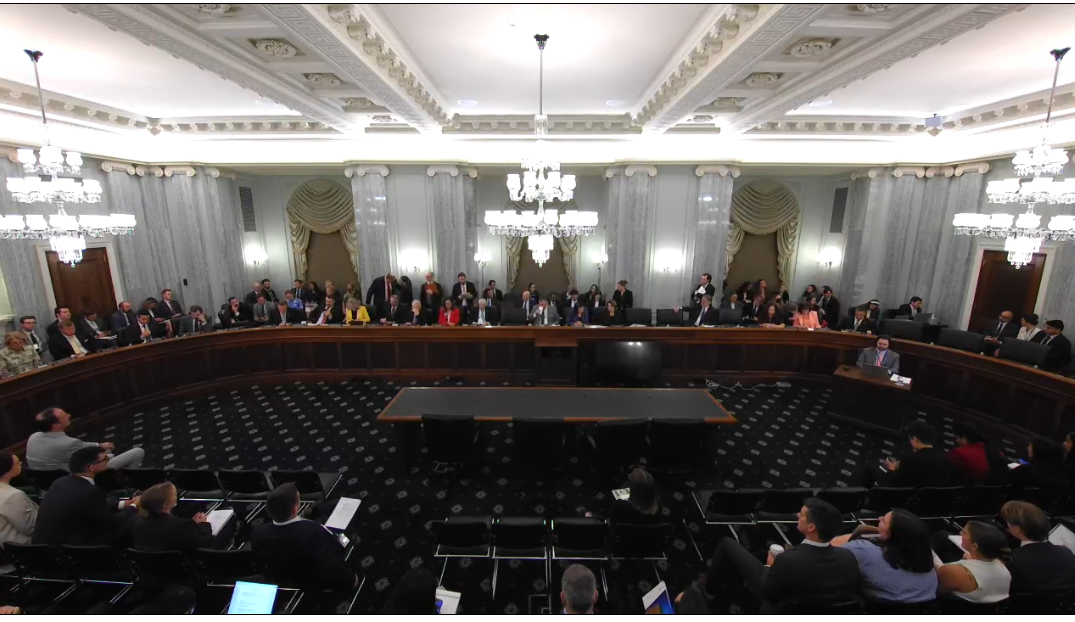
The most visible opponent of the Muhammad Ali American Boxing Revival Act now supports it. Nico Ali Walsh, who testified against the bill before the Senate Commerce Committee in April and told reporters in July that it would not pass as written, sent a letter dated September 10 urging the committee to advance S. 5188 and the full Senate to pass it. Chairman Ted Cruz posted the letter this morning, hours before the committee took up the bill.
Walsh does not hide the reversal. He writes that he strongly opposed the original version because he believed fighters deserved better, that he spent months meeting with senators, policymakers, and attorneys while trying to maintain his career as an active fighter, and that he is proud many of the changes he fought for are now in the bill. He lists five: shorter promotional contracts, a meaningful path to free agency, transparent and accountable ranking systems, a firewall between promoters, UBOs, and fighter managers, and financial disclosure requirements holding UBOs to the same standards as traditional promoters.
Cruz’s post credits him directly. The chairman writes that he told stakeholders with concerns at the April hearing to work with him to strengthen the bill, that Walsh answered the call and took time away from his own career to work with his offices, and that the final product is stronger because of it. He and Senator Rosen, Cruz wrote, are proud to have the support of a fighter who advocated fiercely for his peers and worked to make sure legislation bearing his grandfather’s name is worthy of that legacy.
Two things are worth noting about the list.
The first is scale. The contract changes in the Senate text are real but narrow. The first-contract cap runs three years instead of six, but only for a fighter who has never signed a promotional agreement before, which describes very few professional boxers. Subsequent deals still run to six. The negotiation window went from 30 days to 90, which is a longer runway, not free agency. The ranking transparency provision requires a UBO to file its criteria, bylaws, appeals procedure, and the names of its ratings officials with the Federal Trade Commission and the Association of Boxing Commissions every January. Filing is disclosure. It is not enforcement, and it reaches only UBOs, not the four sanctioning bodies that rank fighters today.
The second is what is not on the list. Not one of the five changes is medical. Walsh came before the committee in April and raised concerns about boxer safety, and the chairman’s own post says so. The letter he sent five months later asks for contract terms. There is nothing in it about the brain health table, nothing about the word that lets a fighter under 40 substitute a neurological exam for imaging, nothing about a national medical registry, and nothing about the fact that the bill’s medical floor stops at the word boxing.
That is not a knock on him. He is a professional fighter who took ten months away from his career to argue with senators, and he moved the text, which is more than anyone else on his side of this managed. It is a statement about what was on the table and what was not. The medical provisions in this bill are the biggest update to federal fighter safety law since 1996, and in a markup where the chairman thanked a fighter by name, nobody was arguing for them.
Walsh fights Treavon Craycraft in an eight-round main event in Kansas City on October 10.