By Larry Goldberg
Federal boxing reform has been attempted four times in twenty years. Three of those attempts are the same bill at different stages. Here is what changed at each step, and what never did.
McCain’s bill, 2004 through 2009. The Professional Boxing Amendments Act created a United States Boxing Commission to administer federal boxing law, oversee every professional match in the country, and enforce the statutes already on the books. It built a centralized national medical registry so a fighter’s record followed him across state lines. It went after the sanctioning bodies with uniform ranking criteria, notice, and appeals. It gave the commission subpoena power. It passed the Senate by unanimous consent in 2004 and again in 2005, and was introduced once more in 2009. It never became law, because the House would not pass it. Nothing in it survives in current statute.
The House bill, H.R. 4624. Introduced by Brian Jack and Sharice Davids in July 2025, advanced 30 to 4 out of Education and Workforce, and passed the House by voice vote on March 24, the first boxing bill to pass the House since the Ali Act in 2000. It created the UBO. It set minimum injury and death coverage for every professional boxer, a $200-per-round minimum purse, an additional ambulance and an additional licensed physician at UBO events beyond what existing law already requires, supplemental exams for fighters 40 and over, an anti-doping program, and access to UBO training and rehabilitation facilities. A fighter could talk to another organization during the final 30 days of his contract. The UBO ran its own titles and rankings without reliance on an outside sanctioning body.
One provision did not survive the House. The bill as introduced in July 2025 required a UBO fighter to have an MRI and an MRA before his first covered match and every three years after. That mandate was gone by the time the House voted.
The Senate bill as introduced, July 30. Cruz and Rosen tightened several things. The negotiation window went from 30 days to 90. A fighter’s first promotional contract was capped at three years if he had never signed one before, with later deals capped at six. A firewall barred UBO officers and employees from holding a financial interest in managing their own fighters. Any UBO running its own ratings had to file criteria, bylaws, appeals procedures, and the names of voting officials with the Federal Trade Commission and the Association of Boxing Commissions every January.
And the Senate flipped the definition. Where the House said a UBO runs its own titles without reliance on an independent organization, the Senate said a UBO “may rely upon, utilize, or recognize” titles and rankings from an outside organization. That is the change Nico Ali Walsh now calls his biggest win. Read closely, the permission belongs to the organization, not to the fighter.
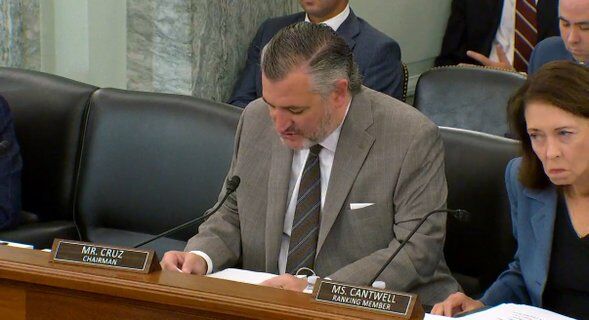
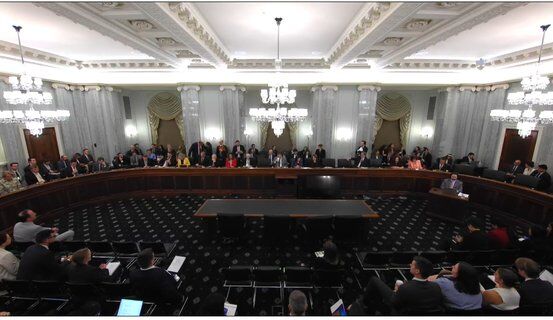
What came out of committee Wednesday. A Cruz-Rosen substitute replaced the introduced text, and four amendments from Ranking Member Maria Cantwell were adopted on top of it. All five documents are posted by the committee, and the language below is quoted from them.
The UBO must now disclose to every fighter his compensation for the bout, an itemized statement of every fee, charge, expense, and deduction assessed against it, the final net, and everything filed with the state commission. That is per-event disclosure to the fighter, which the introduced Senate bill did not require and which the original Ali Act has required of promoters since 2000.
UBO officers, employees, and representatives may not contract with or pay any member or employee of a boxing commission, anyone who administers state boxing laws, or any member of the ABC, except for ordinary supervision and officiating fees.
Any entity that creates boxer ratings and has a financial tie to a UBO must make the same annual FTC and ABC filing the UBO makes, and must attest to the tie. That closes the workaround where a UBO spins up a nominally separate ratings shop.
And Cantwell struck an entire section. The substitute would have required every referee and judge in professional boxing to be certified and approved by either the state commission or the ABC. Read the “or.” It would have made a private association a national certifier operating as an alternative to the states. It is gone. Certification stays where it has always been.
What never changed. Across the House bill as passed, the Senate bill as introduced, and the text that came out of committee, the required brain health examination for a boxer under 40, which is most of the sport, is an MRI of the brain or a neurologic examination conducted by a neurologist. One word, and imaging becomes optional. It survived a chamber, a substitute, and four amendments.
There is also no national medical registry in any version. McCain had one in 2004. The House did not write one. The Senate did not write one. The substitute did not add one. Twenty-two years after a former Navy boxer told this same committee that a license in one state is worthless if a fighter can drive to the next one, the bill about to reach the Senate floor still has no way to follow a failed medical across a state line.
The pattern. Look at what improved at each step. The House built the structure and wrote the first federal medical floor in thirty years, which is real and which this publication has argued all year should become law. The Senate tightened the contracts. The committee added disclosure, closed a conflict of interest, caught a ratings workaround, and pulled back a certification overreach.
Now look at the medical provisions specifically. Insurance, the extra ambulance and physician, anti-doping, and supplemental exams for fighters over 40 all arrived in the House version and have essentially sat there since. The one brain imaging mandate that went beyond the table was cut before the House vote. The brain health row itself has not moved in fourteen months of legislating across two chambers.
That is not because anyone is against it. It is because the contracts had advocates and the scan did not. Fighters, managers, promoters, lawyers, and two unions spent a year arguing about money, which is a legitimate fight with real stakes. No principal in that fight was there for the scan.
There are two stages left. The Senate floor, and reconciliation with the House. We sent the committee ten fixes and the cheapest one is still sitting there. Strike “or.” Write “and.” Imaging is the baseline, the neurological exam is additional.
It is not free. An annual MRI for every licensed professional under 40 is a real cost, and I pay it on my own cards, which is why I know what it runs and why I keep saying it is worth it. What it costs to draft is nothing. One word, no delay, no fight with anyone.
McCain spent five years passing a better bill through this same committee and watching it die across the Capitol. This one is going to become law. It should become law with the word fixed.
Larry Goldberg is the publisher of BoxingInsider.com and a licensed boxing promoter in New Jersey and New York.