
One Ring, Two Fighters, No Safety Net
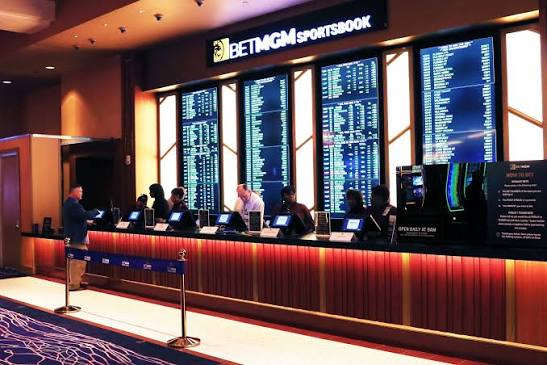
If your experience with sports odds comes from football point spreads or basketball totals, boxing betting feels like a different planet. The mechanics are similar — odds, lines, favorites, underdogs — but the dynamics underneath are fundamentally different. The knockout factor alone changes everything. There’s no equivalent in team sports to a single moment that erases three hours of accumulated work.
Understanding those differences isn’t just academic. It reveals why boxing betting has a unique risk profile, why the odds move differently, why the market is less efficient, and why knowledgeable observers have a bigger edge in boxing than in virtually any other sport.
Whether you follow the NFL, the NBA, UFC, or all of the above, here’s how boxing fits — and doesn’t fit — into the broader sports landscape.
The Point Spread vs. The Moneyline
In football and basketball, the most popular bet is the point spread. The oddsmaker sets a margin — say, Team A by 7 points — and you bet on whether the favorite covers that margin or the underdog stays within it. The spread creates an approximately 50-50 proposition on both sides, which is why both sides are typically priced at -110.
Boxing doesn’t use point spreads. The moneyline — a straight bet on who wins — is the primary market. This creates a fundamentally different betting experience because the price of backing a heavy favorite is steep, and the price of backing a live underdog is enticing.
In the NFL, a team favored by 14 points is still priced at -110 on the spread. In boxing, a fighter expected to win by a comparable margin might be -600 or -800 on the moneyline — meaning you’d need to risk $600 or $800 to win $100. That pricing changes everything about how people approach the market.
The moneyline structure is why prop bets and exotic wagers are proportionally more popular in boxing than in team sports. When the straight moneyline on a heavy favorite offers unattractive returns, observers naturally migrate toward props, round bets, and method-of-victory wagers where the payouts better reflect the risk. As we covered in our breakdown of prop bets and round betting, these markets reward specific knowledge about how a fight will unfold rather than simply who wins.
The Knockout Factor: Why Boxing Is More Volatile
In football, a team that falls behind 21-0 at halftime almost never wins. The probability of a comeback decreases predictably as the deficit increases. In basketball, even large leads shrink in predictable patterns based on time remaining and pace of play.
In boxing, a fighter can lose every round on every scorecard and still win the fight with a single punch.
This is the fundamental difference between boxing and every team sport. The knockout creates what mathematicians call “fat-tailed” risk — the probability of an extreme, sudden outcome is much higher than in a sport with continuous, incremental scoring. The biggest upsets in boxing betting history almost all ended by knockout, not decision. The single-punch finish is what makes boxing odds inherently more volatile and more difficult to price accurately.
For oddsmakers, the knockout factor means they can never price a fighter as a prohibitive favorite the way an NFL team can be. Even a 42-to-1 underdog like Buster Douglas has a nonzero probability of landing one perfect punch. The line-making process in boxing must always account for this tail risk, which is why you rarely see boxing favorites priced beyond -2000, even in the most lopsided matchups. In the NFL, a team might be a 30-point favorite — an implied win probability above 95%. In boxing, an equivalent probability would be unusual because the knockout variable prevents oddsmakers from being that confident.
Sample Size: 17 Games vs. 2 Fights
An NFL team plays 17 regular-season games. An NBA team plays 82. A baseball team plays 162. Each game generates a data point that oddsmakers and analysts use to refine their models. By Week 10 of the NFL season, the market has a rich data set on each team’s strengths, weaknesses, and tendencies.
A top boxer might fight twice a year. Some champions fight once a year or less due to promotional disputes, injuries, or the economics of pay-per-view. This creates a data scarcity problem that permeates every aspect of boxing analysis.
With fewer data points, statistical models are less reliable. Power ratings carry more uncertainty. Trend analysis is noisier. And the subjective factors that are secondary in team sports — training camp reports, corner quality, motivational reads, stylistic analysis — become primary in boxing because there simply isn’t enough quantitative data to build a reliable model without them.
This data scarcity is a double-edged sword. It makes boxing harder to predict, but it also means the market is less efficient — there’s more room for an informed observer to identify mispricings that wouldn’t exist in a deeply liquid market like the NFL.
Individual vs. Team: No One to Cover for You
In basketball, if a star player has an off night, his teammates can compensate. The bench provides depth. The coaching staff makes adjustments. In football, a struggling quarterback can lean on his defense and running game. Team sports have built-in redundancy.
Boxing has none. If a fighter didn’t sleep well, is distracted by personal issues, cut weight poorly, or simply isn’t sharp on fight night, there’s no teammate to pick up the slack. The corner can offer advice between rounds, but the fighter has to execute alone.
This individuality amplifies the impact of non-quantifiable factors. A quarterback’s personal life rarely affects the betting line because the team around him provides a buffer. A boxer’s personal life can be the difference between winning and losing because he’s carrying the entire outcome alone.
This is why experienced boxing observers pay close attention to pre-fight intangibles — body language at the weigh-in, demeanor at press conferences, reports from camp — in a way that would seem excessive in team sports. In boxing, those intangibles aren’t secondary. They’re directly correlated with performance because there’s no safety net.
Boxing vs. MMA: The Closest Comparison
MMA is the most comparable sport to boxing from a betting perspective. Both are individual combat sports with moneyline-dominant markets, knockout potential, and the same fundamental volatility. But there are meaningful differences that affect how odds are set and how fights unfold.
Paths to Victory
In boxing, there are essentially two paths to victory: stoppage (KO/TKO/DQ) or decision. The striking is governed by a single discipline with well-understood parameters — jab, cross, hook, uppercut, body shots — and the range of tactical approaches is bounded by the rules.
MMA adds wrestling, clinch work, ground control, and submissions to the equation. A fighter can win by knockout, submission, decision, or technical stoppage due to strikes, chokes, or joint locks. The additional paths to victory create more variables, which theoretically makes MMA harder to predict. However, the counterargument is that boxing’s deeper talent pools and more granular stylistic distinctions create their own form of complexity.
Fight Duration and Pacing
A championship boxing match is 12 three-minute rounds — 36 minutes of potential fighting. A UFC championship fight is 5 five-minute rounds — 25 minutes. Non-title MMA fights are typically 3 rounds (15 minutes).
The longer duration of boxing creates more opportunities for the better fighter to assert himself, which theoretically makes boxing outcomes more predictable over the full fight. But it also creates more opportunities for fatigue, cuts, and cumulative damage to change the trajectory — which adds volatility in the later rounds.
MMA’s shorter fights mean that individual moments carry more weight. A single takedown that leads to a submission in Round 1 can end a fight before the better overall fighter has a chance to establish his game. This creates higher variance in MMA compared to boxing, particularly at non-championship level.
Market Depth
The UFC has established itself as a mainstream sports property with deep betting markets. Major UFC events attract betting action comparable to mid-tier boxing pay-per-views. However, boxing’s top events — megafights between elite fighters — still generate significantly more betting action than any MMA event, which means the market is more efficient at the top of boxing but less efficient at the lower levels.
For the informed observer, this means boxing club shows and undercard fights often present more analytical opportunities than MMA undercards because the boxing markets are thinner and less scrutinized. A well-analyzed six-round fight on a card at Tropicana Atlantic City might have a softer line than any fight on a UFC card because fewer people are looking at it.
Judging and Scoring
Both sports have judging controversies, but they manifest differently. Boxing uses the 10-point must system across 10 or 12 rounds, creating more individual scoring decisions per fight and more opportunities for contentious rounds. MMA uses the same 10-point must system but across fewer rounds, and the criteria are different (effective striking, grappling, aggression, and cage control).
Boxing decisions are historically more controversial because the sport has a longer track record of questionable scorecards and because the round-by-round system allows judges to “bank” rounds early and coast on a scorecard without being as visually obvious as a bad MMA decision.
For betting purposes, judging inconsistency is a risk factor in both sports, but it’s more relevant in boxing because more fights go to decision (roughly 40-50% of boxing matches versus roughly 30% of MMA fights).
Boxing vs. Major Team Sports: A Side-by-Side
Market Efficiency
The NFL is the most efficient betting market in the world. Hundreds of millions of dollars flow through the lines each week, and the sheer volume of action corrects mispricings within hours. The NBA and MLB are similarly liquid, though slightly less efficient.
Boxing is substantially less efficient. Even major fights attract a fraction of the betting volume of an NFL Sunday, and lower-profile fights have paper-thin markets. This inefficiency is the primary reason boxing rewards informed observers disproportionately — the market doesn’t have enough volume to correct every mistake.
Information Availability
Team sports generate enormous amounts of publicly available data: advanced statistics, player tracking data, injury reports, snap counts, usage rates. This data is widely available and widely analyzed, making it harder for any individual to find an information edge.
Boxing data is comparatively sparse. CompuBox punch statistics exist for televised fights but aren’t universally available. Training camp information is gatekept by promoters and managers. Fighter conditioning, weight management, and injury status are often unknown until fight week. The information asymmetry in boxing is much greater than in team sports, which means the observer who does the work — watching film, building relationships, studying stylistic matchups — has a meaningful advantage.
Frequency of Events
NFL: 272 regular-season games across 18 weeks, plus playoffs.
NBA: 1,230 regular-season games across 6 months, plus playoffs.
MLB: 2,430 regular-season games across 6 months, plus playoffs.
Boxing: Varies wildly. A major card might have 10-12 fights. There might be 2-4 significant cards per month across all promoters.
The frequency difference is critical. In team sports, a bad week is easily absorbed because there are dozens of games the following week. In boxing, if the one major card of the month produces unexpected results, there’s no immediate opportunity to recalibrate. The scarcity of events makes each one higher-stakes for observers and oddsmakers alike.
Seasonality and Structure
Team sports operate on predictable schedules. You know when the NFL season starts, when the playoffs begin, and when the Super Bowl occurs. This structure creates reliable rhythms for oddsmakers and observers.
Boxing has no season. Fights are announced on promoter timelines, often with only 6-8 weeks of notice. Megafights can take years of negotiation before being finalized. This unpredictability makes boxing harder to follow systematically but also creates opportunities when fights are announced quickly and the market hasn’t fully adjusted.
Where Boxing Has the Edge
For all its quirks — the thin markets, the data scarcity, the knockout volatility — boxing offers something that more efficient sports markets don’t: a meaningful reward for expertise.
In the NFL, the market is so efficient that even the sharpest analysts struggle to maintain a significant edge over the closing line. The data is too available, the models too sophisticated, and the volume too large. Beating the NFL market consistently is one of the hardest things in sports analysis.
In boxing, a fan who watches film, understands stylistic matchups, follows training camp reports, and knows the tendencies of specific referees and judges has an information advantage that simply doesn’t exist in team sports. The market isn’t efficient enough to price in everything, because not enough people are doing the work.
That’s why boxing — from world championships to club shows at Tropicana Atlantic City — rewards the student of the sport more than any other betting market. You don’t need to be a mathematician. You need to be a boxing fan who pays attention.
The Common Thread: Know Your Sport
Whether it’s boxing, football, basketball, or MMA, the same fundamental principle applies: the people who understand the sport at a deep, nuanced level are the ones who best understand the odds. The mechanics differ — point spreads vs. moneylines, continuous play vs. round-by-round, team dynamics vs. individual performance — but the edge always comes from knowledge.
Boxing just happens to be the sport where that edge is most accessible, because the market leaves the most room for it.
If you’re a boxing fan who already understands fighting styles, ring generalship, and the subtle difference between a fighter who’s tired and a fighter who’s hurt, you already have the analytical toolkit. Understanding the betting landscape just gives you a new framework for applying what you already know.
The Complete BoxingInsider.com Betting Series
Boxing Betting Explained: The Complete Guide
How odds work, every bet type, strategy basics, and famous upsets — start here.
The Biggest Boxing Betting Upsets of All Time
Douglas-Tyson, Ruiz-Joshua, and more — what the odds missed and why it matters.
How Boxing Odds Are Set: Behind the Line
How oddsmakers build lines, what moves them, and what line movement tells you.
Boxing Prop Bets & Round Betting Explained
Round picks, method of victory, knockdown props, and every exotic wager broken down.
Live Boxing Betting, Parlays & Advanced Strategy
In-fight odds, parlay math, expected value, and the concepts sharp observers use.
Boxing Betting vs. Other Sports
How boxing compares to NFL, NBA, MLB, and MMA — and why boxing rewards knowledge most.
BoxingInsider.com is a boxing news and entertainment website. We do not operate a gambling platform, accept wagers, or link to sportsbooks. All odds-related content is for informational and entertainment purposes only. If you or someone you know has a gambling problem, call the National Council on Problem Gambling helpline at 1-800-522-4700.