By BoxingInsider Editorial
Netflix is in the entertainment business, and the entertainment business buys finished product. A studio delivers a film. A league delivers a season. A producer delivers episodes. In every one of those transactions the thing being bought already exists, and the people who made it have agreed among themselves what it is.
Boxing is the only thing Netflix buys where none of that is true.
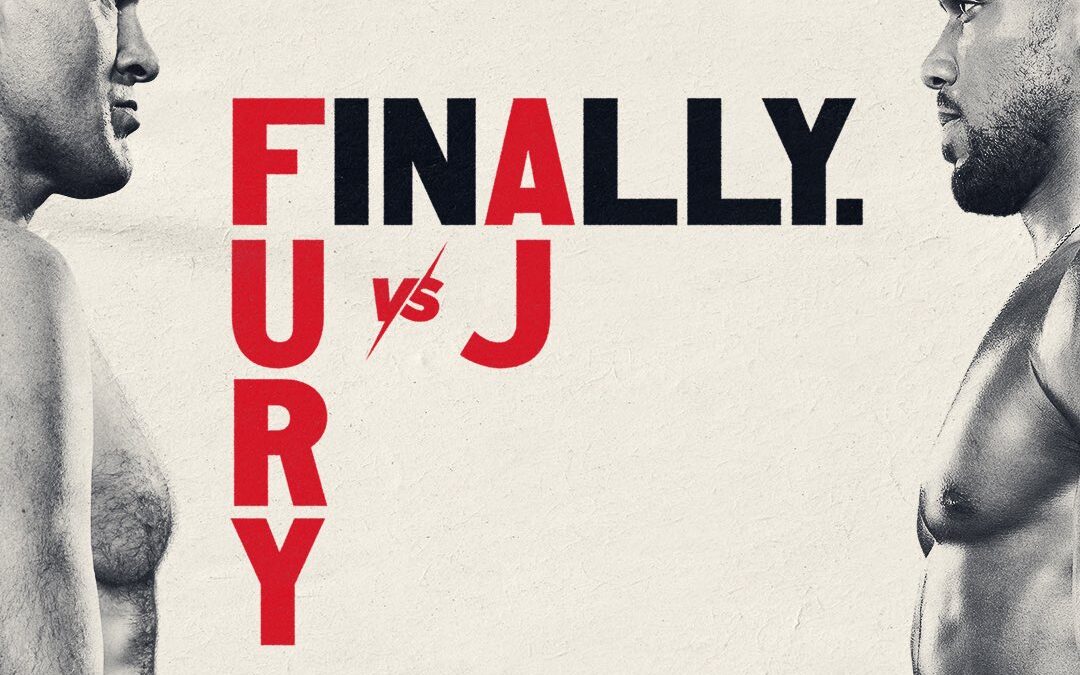
Last Thursday the company announced Tyson Fury vs. Anthony Joshua for December 11 in Cardiff. Within minutes, Eddie Hearn was on iFL TV saying the release was wrong. Within 36 hours the fight was reported to be in peril. On Saturday night, at a press conference for a different event entirely, Dana White called Hearn “full of f***ing shit” and said he did not know whether the fight was happening. By Monday a deadline had been imposed and the fight was back on. On Wednesday both fighters sat on a stage at Olympia and sold it.
That is not how you buy a product. That is how you watch one being made.
Netflix has now streamed five live boxing events, and the record is consistent about what the company thinks it is doing. Co-CEO Ted Sarandos told shareholders in January 2025: “We’re not focusing on acquiring rights to large regular season sports packages. Rather, our live strategy is all about delivering can’t-miss, special event programming.” Gabe Spitzer, the company’s vice president of global live sports and entertainment, put it more bluntly on The Varsity in December: “We’re not in the volume business, at least at this point in time.”
Brandon Riegg, Netflix’s vice president of nonfiction and sports, gave the clearest version to the New York Times last December. Netflix has no exclusive deals with promoters. It wants one to five fights a year with fanfare and buzz. “When there are compelling fights to be made, we will pursue those,” Riegg said. “You want to maintain the caliber of fight throughout so that it feels like a real thing and it feels like there’s urgency to watch it.”
One to five a year. No stable, no weekly slate, no promoter relationship. That is not a broadcaster. That is a buyer of moments, and it puts Netflix in a different tier from DAZN and Paramount rather than in competition with them.
DAZN does the week-to-week work, more than 100 fights a year, and extended with Matchroom through 2031 in February. Paramount+ became the exclusive home of Zuffa Boxing last September. Those are the places where the sport actually lives.
And then, two or three times a year, the biggest night that boxing produces goes somewhere else.
Katie Taylor fought Amanda Serrano the first time on DAZN in 2022. The second and third fights went to Netflix. Joshua fought Francis Ngannou, Daniel Dubois and Kristian Prenga on DAZN. His fight with Jake Paul went to Netflix, and so does Fury. In each case DAZN granted an exception, and in each case the platform that developed the fighter watched the payoff air on a competitor.
Nobody at DAZN has publicly complained about it, which is its own kind of answer. Pete Oliver, DAZN’s chief executive for growth markets, told the Times in December that cable’s exit left a gap and that DAZN’s opportunity is to bring “all the fighters and all the promoters into one roof.” That is a company positioning itself as the home of the sport rather than the home of the event.
What Netflix brings is reach and no additional paywall. Paul vs. Tyson drew a global average minute audience Netflix put at 108 million. Canelo vs. Crawford did 41.4 million for the event and peaked at 24 million concurrent streams. Joshua vs. Paul did 33 million. Those are Netflix’s own figures, measured by partners the company selected, not audited ratings. They are still numbers no boxing broadcaster has ever produced.
What Netflix does not have is a boxing department.
This gets flattened in most of the coverage, so it is worth being precise. Spitzer is not a stranger to the sport. He came up at HBO Sports from 2006, worked fifteen editions of 24/7, and co-directed Legendary Nights: The Tale of Gatti-Ward. He knows boxing intimately. He is also, by background and by title, a producer of events rather than a maker of fights.
That distinction is the whole thing. HBO’s boxing department did not buy finished fights. It made them. Seth Abraham, Lou DiBella, Kery Davis and later Stephen Espinoza at Showtime negotiated the terms and knew what was in the paper because they had helped write it. Promoters ambushed those networks constantly. The difference is that the network was already a party to the deal, and therefore already knew what the deal said.
Netflix buys the fight after it is made. So when it published a release naming Turki Alalshikh’s The Ring and Dana White as the parties promoting Fury vs. Joshua, it was describing its own transaction, and it was not institutionally positioned to know what Hearn says is in Joshua’s agreement with Sela. Hearn’s response was to go on iFL TV and say he would be calling Netflix “just to remind them of their contractual obligations.” A promoter reminding a broadcaster of the terms of an event the broadcaster is paying for is a reversal of how that relationship used to work.
And when it broke, the tool Netflix reached for was the only one a licensor has. Ariel Helwani reported Monday that Netflix was mediating and that a deadline had been placed on the parties Sunday night. Fury enrolled with VADA on Monday afternoon. Joshua boarded a plane. Mike Coppinger reported the fight was back on, adding that Alalshikh had been pushing hard over the same 48 hours.
Six days of two promoters, a financier and a sanctioning body unable to settle anything, resolved by the people paying for it telling everyone the clock was running.
They wanted a film. They were handed a kitchen. So they did the only thing a studio does when a production runs long, and set a date to lock the picture.
That is kingmaking without a crown. Netflix determined that the fight would exist, when the bell would ring, and which market the schedule would serve. The Athletic reported that Netflix pushed for a US-friendly bell time after being unimpressed with the numbers for Fury vs. Arslanbek Makhmudov in April, an event the company disclosed only as five million in the United Kingdom. A disappointing spring figure is why a stadium billed at 80,000 will watch two British heavyweights walk to the ring in the early hours of a December morning. Hearn expects ring walks around 1 to 1.30am. Fury’s manager Spencer Brown is lobbying to move it earlier. “I think 2am is far too late,” Brown said this week. “People don’t want to be in a stadium at 2am freezing.”
Both British camps now publicly pushing against the broadcaster’s window, three days after being at war with each other, is the clearest illustration available of who sets terms in this sport.
Netflix behaved as a buyer of finished product behaves. Boxing did not sell them one.
Nick Khan described the problem this week on The Varsity, recounting what network executives told TKO about why they left boxing. “They said decisions that should take two hours take two weeks and you can’t get straightforward answers from your partners,” Khan said. “If you run away from it or you’re taking too long to give answers, at a certain point they’re like, ‘This isn’t worth it.’ And we think that was the case on all of those buyers that I just mentioned. They like it. They want the big prize fights. But ultimately, the partners that they chose underdelivered for them.”
He was talking about HBO, Showtime, Fox, NBC and ESPN. He was also, without naming it, describing the last seven days.
TKO’s answer is a league, and the economics are already built for it. Mark Shapiro told investors that on each super fight, “we get a fee to promote it… We get a fee to negotiate the media rights for each fight, which IMG does,” plus a fee for On Location to sell hospitality. Promotion, media rights and hospitality under one roof, with the Saudis funding the purses. That is a finished product: one counterparty, one calendar, no promoter calling a broadcaster to remind it of its obligations.
Which is the uncomfortable part for everyone who spent this week cheering a win over Dana White. The argument against a unified boxing organization is serious. A single buyer can make the sausage, and it can also set the price of the hog. Fighters negotiating against one entity lose leverage, and nothing in the sport’s history suggests the savings would reach the people taking the punches.
But the case for it was made this week by the people opposing it. Netflix will keep buying one to five nights a year because the audiences justify it. The question is whether, the next time a release goes out, boxing can deliver something that resembles a finished product, or whether it will again take a deadline from a streaming service to get two British promoters to agree on who is allowed in the room.