The fight, the finances, and the full story behind the most famous 91 seconds in heavyweight history
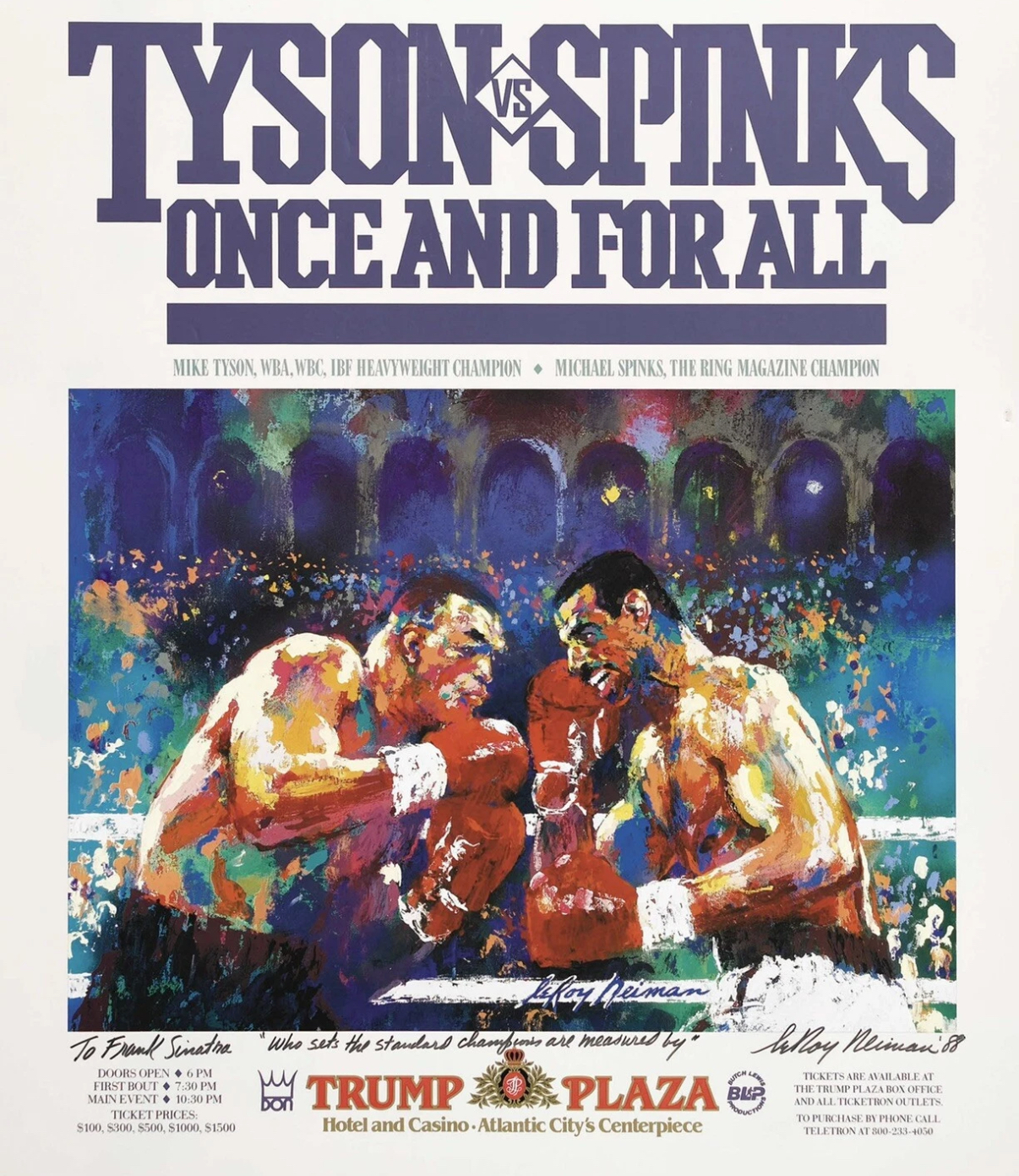
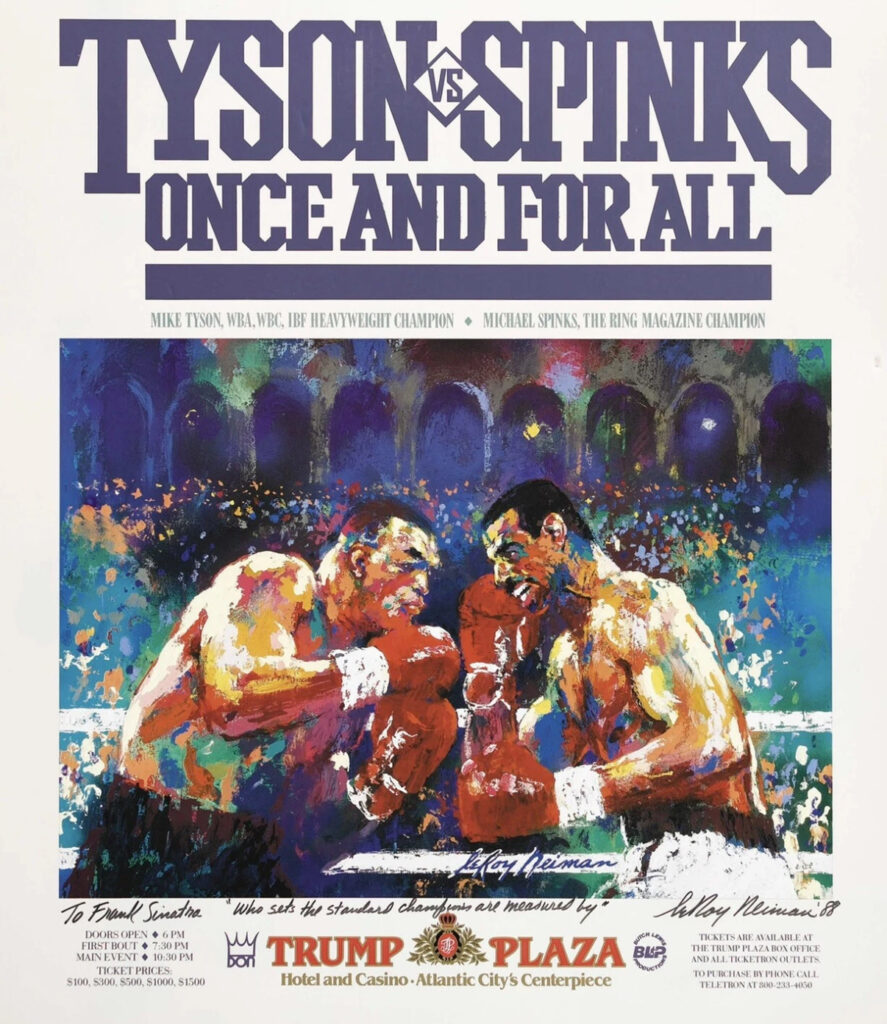
Mike Tyson’s first-round knockout of Michael Spinks on June 27, 1988, at the Atlantic City Convention Center was the highest-grossing boxing event of its era. Billed as “Once and For All,” the fight generated approximately $70 million in total revenue, drew a record crowd of 21,785, and ended in 91 seconds. It remains a defining event in Atlantic City boxing history.
Background
Tyson, 21, entered the fight at 34-0 with 30 knockouts. He held the WBA, WBC, and IBF heavyweight titles, all unified through HBO’s Heavyweight World Series, and was the youngest heavyweight champion in history.
Spinks, 31, was 31-0 with 21 knockouts. The 1976 Olympic gold medalist at middleweight had won the lineal heavyweight title by defeating Larry Holmes in 1985 — the first reigning light heavyweight champion to win the heavyweight title. The IBF stripped Spinks for choosing to fight Gerry Cooney rather than mandatory challenger Tony Tucker, but The Ring magazine continued to recognize him as champion.
Negotiations were prolonged. Spinks’ manager Butch Lewis demanded a $15 million guarantee and walked out of talks at least once. The IBF threatened to strip Tyson if the bout was not scheduled for 15 rounds; IBF president Bob Lee ultimately relented and accepted a 12-round limit. Final purses were $22 million for Tyson and $13.5 million for Spinks, both records at the time.
Tyson’s co-manager Jimmy Jacobs died in March 1988, three months before the fight. According to Sports Illustrated, the resulting power struggle between co-manager Bill Cayton, promoter Don King, Tyson’s wife Robin Givens, and her mother Ruth Roper was already intensifying as the fight approached.
The Site Fee and Casino Economics
Donald Trump, owner of Trump Plaza Hotel and Casino, paid an $11 million site fee to host the fight at the Convention Center — a record at the time, outbidding Las Vegas and other venues. The fight was scheduled for a Monday to extend the gambling weekend by an additional day.
Ringside tickets were priced at $1,500, with secondary market prices reaching $2,500 according to press reports. The live gate totaled $13 million. Pay-per-view and closed-circuit theater sales added approximately $22 million. The total gross was roughly $70 million, making it the richest fight in boxing history at that time.
Trump Plaza recorded an $11.5 million casino drop on fight night. The Press of Atlantic City reported that the city’s casinos earned approximately $344 million over the weekend, roughly $130 million above an average weekend. The casino drop — money exchanged for chips at the tables — illustrated the economic model behind Trump’s site fee: the fight itself was the draw, but the return came from gambling revenue.
Among the ringside attendees were Jack Nicholson, Warren Beatty, Oprah Winfrey, Madonna, Sylvester Stallone, Arnold Schwarzenegger, Frank Sinatra, Herschel Walker, and Magic Johnson.
Trump had previously hosted Tyson’s fourth-round knockout of Larry Holmes at Boardwalk Hall on January 22, 1988. The Spinks fight was the centerpiece of a five-fight Tyson run at Atlantic City casinos, overseen in part by Trump Plaza president Mark Etess. Etess was killed in a helicopter crash on October 10, 1989. The Mark G. Etess Arena at Hard Rock Hotel & Casino Atlantic City (formerly Trump Taj Mahal) bears his name.
Promotion
Don King co-promoted the fight with Butch Lewis. King had organized the HBO unification series that produced Tyson’s three-belt reign and promoted virtually every Tyson fight during the Atlantic City era.
According to Jack Newfield’s biography The Life and Crimes of Don King, King began working to gain influence over Tyson’s career in the period surrounding Jacobs’ death in March 1988. Within months of the Spinks fight, King had displaced Cayton as the primary figure in Tyson’s management structure.
Pre-Fight Incident
A widely reported incident occurred in Tyson’s dressing room shortly before the ring walk.
Lewis went to inspect Tyson’s gloves, a standard pre-fight procedure. He identified what he believed was an irregularity — a lump near the wrist of Tyson’s left glove — and demanded it be examined. Tyson’s handlers said the bulge was the knotted laces.
Larry Hazzard, chairman of the New Jersey State Athletic Commission, was brought from ringside to examine the glove and found it in order. Lewis continued to protest. The dispute was resolved when Eddie Futch, Spinks’ 77-year-old trainer, confirmed the glove was harmless. Sports Illustrated reported that Tyson, sweating and agitated, paced the dressing room during the delay and punched the walls.
Lewis later acknowledged that the dispute was a deliberate attempt to unsettle Tyson. In a segment from ESPN’s documentary Fallen Champ, Lewis described the scene: “He’s punching holes in the wall. I’m thinking to myself, this guy is getting ready to fight my guy, my little guy, and he’s punching holes in the wall before he goes out to fight.”
The Fight
Muhammad Ali, present at ringside, received an ovation from the crowd and spoke briefly to Spinks before the opening bell.
Tyson opened with a left hook that landed high on Spinks’ head within the first seconds. According to Sports Illustrated’s Pat Putnam, Spinks visibly sagged after the blow. Though Futch had instructed Spinks not to clinch, Spinks attempted to grab Tyson in close range multiple times.
Approximately one minute into the round, Tyson landed a left uppercut followed by a right hook to the body. Spinks dropped to one knee — the first knockdown of his professional career. He rose at a count of four and took the mandatory eight count from referee Frank Cappuccino.
When the action resumed, Spinks attempted a right hand. Tyson threw a left hook over it, then connected with a sweeping right hand that landed flush on Spinks’ jaw. The Washington Post reported that Spinks fell straight backward with his arms outstretched, attempted to rise, then collapsed on his right side with his head against the bottom rope. Cappuccino counted him out at 1:31 of the first round.
According to CompuBox, 10 total punches landed in the fight — eight by Tyson, two by Spinks. Ring Magazine named it Round of the Year for 1988.
Post-Fight
Tyson told reporters afterward: “This one was for Jimmy Jacobs,” referring to his late co-manager. He also stated: “Nobody can beat me. I’m the greatest fighter in the world.”
Spinks said: “I came to fight. He hit me a good shot early, but I thought I’d get back in it.”
Futch, who had trained Joe Frazier and worked with dozens of world champions over six decades, told the Chicago Tribune: “Never seen anything quite like this.”
Spinks retired one month later at a press conference. He was 31. He did not fight again.
Tyson went on to knock out Frank Bruno and Carl Williams in his next two defenses. On February 11, 1990, he lost the undisputed heavyweight championship to Buster Douglas by tenth-round knockout in Tokyo, a 42-to-1 upset.
Economic and Historical Significance
The Tyson-Spinks fight represented the peak of the casino-boxing model that had driven Atlantic City’s rise as a major fight venue since 1978. The $344 million casino weekend established a benchmark for the economic impact of marquee boxing events on the resort.
The fight demonstrated a principle that defined Atlantic City boxing economics for the next two decades: the primary financial value of a major fight to a casino was not the gate or television revenue, but the gambling activity generated by the influx of high-net-worth visitors. Trump’s $11 million site fee was, in economic terms, a customer acquisition cost offset by table revenue.
Trump continued hosting championship boxing through 1994, including four additional Tyson bouts. The final fight card at Trump Plaza took place on August 19, 1994, according to BoxRec. For a full account of how casino boxing shaped the resort, see The Complete History of Atlantic City Boxing.
Fight Card
Mike Tyson vs. Michael Spinks
“Once and For All”
June 27, 1988 — Atlantic City Convention Center
Attendance: 21,785 (venue record)
Result: Tyson KO 1 (1:31)
Referee: Frank Cappuccino
Tyson’s purse: $22 million | Spinks’ purse: $13.5 million
Total gross: ~$70 million
Sources
The Complete History of Atlantic City Boxing — BoxingInsider.com
“I’m Gonna Hurt This Guy” — Pat Putnam, Sports Illustrated, July 4, 1988
“Tyson Devastates Spinks in First” — The Washington Post, June 28, 1988
“Tyson Wastes Spinks, Not Time” — Chicago Tribune, June 28, 1988
“25 Years Ago, Tyson-Spinks Had All Eyes on Atlantic City” — The Press of Atlantic City