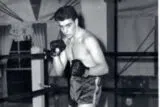
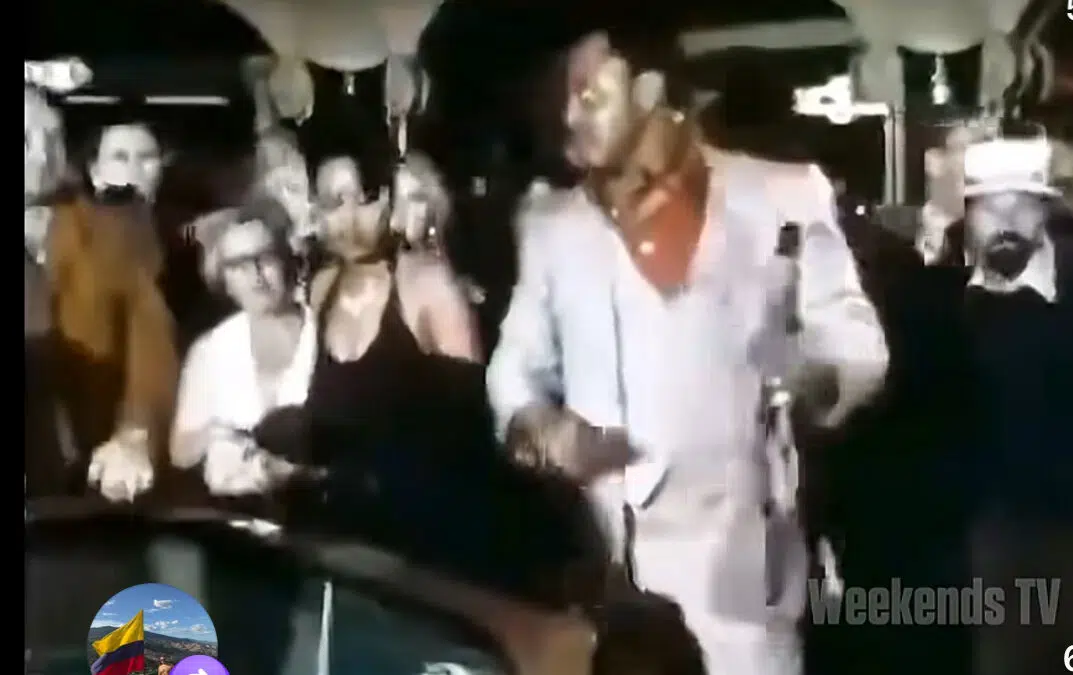
A grainy video keeps going viral across TikTok, Instagram, and X. The caption is always some version of the same claim: before their 1964 title fight, Sonny Liston pulled a revolver on Muhammad Ali in a Las Vegas casino and fired two shots, sending a terrified Ali screaming through the lobby, unaware the bullets were blanks. The clip racks up tens of thousands of likes every time it resurfaces. So here is the question boxing fans keep asking. Is it true?
The short answer: the story is real, but the video is not.
The Incident Actually Happened
In the long buildup to his February 1964 challenge for the heavyweight title, the brash young Cassius Clay made a sport of tormenting the champion. He turned up at Liston’s house in the early hours with a bullhorn. He rented a bus, parked it outside, and shouted that Liston was going down. He chased Liston wherever he went, looking for a microphone and a crowd.
The chase eventually reached a Las Vegas casino floor, where Liston was playing cards. By Ali’s own account in his autobiography, Liston had been tipped off that the young challenger was coming. When Clay started in on him, Liston reached into his pocket, pulled out a pistol, and fired. Clay bolted. Years later, Ali described it as the one time in his life he was genuinely scared. The gun, of course, was loaded with blanks. One of Liston’s own trainers had helped arrange the stunt, knowing Clay would walk right into it.
So the bones of the viral caption are accurate. The harassment campaign was real. The blank pistol was real. The fear was real, at least according to the man who ran.
But the Video Is From a Hollywood Movie
Here is where the viral posts cross the line from history into fiction. There is no real footage of Liston firing a gun at Ali. None. The dramatic clip circulating online, the one in nearly every “rare footage” post, is a scene from the 1977 film “The Greatest,” in which Ali played himself in a dramatized retelling of his own life. The man with the gun is an actor, not Sonny Liston. The casino is a movie set.
This matters because the posts present the clip as documentary evidence, as if a camera happened to be rolling on the Las Vegas Strip in 1963. It was not. What viewers are watching is a reenactment produced more than a decade after the fact, with Ali’s cooperation, for a feature film. The real event left behind a story, not a tape.
The Viral Clip, For the Record
Below is the clip making the rounds on social media. Watch it knowing what it is: a dramatized scene from the 1977 film “The Greatest,” not documentary footage of the real event. No camera captured the actual incident.
What Would Happen If a Fighter Did This Today?
Set aside the showmanship of a different era and imagine the same scene on a casino floor in 2026. A heavyweight champion, irritated by a trash-talking challenger, pulls out a pistol in a crowded room and squeezes off two rounds. Even with blanks, the legal exposure would be severe, and it would not end with a laugh and a handshake.
Start with the basics. Nevada law makes it a crime to discharge a firearm in a public place, and that crime exists even when no one is hurt. A blank cartridge still produces a muzzle blast, a loud report, and the unmistakable appearance of live gunfire. Prosecutors do not need a wounded victim to bring charges. They need a person who fired a gun in a room full of people.
From there it escalates quickly. Firing a weapon inside an occupied building in a populated area can be charged as a felony in Nevada, the kind that carries years in state prison and thousands in fines. Pointing the gun at a specific person and firing opens the door to assault charges on top of that, because the victim’s reasonable belief that he is about to be shot is the entire point of the crime. Ali sprinting across the floor in fear would be Exhibit A, not a punchline.
The casino angle makes it worse, not better. Modern resorts are private property, and nearly every major property bans firearms outright, with metal detectors and trained security at event entrances. A fighter who brought a gun onto a casino floor would likely be violating house policy before the trigger was ever pulled, and the property would have every reason to cooperate fully with law enforcement. A blank-loaded prank gun would not be treated as a prank. It would be treated as a man discharging a firearm in their building.
Then comes the layer that did not exist in 1963. A boxer licensed to fight answers to a state athletic commission, and commissions hold broad authority to suspend or revoke a license for conduct that brings the sport into disrepute. A felony firearms arrest would almost certainly trigger a disciplinary review, jeopardizing not just the fighter’s freedom but his ability to earn inside the ropes. Sponsors would vanish. Broadcasters would distance themselves. The fight itself would likely collapse.
What played in 1963 as a wild story to be retold for decades would, in 2026, end a career and quite possibly start a prison sentence. The era that made Liston’s stunt a legend is exactly the era that no longer exists.
Why the Real Story Still Matters
The casino incident has lasted sixty years for a reason. It captures the strange chemistry between two men who defined an era of heavyweight boxing, one the feared and unknowable champion, the other the loudest and most magnetic challenger the sport had ever seen. Clay’s harassment campaign was theater, and Liston’s response was theater right back. The stunt became part of the mythology that carried both men into their first fight, which Clay won in one of the greatest upsets in the sport’s history before announcing he would be known as Muhammad Ali.
Their rivalry only deepened from there, including a 1965 rematch and a “phantom punch” finish that remains one of the most debated endings in boxing history.
The next time the clip rolls across your feed, you will know the truth. The story happened. The video is a movie. And in today’s world, the same stunt would land a fighter in a courtroom, not in a legend.