
From Tony Zale drawing 135,132 in a Milwaukee park to Jack Dempsey’s legendary 1920s gates, these are the five biggest live boxing audiences ever assembled on American soil. Dempsey alone accounts for four of the top six.
Boxing has always been a sport of spectacle. In the 1920s, promoter Tex Rickard built a temporary stadium in nine weeks just to hold a crowd big enough to watch Jack Dempsey fight. In 1941, a Milwaukee park gave away free admission to a middleweight fight and drew over 135,000 people. Almost a century later, those crowd sizes remain almost untouchable.
Each of these crowds tells a different story about how Americans have engaged with boxing across generations. Here are the five biggest live boxing audiences in United States history.
1. Tony Zale vs. Billy Pryor, 135,132
Juneau Park, Milwaukee, Wisconsin. August 16, 1941.
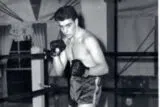
The all-time record for live boxing attendance in the United States is also the most unusual entry on the list. Reigning middleweight champion Tony Zale faced Billy Pryor in a non-title bout sponsored by the Pabst Brewing Company at Juneau Park in Milwaukee. Admission was free.
Pabst footed the bill as a community event. The Guinness World Record for the largest attendance at a boxing match still stands at 135,132 spectators, and it has stood for 85 years. Zale dominated the fight, knocking Pryor down multiple times before stopping him in the ninth round. The Man of Steel would go on to author one of the greatest trilogies in boxing history against Rocky Graziano in the years that followed, but his largest live audience came in a Milwaukee park on a summer afternoon, paid for by a brewery.
2. Jack Dempsey vs. Gene Tunney I, 120,557
Sesquicentennial Stadium, Philadelphia, Pennsylvania. September 23, 1926.
Jack Dempsey was the biggest sports star in America in the 1920s, and his first fight with Gene Tunney drew the largest paid crowd in U.S. boxing history. A reported 120,557 fans packed Sesquicentennial Stadium in Philadelphia to watch the unbeaten heavyweight champion defend his title against the cerebral former Marine.
The fight produced a stunning upset. Tunney boxed beautifully for ten rounds and won a unanimous decision, ending Dempsey’s seven-year reign as heavyweight king. The gate generated nearly $1.9 million, a record at the time and a number that helped cement boxing as the dominant American spectator sport of the era. The fight is covered in detail in our guide to boxing’s first golden era in the 1920s.
3. Dempsey vs. Tunney II (“The Long Count”), 104,943
Soldier Field, Chicago, Illinois. September 22, 1927.
The rematch one year later drew 104,943 to Soldier Field in Chicago and produced what may be the most controversial moment in heavyweight boxing history. In the seventh round, Dempsey caught Tunney with a left hook and a flurry of punches that sent the champion to the canvas for the first time in his professional career.
Then the rules intervened. Illinois had recently adopted the neutral corner rule, which required Dempsey to retreat to the farthest corner before referee Dave Barry could begin counting. Dempsey, true to his instincts, stood over Tunney waiting to finish him. By the time Barry started counting, Tunney had been down for roughly five seconds. Tunney rose at nine. The total time on the canvas was somewhere between 13 and 15 seconds.
Tunney recovered, won the decision, and retired Dempsey for good. Almost a century later, fight fans still argue about whether Dempsey was robbed.
4. Jack Dempsey vs. Georges Carpentier, 91,613
Boyle’s Thirty Acres, Jersey City, New Jersey. July 2, 1921.
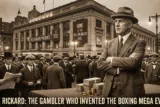
Boxing’s first million-dollar gate. Tex Rickard borrowed $250,000 to construct a wooden octagonal stadium called Boyle’s Thirty Acres in just nine weeks specifically to host this fight. The result was 91,613 spectators paying a then-unthinkable $1.7 million in receipts to watch Dempsey defend his title against the dashing French war hero Georges Carpentier.
Dempsey stopped Carpentier in the fourth round. The fight was the first to be broadcast nationally on radio, the first to draw a million-dollar gate, and the event that proved boxing could compete with baseball as America’s marquee sport. Rickard would later use the playbook he developed in Jersey City to build Madison Square Garden into the cathedral of professional boxing, as we cover in our guide to the top boxing venues of all time.
5. Jack Dempsey vs. Luis Angel Firpo, 88,228
Polo Grounds, New York City. September 14, 1923.
Two minutes of the most chaotic action in heavyweight history. The Polo Grounds was expanded from its baseball capacity of 55,000 to accommodate 88,228 paid spectators, with thousands more reportedly crashing the gates. Dempsey defended his title against the Argentine giant Luis Angel Firpo, the first Latin American boxer to fight for the world heavyweight championship.
Dempsey knocked Firpo down seven times in the first round. Firpo got up every time, and late in the round, the Wild Bull of the Pampas landed a right hand that sent Dempsey clear out of the ring and into the press section. Sportswriters helped push the champion back through the ropes after a count of nine. Dempsey returned, weathered the storm, and knocked Firpo out in the second round. Ring Magazine later called it the greatest prizefight in the history of the sport, and George Bellows immortalized the moment in his famous 1924 painting now housed at the Whitney Museum.
The fight also produced the rule change that would later cost Dempsey the title. Two months after Dempsey-Firpo, the New York Boxing Commission adopted the neutral corner rule that would define the Long Count four years later in Chicago.
Honorable Mentions
Several other American boxing crowds deserve mention even if they fall outside the top five.
Jack Dempsey vs. Jack Sharkey, approximately 80,000 (Yankee Stadium, July 21, 1927). Dempsey’s only Yankee Stadium appearance and his elimination bout to set up the Tunney rematch. Sources cite figures from 77,283 to 82,000 for what was then a record crowd at the new Yankee Stadium. Sharkey controlled the fight for six rounds before Dempsey landed a series of body shots in the seventh that Sharkey claimed were low. When Sharkey turned to complain to the referee, Dempsey landed the left hook that ended the fight. Counting Dempsey-Sharkey, the Manassa Mauler appears in five of the six largest U.S. boxing crowds ever drawn.
Canelo Alvarez vs. Billy Joe Saunders, 73,126 (AT&T Stadium, May 8, 2021). The largest indoor boxing crowd in American history, surpassing the 63,350 mark Muhammad Ali and Leon Spinks had set in their 1978 Superdome rematch. Canelo’s stoppage of Saunders confirmed Arlington as a viable boxing market.
Jake Paul vs. Mike Tyson, 72,300 (AT&T Stadium, November 15, 2024). Most Valuable Promotions drew 72,300 fans for Paul’s eight-round fight with a 58-year-old Mike Tyson. The gate exceeded $18 million, the largest in boxing history outside of Nevada, and the Netflix livestream peaked at 65 million concurrent streams worldwide.
Muhammad Ali vs. Leon Spinks II, 63,350 (Louisiana Superdome, September 15, 1978). Ali avenged his earlier loss to Spinks and won the heavyweight title for a record third time. The crowd was the largest indoor boxing audience in U.S. history for 43 years.
Rocky Marciano vs. Archie Moore, 61,574 (Yankee Stadium, September 21, 1955). Marciano’s final professional fight. He climbed off the canvas in the second round to stop Moore in the ninth, then retired 49-0.
Sugar Ray Robinson vs. Randy Turpin II, 61,370 (Polo Grounds, September 12, 1951). Still the record for a non-heavyweight fight on American soil. Robinson avenged his loss to the British middleweight to reclaim his title.
The Dempsey Era Built American Boxing
Look at the top five again. Tony Zale’s free Milwaukee crowd holds the record. The other four belong to Jack Dempsey. Counting the honorable mention against Sharkey, Dempsey appears in five of the six largest live boxing audiences in American history, all drawn between 1921 and 1927.
That concentration is not coincidence. Boxing in the 1920s was the dominant American spectator sport. There was no NFL as we know it, no NBA, no televised baseball. Heavyweight title fights were the closest thing the country had to a national event, and Dempsey was the first true American sports superstar of the modern era. His charisma, his violent fighting style, and the storylines that surrounded him, from his ducking of Harry Wills to his marriage to Estelle Taylor, made him the most discussed athlete in the country for nearly a decade.
Promoter Tex Rickard understood what Dempsey represented and built the live boxing economy around him. Stadiums were constructed specifically for fights. Free admission cards like Zale-Pryor were used as community promotions in the pre-television era. The first million-dollar gate, the first nationally broadcast fight, the first 100,000-plus crowd, all of them happened in seven years on Rickard’s watch with Dempsey on the marquee.
Why the Numbers Have Stood for So Long
The arrival of network television in the 1950s, the rise of closed-circuit broadcasts in the 1960s and 70s, and the migration of championship boxing to the casinos of Las Vegas all shrunk live attendance figures. Promoters discovered that smaller venues with higher ticket prices generated more revenue than enormous stadiums full of cheap seats. By the 1980s, championship boxing had largely settled into 16,000-seat casino arenas, a model that has dominated the sport ever since.
That is what makes the modern boxing crowd numbers so notable when they happen. Anthony Joshua’s 90,000 at Wembley in 2017. Tyson Fury’s 94,000 at Wembley in 2022. Canelo’s 73,126 indoors at AT&T Stadium. Paul-Tyson’s 72,300. These are deliberate efforts to recapture the scale of the Dempsey era, and they have largely succeeded internationally. American boxing, with the exceptions of Paul-Tyson and Canelo-Saunders, has not produced a comparable live event since Ali-Spinks II in 1978.
San Francisco’s Bid to Break the Record
On July 11, 2026, an open-air boxing card at San Francisco’s Civic Center Plaza will attempt to surpass the Zale-Pryor record. The event, organized by Ed Pereira’s iVisit Boxing and led by veteran promoter Sampson Lewkowicz, is targeting an attendance figure north of 135,132 with free admission and a global YouTube livestream. The card is headlined by WBO flyweight champion Anthony Olascuaga defending his title against Andy Dominguez, with a strong undercard featuring Vito Mielnicki Jr., Charly Suarez, and heavyweight prospect Gurgen Hovhannisyan.
San Francisco Mayor Daniel Lurie has thrown his support behind the event. Whether the actual turnout breaks 135,132 will depend on weather, crowd flow, and how the city counts a free outdoor crowd against a fenced venue measurement. The last world title fight to land in San Francisco was Devin Haney vs. Regis Prograis at a sold-out Chase Center in December 2023.
Whatever happens on July 11, the event is a reminder that boxing remains a sport defined by its biggest live crowds. The numbers on this list are not just attendance figures. They are the moments when boxing was the largest single thing happening in America.
The Top Five at a Glance
- Tony Zale vs. Billy Pryor, 135,132, Juneau Park, Milwaukee, August 16, 1941
- Jack Dempsey vs. Gene Tunney I, 120,557, Sesquicentennial Stadium, Philadelphia, September 23, 1926
- Dempsey vs. Tunney II, 104,943, Soldier Field, Chicago, September 22, 1927
- Jack Dempsey vs. Georges Carpentier, 91,613, Boyle’s Thirty Acres, Jersey City, July 2, 1921
- Jack Dempsey vs. Luis Angel Firpo, 88,228, Polo Grounds, New York City, September 14, 1923