By Eric Bottjer
RICHARD FABIAN, 70, Florida boxing man, passed in Tampa in August. Richard, a 2022 Florida Boxing Hall of Fame inductee, was an advisor to local promoters and most recently worked as an inspector for the Florida Boxing Commission.
NELSON FERNANDEZ, 76, New Jersey boxing manager, passed in September. Nelson managed title-holders Hector Acero-Sanchez, Julio Cesar Green and Andrew Lewis among others in decades of pro boxing. Fernandez was born in Cuba and moved to New York, where he eventually took over his father’s food distribution company. A lifelong boxing fan, Fernandez founded the Mile Square Gym in North Jersey, managed dozens of pros – eight of whom won world titles – and was a favorite TV commentator amongst many Northeastern Latin boxing fans.
FRANCISCO FIOL, 74, Spanish light-heavyweight, died in March after a long illness. Fiol, born in Spain, lived in Switzerland during his entire career. After about 100 amateur matches (he sparred with Muhammad Ali in 1971 while as an amateur, when Ali fought Jurgen Blin in Zurich), Fiol turned pro in 1974 and went 22-6-1 (16 KOs) in a five-year career. He won the Spanish title in 1976, but came up short against Mate Parlov and Aldo Travasaro in separate shots at the European crown.
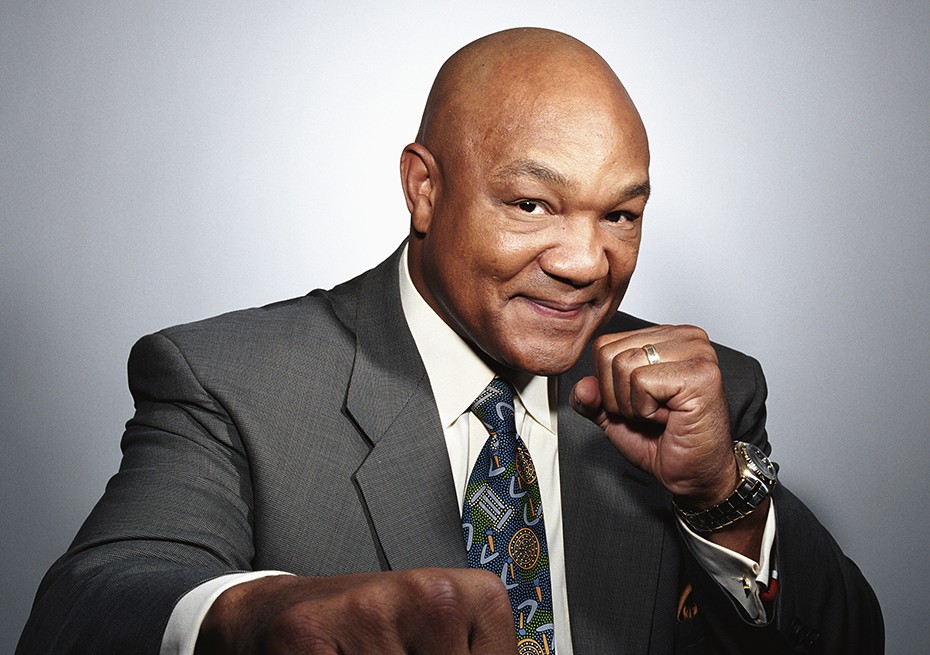
GEORGE FOREMAN, 76, legendary heavyweight champion from Houston, died after a short illness in March in a Texas hospital. No cause of death was given. Foreman was one of the most terrifying figures in heavyweight history, a 6-foot-3, 220-pound menace who won an Olympic gold medal at the 1968 Games, despite having less than 20 amateur bouts, and knocking out Joe Frazier in January 1973 for the undisputed heavyweight championship. Both Frazier and Foreman were undefeated, but Frazier, less than two years removed from his victory over Muhammad Ali, was a 3-1 favorite. Foreman had not beaten a top pro before meeting Frazier in Jamaica. It didn’t matter. Foreman bounced Frazier off the canvas six times in two rounds, at one point literally lifting the champion off his feet with an uppercut. Foreman crushed Joe Roman and Ken Norton in title defenses and was a 3-1 favorite in the famous “Rumble in the Jungle” vs. Muhammad Ali. The fight cemented Foreman’s fame – and lost him the title. The 32-year-old Ali, in a decision made in real time, opted to lay on the ropes and let Foreman bludgeon him. The champion tired and Ali knocked Foreman out in a shocking upset in 8 rounds. Foreman came back after 15 months – won a few matches (including an epic war with Ron Lyle where he crawled off the canvas twice to KO Lyle in 5 rounds – but lost in March 1977 to Jimmy Young and retired. Foreman disappeared for 10 years, preaching on streetcorners in Houston (he had a religions experience in the dressing room after the Young loss, which he felt called on him to leave boxing and preach). When he ran out of money, he returned to the ring in 1987. He was 39 years old, bald, fat and most were saddened at the site of him in the ring. Foreman toured the country, fighting in club venues every month, slowly getting back into shape until Bob Arum signed him. A KO win over Gerry Cooney in 1990 got some attention. Foreman got a title shot in 1991, losing a decision to champion Evander Holyfield in a gallant effort. It seemed a good ending, but Foreman fought on. He lost to Tommy Morrison and seemed done, but when Michael Moorer beat Holyfield and wanted an easy first title defense, he tabbed Foreman. Wearing the same trunks he wore against Ali in Africa, Foreman, now 45, took a beating for nine rounds and then crashed a right on Moorer’s jaw, flattening the champion. It was boxing history’s most amazing comeback. Now round and lovable, Foreman became a well-known pitchman and loaned his name to a portable indoor hamburger grill that became nearly as well-known as the man himself. Foreman fought until age 50, during which time he was stripped of his titles for defending against inferior opposition. Nobody cared. In 1999, two years after his last fight, Foreman sold the rights to the grill – along with his name as a brand – for $138 million. He was a much-desired public speaker and did boxing commentary on HBO.
JOE FORMATO, 97, Connecticut welterweight, died “peacefully” in December at his Connecticut home, surrounded by his wife and three children. Formato turned pro in 1948 and went 3-0-1 (1 KO) in just 10 weeks before retiring to become a physical education teacher in Orange.
MARK FRAZIE, 67, Ohio middleweight, died in May in a Portsmouth hospice facility. Mark was 29-9 (15 KOs) from 1980-1988, coming up short against top guys like Bobby Czyz, Wilford Scypion and Alex Ramos. Frazier was known in Portsmouth for his charitable work with kids and he hosted a local cable access show called “Athletes for Christ.”
SARBELIO FUENTES, 85, Cuban middleweight and later famed coach of the Cuban and Argentine national teams, died in April in Cuba. Fuentes went 19-8-2 (12 KOs) from 1957-1961, an era when pro boxing was still allowed in Cuba. He was coach of the Cuban team in the early 2000s, garnering an unheard-of seven gold medals in the 2001 world amateur championships and later five gold medals at the 2004 Olympics. The mild-mannered Fuentes, a true-believer in the Cuban philosophy of keeping its athletes out of the pro ranks, credited Cuba’s amateur success to the fact it started its’ boxers in their pre-teens and made them fulltime fighters.
JOE GAGLIARDI, 85, San Jose promoter and boxing insurance mogul, died in July in Arizona. Gagliardi followed his father into real estate and then branched off into insurance, where he became a go-to for years for boxing promoters to cover their events and fighters insurance-wise. Gagliardi was also a boxing fan and formed J&J Promotions, holding dozens of shows from 1972-1992 in the San Jose area. Gagliardi also owned minor league baseball teams in Modesto and San Jose.
ELIZABETH GANDY, 60, Georgia bantamweight with one pro fight, died in July from cancer. Gandy was a world traveler and held a master’s degree from the University of Georgia. She learned Karate while teaching in South Korea and after returning to Georgia in 2004, fought a 4-round pro match with nine-fight veteran Terri Moss in Baton Rogue, “on a dare.” Gandy lost a decision.
NAZIF GASHI, 74, Yugoslavian amateur star, died in December. Gashi, from what is now called Kosovo, fought for a team of amateurs in Pristina, who were well known behind the Iron Curtain. Gashi joined the club when it formed in 1971 and helped lead it to five national team titles. Gashi’s death was noted by Kosovo President Vjosa Osmani.
ARTURO GATTI JR., 17, son of legendary Hall of Famer Arturo Gatti, died in October in Mexico from an apparent suicide. Gatti’s mother and his father’s widow, Amanda Nunes. Has a residence in Mexico City. Gatti Jr.’s death was announced by family friend Chuck Zito and confirmed by Moe Latic, who was Gatti Jr.’s amateur trainer. Zito shared that Gatti Jr. took his own life by hanging, as did his father in 2009. Two weeks after Gatti’s death was announced, Sofia Gatti, Arturo Jr.’s older half-sister, announced (without evidence) that Mexican authorities were investigating the death as a homicide and started a GoFundMe page to assist in her own investigation (as of Dec. 5, the page had raised $29,000).
FRANK GELB, 87, New Jersey boxing power broker, passed away in April from natural causes. Gelb was the glue for Atlantic City boxing events in the late 20th century, getting casinos to cooperate with one another in hosting regular shows at the shore’s dozen casinos, as well as the famed Boardwalk Hall. Gelb, a Pennsylvania native, worked at his family’s furniture store in the 1970s. A driver for the store moonlighted as a pro boxer and Gelb managed him, launching an unplanned career as a manger and later a promoter. Gelb began guiding world-class fighters such as Tyrone Everett and Jimmy Young and later graduated to promotions. Gelb saw the early promise that Atlantic City held for boxing and promoted the first casino show there in 1978 after gambling was legalized. Gelb also quenched his love for classical music by promoting concerts, developing lifelong professional and personal relationships with Luciano Pavarotti and Andre Bocelli.
THOMAS GERBASI, 57, award-winning boxing writer, passed in September in Staten Island. Gerbasi worked for the UFC the past 20 years, but was a well-known freelance boxing writer. His book, Boxing: The 100 Greatest Fighters, was released weeks before his passing. Gerbasi entered boxing journalism at the time the internet exploded with boxing news sites and he made his bones writing for MaxBoxing and House of Boxing.
JIMMY GIAMBELLUCA, 69, Buffalo lightweight, died in January. Giambelluca won a local Golden Gloves title at featherweight in 1974, but never devoted himself to boxing fulltime. He turned pro in 1981, but took fights for money. He went 2-21-1 (0 KO’s) over five years before retiring to work at a local steel company. Giambelluca was a 26-year employee at Samuel Plate Sales and a supervisor there at the time of his death.
GEORGE GILBODY, 70, British Olympian, died on Halloween. Gilbody was England’s lightweight at the 1980 Moscow Olympics (he did not medal) and won four national amateur titles in the 1970s. Gilbody, who had 195 amateur fights, stayed in the game as a trainer after he stopped boxing and worked for the national team from 2010-2013.
JIMMY GILL, 81, British club promoter and matchmaker, died in January. Gill was remembered as a fantastic story-teller and all-around “boxing guy” who worked in Nottingham nearly half a century.
DANNY GIOVANELLI, 92, Brooklyn welterweight, passed in February. Danny was part of New York boxing’s golden era of the 1950s, where fighters dreamed of making it to the Garden. Giovanelli headlined there in 1953, getting off the deck against favored Vince Martinez to win a 10-round decision. The win earned Giovanelli a coveted top-10 ranking in The Ring magazine. Giovanelli turned pro in 1951, cramming 40 fights into a career that lasted less than six years, retiring with a 30-9-1 (13 KO’s) record.
SAMMY GIULIANI, 93, Connecticut welterweight, died “peacefully” in November at a daughter’s home in Ohio. Trained by Charlie Goldman, Guiliani was 30-9-1 (11 KOs) from 1953-1955, which included a draw with Joey Giardello and decision losses to Chuck Davey and Vince Martinez. A young Carmen Basilio stopped Guiliani in three in 1952 and when Paddy Young stopped him at St. Nick’s Arena a year later, Guiliani retired. In his later years, Guiliani worked as a school electrician and later as a crossing guard, retiring from that job at age 83. His retirement was noted in the local media, which described Guiliani as “beloved.”
CARL GIZZI, 80, British heavyweight, died in April from dementia. Gizzi lost a close decision (one point) to Jack Bodell in 1969 for the British title. Gizzi was 31-12 (11 KOs) from 1864-1971, worked as a bouncer and window washer after boxing.
TONY GRAZIANO, 103, upstate New York manager and venerable owner of Graziano’s Casa Mia, the mainstay restaurant and watering hole that was a mandatory stop for visitors to the International Boxing Hall of Fame, died in Canastota in December. Graziano was owner, cook, bartender, confidant from 1964-2018 at Graziano’s, whose walls were adorned with signed boxing photos, intermixed with Graziano family portraits and paintings. An era ended when the Oneida tribe bought Graziano’s restaurant – along with Tony’s two-floor motel behind it – in 2021, razing the entire area (it remains vacant). Graziano guided Billy Backus to the world welterweight championship in 1970, when Backus stunned Jose Napoles at the War Memorial in Syracuse (to be fair, Napoles was stopped on a cut in the fourth in a fight that had not found its legs – he stopped Backus in a rematch). Graziano also steered Rocky Fratto to a jr. middleweight title shot in the 1980s. Graziano served in World War II as a paratrooper and saw action during the D-Day invasion as well as the Battle of the Bulge. He was wounded twice during service. To put Tony’s lifespan in perspective, he was born five years before the Dempsey-Tunney Long Count.
EDDIE GREGG, 75, New York heavyweight, died in his sleep in October at his North Carolina home. Gregg was an outstanding college athlete who’s records for interceptions in one game (5) and rebounds (31) in single football and basketball games still stand at Winston-Salem State University. Gregg won two New York Golden Gloves titles before turning pro in 1979 at age 29, going 24-3-1 (18 KO’s) in a brief career that lasted less than seven years. Gregg was unbeaten in his first 21 fights before meeting James Broad (then 15-1) for the NABF heavyweight title in 1984. Both men were 6-foot-5 and the winner would be rewarded with a WBC world ranking. The hard-hitting Broad stopped Gregg in 8 rounds. Gregg rebounded nine months later by beating Tex Cobb (actually flooring Cobb once), but did not get a title shot at Larry Holmes he claimed Don King had promised before the fight. A year later, Gregg fell in one round to Gerry Cooney and finished his career one fight later a first-round victim to Francesco Damiani.
RONALD GWALTNEY, 70, Tennessee heavyweight, died in June. Gwaltney scored two quick KO wins in 1990 over debut boxers. Gwaltney worked as a Westerly police officer for 25 years.