The collapse of LIV Golf’s funding has produced a wave of stories asking whether Saudi Arabia is also stepping back from boxing. Most of those stories share a common problem. They treat “the Saudis” as a single entity writing checks. They are not.
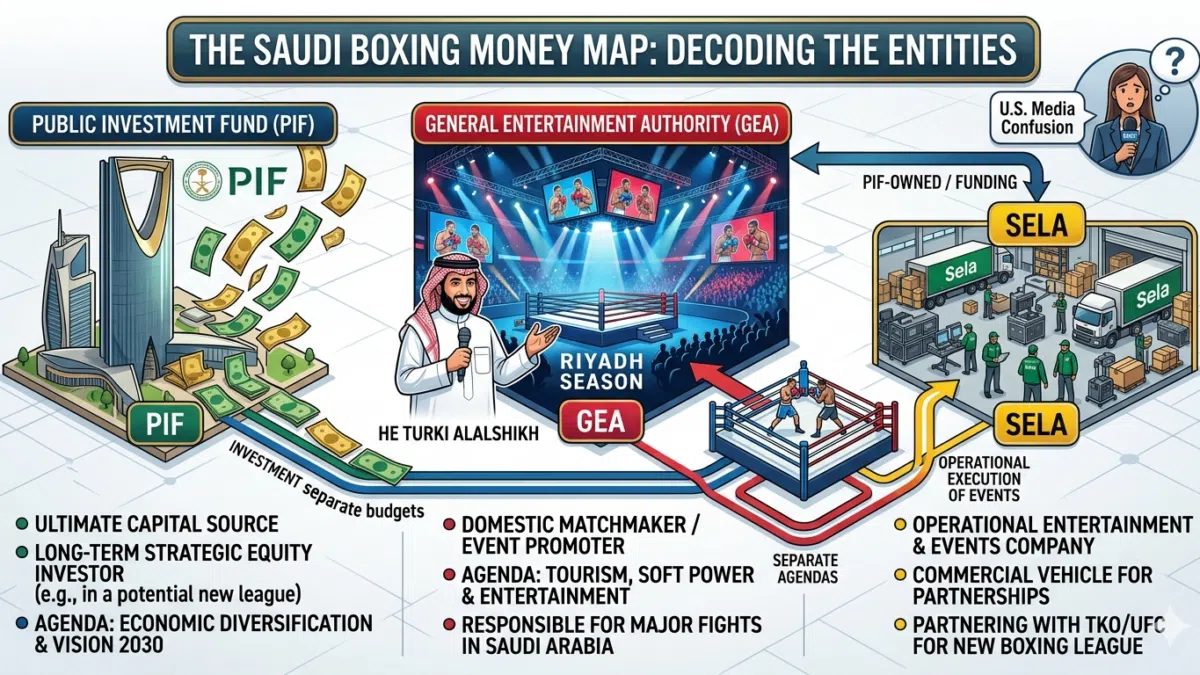
There are at least three Saudi entities involved in global sports right now, and they have separate budgets, separate leadership, and at times separate agendas. Anyone trying to read the boxing tea leaves needs to know which one is which.
The Public Investment Fund (PIF)
The Public Investment Fund is Saudi Arabia’s sovereign wealth fund. It is governed by Yasir Al-Rumayyan, who reports directly to Crown Prince Mohammed bin Salman. PIF holds an estimated $940 billion to $1.15 trillion in assets, depending on the source. It is the largest single pool of Saudi capital and the entity most often referenced in U.S. coverage of Saudi sports investment.
PIF is the entity that bankrolled LIV Golf. Per Sportico, PIF has poured more than $5 billion into the league since 2022 and is now considering ending that funding. The fund announced a new five-year strategy that reduces international investments from 30 percent of the portfolio to 18 to 20 percent, with an emphasis on domestic projects under Saudi Vision 2030.
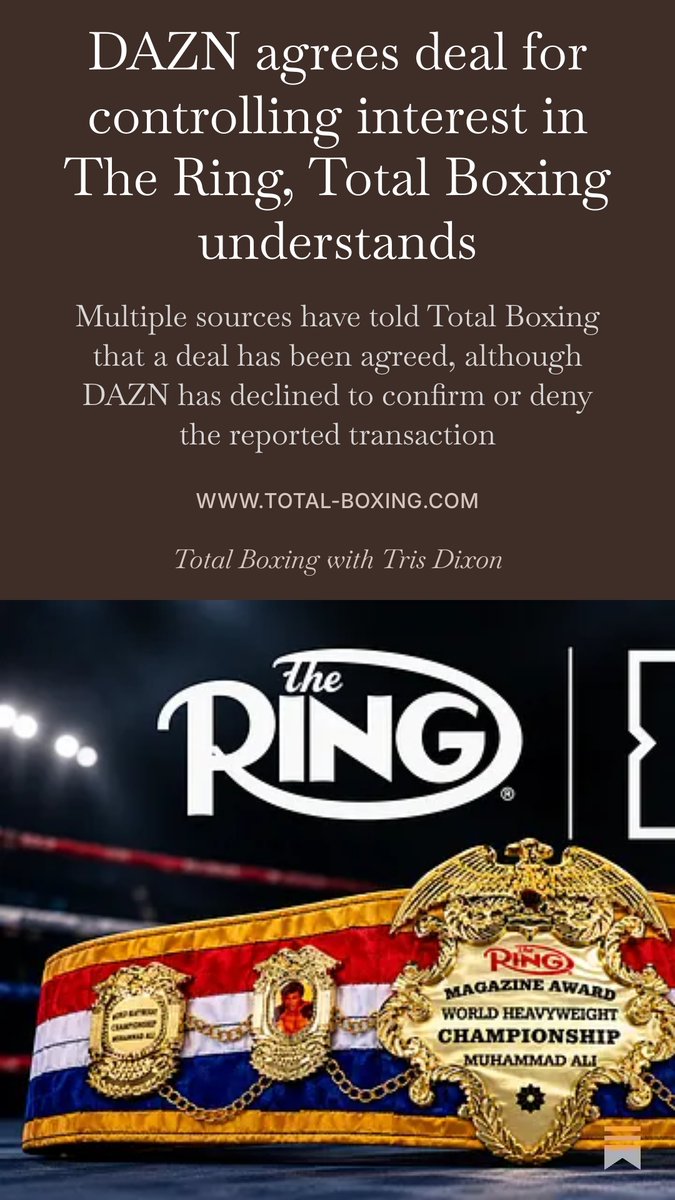
PIF’s direct boxing exposure is narrower than its golf exposure, but it is real. The fund owns Sela, the company that has actually staged most of Riyadh Season’s biggest cards and that sits inside the Zuffa Boxing joint venture with TKO. PIF also pushed approximately $1 billion through its sports-focused subsidiary SURJ into a minority stake in DAZN, the streaming home of Matchroom, Queensberry, Top Rank, Golden Boy, and Riyadh Season cards.
The General Entertainment Authority (GEA)
The General Entertainment Authority is a Saudi government body, not a fund. It was created in 2016 under Vision 2030 to develop and regulate the kingdom’s entertainment sector. Turki Alalshikh has chaired the GEA since 2017.
The GEA, not PIF, is the formal funder of Riyadh Season. It pays fighter purses for Riyadh Season cards and underwrites the broader Riyadh Season festival. When Alalshikh teases the next mega-fight on X, he is doing so as GEA chairman, working with a government budget that is separate from PIF’s portfolio.
That budget has also been scaled back. Reports last year out of Sportcal indicated that Riyadh Season would no longer stage boxing cards outside Saudi Arabia, citing the financial performance of the Crawford vs. Madrimov card at BMO Stadium in Los Angeles in August 2024 and what the report described as pushback against Alalshikh from internal higher-ups for staging events abroad. The California State Athletic Commission later reported paid attendance of 17,799 against a 21,799-seat capacity, with reported purses exceeding the live gate. In November 2025, Alalshikh himself told The Ring that reports of a slowdown were “100 per cent not true,” promising more announcements in 2026.
Sela
Sela is a PIF subsidiary. It is the events company that promotes the cards. Per Arab News, Sela is owned by the Public Investment Fund, and Arab News specifically noted that the GEA “is not involved in the partnership” between Alalshikh, TKO, and Sela that became Zuffa Boxing. That is the cleanest single sentence on the structure available in print: Zuffa Boxing is a TKO-Sela joint venture with Alalshikh as a co-founder. The GEA, the body Alalshikh chairs, is not a formal counterparty to the deal. The PIF-owned Sela is.
This matters because it means PIF money, the same pool that funded LIV, is also inside Zuffa Boxing through Sela. It also means that Alalshikh’s personal relationship with PIF Governor Al-Rumayyan, which has been publicly reported as strained, runs through every Zuffa Boxing decision in some form.
Turki and Al-Rumayyan
The personal dimension is where U.S. media coverage tends to flatten the most detail. Multiple reports have described Alalshikh and Al-Rumayyan as competing for influence with the Crown Prince. Al-Rumayyan is the institutional figure, in charge of the largest checkbook. Alalshikh is the operator with the personal relationships across global sports and entertainment.
The two men have publicly disagreed on strategy. Reporting on the DAZN deal indicated Alalshikh pushed for the SURJ investment in DAZN while Al-Rumayyan preferred a deal with Qatari broadcaster BeIN Sports. Alalshikh’s proposal won out. Reporting around Bob Arum’s 2024 dispute with Alalshikh referenced pressure from Saudi higher-ups, widely interpreted as PIF leadership, to limit Riyadh Season’s overseas activity.
None of that maps cleanly onto “the Saudis are pulling out of boxing.” It maps onto a complicated internal hierarchy in which different power centers fund different parts of the sport, sometimes in cooperation and sometimes in tension.
What This Means for Reading the Boxing Story
The headlines about LIV are PIF stories. PIF reducing its international footprint is a documented fact, on the record from Al-Rumayyan at the Future Investment Initiative conference. That has implications for everything PIF touches, including Sela’s role inside Zuffa Boxing and the SURJ stake in DAZN.
It does not automatically translate to GEA spending. The GEA has its own budget and its own chairman. There are reports of GEA spending also being trimmed, but that is a separate decision tree. The Riyadh Season schedule for 2026 remains intact, and Alalshikh has continued to announce new fights, including the agreed-in-principle Tyson Fury vs. Anthony Joshua bout for Q4 2026 on Netflix.
It also does not automatically translate to the existing TKO-Sela joint venture. As Lou DiBella argued on The Ariel Helwani Show, TKO’s seed money from the Sela partnership is already booked, and the operating cost of the Zuffa Boxing slate is now spread across Paramount+ media rights, Sky Sports rights in the UK, sponsorships, and live gates. A Saudi pullback from new investment is a different question than a Saudi exit from a deal already signed.
Three entities. Three checkbooks. Two rival principals. One sport caught in the middle. The story is more complicated than the LIV-shaped headline suggests, and getting the boxes right is the first step in reading what comes next.