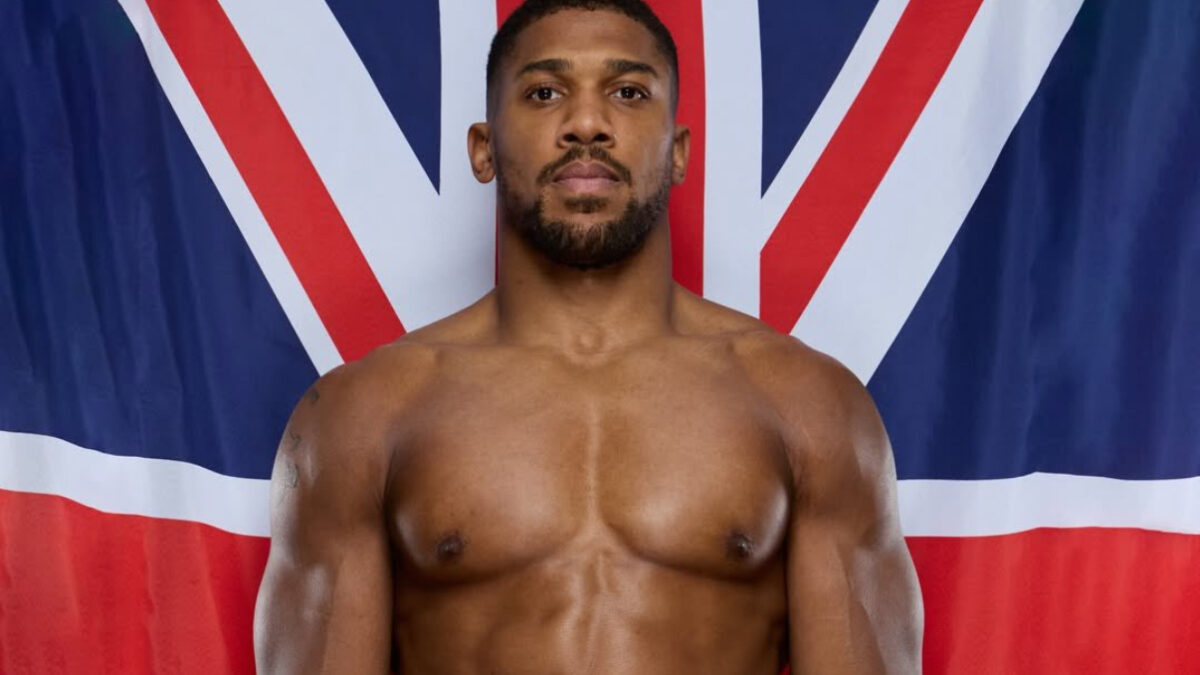
Anthony Joshua has formally relocated from the United Kingdom to Dubai, confirmed through corporate filings submitted on March 7 for his companies Sparta Promotions Limited and 258 Investments Limited. Dubai’s zero-income-tax environment is an obvious financial incentive — Sparta Promotions reported profits exceeding £20 million in 2024 — but the boxing implications may matter more than the balance sheet.
A Career at a Crossroads
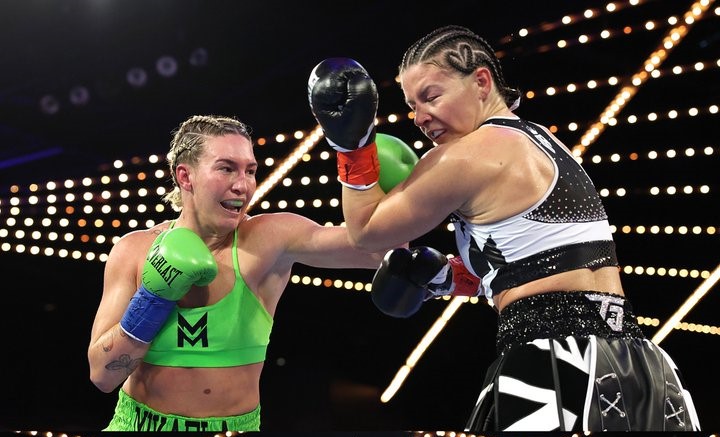
Joshua (29-4, 26 KOs) is in the most uncertain stretch of his professional life. Ten days after stopping Jake Paul in the sixth round on December 19, the former two-time unified heavyweight champion was involved in a devastating car crash on Nigeria’s Lagos-Ibadan Expressway. Two close friends and members of his inner circle — personal trainer Kevin “Latz” Ayodele and strength and conditioning coach Sina Ghami — were killed. Joshua sustained rib injuries and was hospitalized before being released on New Year’s Eve.
The crash destroyed what had been an ambitious 2026 roadmap: a March tune-up under the Riyadh Season banner, followed by a long-awaited showdown with Tyson Fury in August. That timeline is now scrap paper.
“Originally, the plan for AJ was for him to fight in March and then fight Tyson Fury in August. That’s not happening,” promoter Eddie Hearn told media in February, as reported by ESPN. “He’s going to come back, I believe, late summer, but physically he’s not yet in a position to return to camp.”
Hearn has identified July as a target return date, though he acknowledged in a separate interview with First Round TV that there are no guarantees Joshua fights again at all.
Dubai as a Training Base
Joshua’s connection to Dubai is not new. He has used the city’s facilities for training camps throughout his career and was memorably photographed sparring on the helipad of the Burj Al Arab in 2017. More recently, he trained there with former UFC lightweight champion Khabib Nurmagomedov in February.
Making Dubai a permanent base rather than an occasional stop raises practical questions. Joshua’s longtime UK setup — built around the network of trainers, sparring partners, and support staff that sustained his championship years — would need to be replicated or reimagined. The loss of Ayodele and Ghami has already fractured that support system at the worst possible time.
Dubai’s geographic position does put Joshua closer to Riyadh, where Turki Alalshikh’s Riyadh Season has staged many of boxing’s biggest recent events. If Joshua’s remaining fights are primarily bankrolled by Saudi investment — as the Fury negotiations suggest — proximity to that power center is not a disadvantage.
The Fury Fight: Delayed, Not Dead
Fury, who had been retired since consecutive losses to Oleksandr Usyk in 2024, announced his own comeback and is scheduled to face Arslanbek Makhmudov on April 11 at Tottenham Hotspur Stadium. Hearn has kept the door open for the all-British showdown, suggesting it could land at the end of 2026 or early 2027. Fury, however, has publicly stated his preference for an Usyk trilogy if he defeats Makhmudov, which would push the Joshua fight even further down the calendar.
The matchup British boxing fans spent a decade demanding now hinges on a sequence of events that must break exactly right: Joshua must return healthy, win a July tune-up, and remain on Alalshikh’s radar while Fury navigates his own path. As Fury told Sky Sports, the Joshua crash was the catalyst for his own return: “Life is very short, very precious and very fragile. Anything could happen at any given moment.”
What Comes Next
Joshua is 36 with four losses on his record. His stoppage of Paul was a necessary payday but told the sport nothing about where he stands against elite heavyweights. The last time he beat a ranked opponent was a decision over Jermaine Franklin in April 2023 — nearly three years ago.
A new address does not change those facts. What it may change is the emotional environment surrounding the final chapter of his career. Joshua spoke publicly for the first time since the crash in February, framing his return around the friends he lost: “What my goal is, is to continue to help them achieve their goals. Even though they may not be here in the physical, when I pray, I know spiritually they’re going to aid me through.”
That is not the language of a man chasing a payday. Whether he rebuilds from a gym in Dubai or one in Sheffield, the challenge is the same: prove that at 36, after everything, Anthony Joshua still belongs among the best heavyweights on the planet. The address on the corporate filing matters far less than what he does once the bell rings.