Five Years Later, I Took My Son to a Club Show — And He Became a Fan for Life
By: William Holmes
Former Managing Editor for BoxingInsider.com (2010–2020) and Former Deputy Attorney General/Assistant Prosecutor for the State of New Jersey
From 2010 to 2020, I had the privilege of writing for BoxingInsider.com. I wrote hundreds, if not thousands, of articles. I’ve seen hundreds of fights live. I’ve had the opportunity to speak with and watch some of the best the sport of boxing has to offer.
If there was a fight in the Northeast—from New York City down to Washington, D.C.—and it was on television, I usually attended and wrote about it. Back then, televised fights were plentiful. HBO, Showtime, ESPN, NBC Sports, and pay-per-view events meant it wasn’t unrealistic to see two or three televised fight cards in any given month.
Occasionally, I’d even fly out to Las Vegas to cover a pay-per-view fight.
I didn’t view it as work, and I certainly didn’t rely on it for the money, but I did enjoy it and took it seriously. I took pride in knowing that our staff back then could provide pre-fight and post-fight analysis of every televised fight.
But the thing I enjoyed the most was going to a “club” show—the smaller fight cards where you may catch a few fighters with potential, some with none, but a smaller and more frenzied fan base that watches the entire fight card from beginning to end.
The club shows create an environment that breeds fans for life and is the lifeblood of this sport.
In 2020, I stopped writing for BoxingInsider.com. I worked as an Assistant Prosecutor for the State of New Jersey, and my work commitments were too burdensome to dedicate the time BoxingInsider.com deserved.
However, I never stopped following the sport, and from afar I saw a changing sport that forgot what made it thrive.
One by one, the networks left. HBO, Showtime, and NBC Sports no longer carry boxing. The sport’s top stars are no longer American. Competitive fights can be found on DAZN, but it’s an app the casual fan will never, ever buy. The pay-per-view numbers of Mayweather and Pacquiao will likely never be surpassed.
Sadly, the local fight cards that I used to enjoy attending also appeared to dry up.
Boxing became so focused on money that it forgot to water its roots.
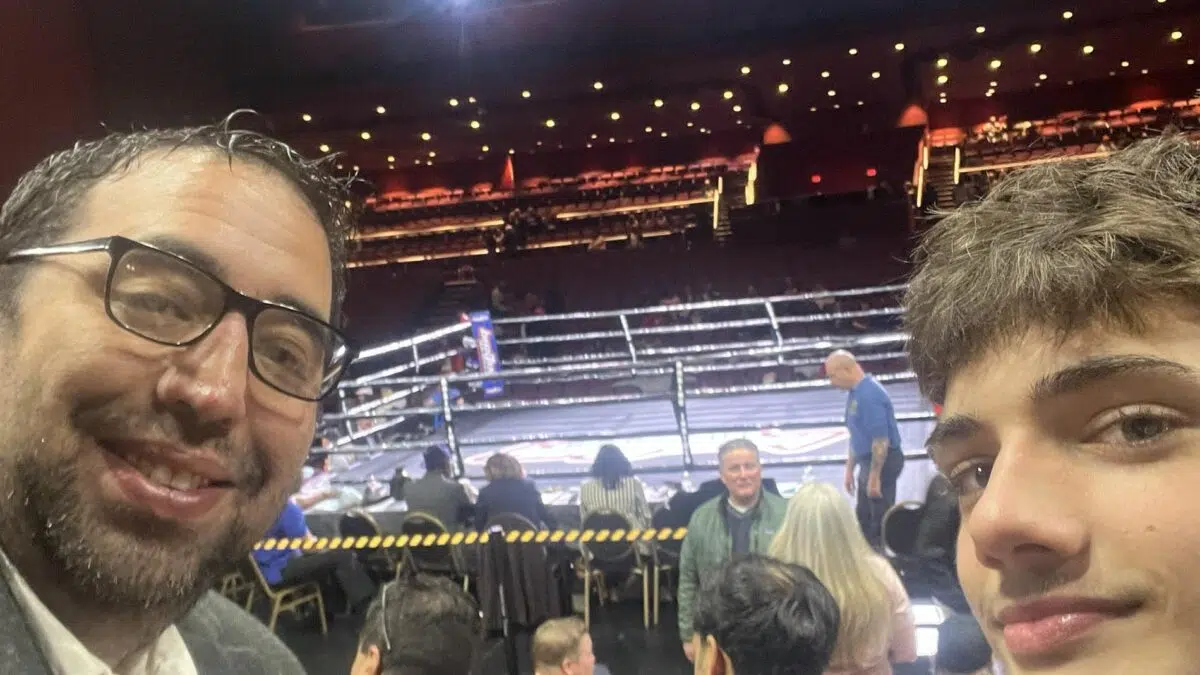
I attended my first fight in five years on March 7th. Work and fatherhood had gotten in the way of attending something I loved to watch.
I attended a fight card promoted by BoxingInsider.com founder Larry Goldberg and his Boxing Insider Promotions. Since I’ve been gone, Larry has created a boxing promotion and put on twenty fight cards in New Jersey and New York. You’d be very hard pressed to find someone as active as him on the club-show level.
I brought my 14-year-old son with me. We arrived before the first fight. He saw the boisterous crowd fill the Tropicana Showroom and engage in every single bout. He saw a few knockouts. He saw an upset. He saw a legit prospect with knockout power (Josh Popper). Of course, he saw a controversial finish in the main event that resulted in a no-contest.
Most importantly, he was locked in and entertained by every single fight and became a fan for life. Boxing can sell itself.
American-born champions get their start at the club level, but since the 1990s American dominance and control in the sport have steadily declined.
The sport has become so focused on celebrity that it forgot what made boxing popular in the first place and created a rabid fan base: the competitive, violent drama in the ring and the addictive energy in the air. It’s the type of environment that breeds champions.
I left on Saturday thinking, as long as people like Larry are willing to take the risk to put on a good show, the sport isn’t in a bad place. My son couldn’t wait to see the next fight.
William Holmes is currently an attorney with the Law Firm of Testa Heck Testa & White located in Vineland, NJ.