
This is the most comprehensive boxing glossary you’ll find anywhere online — and the only one written by people who actually promote professional boxing events. We’ve organized over 150 terms into categories so you can find what you need fast, whether you’re a new fan trying to follow a broadcast or a seasoned head settling an argument at the bar.
Jump to a section: Punches · Defense & Movement · Fighting Styles & Strategy · Scoring & Decisions · Rules & Fouls · The Ring & Equipment · People & Roles · Weight Classes · The Business of Boxing · Ring Slang & Broadcast Terms
Punches
Jab — Quick, straight punch thrown with the lead hand. The most important punch in boxing. Used to measure distance, set up combinations, disrupt rhythm, and score points. A fighter with a good jab controls the fight.
Cross (Straight Right / Straight Left) — Straight power punch thrown with the rear hand. For an orthodox fighter, this is the right hand. Often follows the jab in a basic one-two combination.
Hook — Short, arcing punch thrown with a bent arm, targeting the side of the head or body. Hooks generate power through hip rotation and are among the most devastating punches when landed clean.
Uppercut — Rising vertical punch thrown upward from below, usually at close range. Targets the chin or solar plexus. Most effective on the inside when a fighter’s guard is low.
Overhand (Overhand Right / Left) — Looping power punch thrown over the top of an opponent’s guard, arcing downward. A favorite weapon of shorter fighters looking to close distance against taller opponents.
Body Shot / Body Punch — Any punch targeting the torso rather than the head. Effective body work slows a fighter down over the course of a fight and can set up head shots later.
Liver Shot — A devastating punch to the right side of an opponent’s body, targeting the liver. One of the most painful punches in boxing — a clean liver shot can drop a fighter regardless of how tough they are.
Bolo Punch — A flashy, windmill-style punch combining a hook and uppercut motion. Popularized by Kid Gavilan and later by Sugar Ray Leonard. More showmanship than power, but can score and surprise opponents.
Check Hook — A short hook thrown while simultaneously pivoting away from an advancing opponent. Designed to catch aggressive fighters moving forward. Effective against pressure fighters who charge in recklessly.
Corkscrew Punch — A punch thrown with a twisting motion of the fist at the point of impact. The rotation of the glove can cause cuts and abrasions on the opponent’s skin.
Combination (Combo) — A series of punches thrown in quick succession without pause. Common combinations include the one-two (jab-cross), the one-two-three (jab-cross-hook), and variations with body punches mixed in.
Counterpunch — A punch thrown in immediate response to an opponent’s attack, taking advantage of the opening created when they throw. Great counterpunchers include Floyd Mayweather Jr. and Juan Manuel Márquez.
Lead Hand / Rear Hand — The lead hand is closer to the opponent (left hand for orthodox, right hand for southpaw). The rear hand is the power hand positioned farther back.
Rabbit Punch — An illegal punch to the back of the head or neck. Extremely dangerous because it can cause spinal cord injuries. Always results in a warning or point deduction.
Kidney Punch — A punch landing on the lower back near the kidneys. Illegal when thrown intentionally to the back. Extremely painful and can cause internal damage.
Shovel Hook (Shovel Punch) — A short, digging hook thrown at a 45-degree angle, splitting the difference between a hook and an uppercut. Effective at close range to the body.
Potshot — A single, opportunistic punch thrown without commitment to a combination. Often a long jab or right hand thrown from distance to score a point without engaging.
Defense & Movement
Slip — Moving the head laterally to avoid a punch. A small, precise movement — you turn your shoulders and let the punch slide past your face. The foundation of good boxing defense.
Bob and Weave — Bending at the knees and waist while moving the head side-to-side in a U-shaped motion to evade punches. Joe Frazier and Mike Tyson are two of the best examples of fighters who relied on bobbing and weaving.
Duck — Bending the knees to drop below a punch, usually a hook. Risky because you can drop into an uppercut if your opponent reads it.
Parry — Using the gloves to deflect or redirect an incoming punch. A slapping motion that redirects the opponent’s fist away from its target rather than absorbing the impact.
Block — Absorbing a punch on the gloves, arms, or shoulders. The most basic form of defense — less elegant than slipping but reliable.
Shell / Shell Defense — A tight defensive posture with elbows protecting the body and gloves framing the face. George Foreman used a shell defense extensively in his later career.
Shoulder Roll (Philly Shell) — Defensive technique where the lead shoulder is raised to deflect incoming punches while the rear hand stays low to protect the body. Originated with Philadelphia trainer George Benton and later made famous worldwide by Floyd Mayweather Jr.
Peek-a-Boo — Defensive style developed by Cus D’Amato where both gloves are held high in front of the face while the fighter bobs and weaves aggressively to get inside. Mike Tyson’s signature style during his prime.
High Guard — Both hands held high near the temples with elbows close to the body. The standard defensive posture taught to most beginners.
Cross-Guard (Crab) — An unorthodox defensive position where one arm crosses in front of the face horizontally while the other protects the body. Archie Moore and Joe Frazier’s trainer Eddie Futch were associated with variations of this guard.
Roll (Roll with the Punch) — Turning the body in the same direction as an incoming punch to reduce its impact. Instead of taking the punch flush, you move with it so it loses force.
Clinch — Grabbing and holding an opponent to prevent them from punching. Used to smother offense, recover from being hurt, slow the pace, or reset position. The referee breaks the clinch and restarts action.
Feint — A fake punch or movement designed to draw a reaction from the opponent. A well-timed feint makes an opponent flinch, drop their guard, or commit defensively, creating openings for real punches.
Footwork — How a fighter moves around the ring. Great footwork allows a boxer to control distance, create angles, avoid punches, and position themselves for offense. Muhammad Ali and Pernell Whitaker are gold-standard examples.
Pivot — Turning on the ball of the lead foot to change angles. Instead of stepping straight back from an advancing opponent, you pivot to the side, repositioning yourself at an angle.
Smother — Getting extremely close to an opponent to prevent them from generating power on their punches. If you’re too close, they can’t extend their arms fully and their punches lose effectiveness.
Covering Up — Going into a purely defensive shell, usually on the ropes or in a corner, absorbing punches on the gloves, arms, and shoulders while waiting for the opponent to tire or for an opportunity to counter.
Rope-a-Dope — Leaning on the ropes and covering up defensively while letting an opponent throw punches freely, with the goal of tiring them out. Muhammad Ali famously used this strategy to defeat George Foreman in the 1974 “Rumble in the Jungle.”
Fighting Styles & Strategy
Orthodox — Standard boxing stance with the left foot and left hand forward, typically used by right-handed fighters. The right hand is the power hand.
Southpaw — Stance with the right foot and right hand forward, typically used by left-handed fighters. The left hand is the power hand. Southpaws create problems because most fighters train primarily against orthodox opponents.
Switch-Hitter — A fighter who can effectively switch between orthodox and southpaw stances during a fight. Terrence Crawford is the modern gold standard.
Boxer / Out-fighter — A fighter who relies on technique, footwork, and fighting at long range rather than brawling. Uses the jab to control distance and picks opponents apart from the outside.
Brawler / Slugger — A fighter who relies on power and aggression over finesse. Brawlers walk forward, throw heavy punches, and try to overwhelm opponents with volume and force.
Pressure Fighter — A fighter who constantly moves forward, cutting off the ring and forcing the opponent to engage at close range. Different from a brawler in that pressure fighters can be technically skilled — they just prefer to fight at close range.
Counterpuncher — A fighter whose primary strategy is letting the opponent lead, then exploiting the openings created. Counterpunchers tend to be patient, defensively skilled, and precise. Floyd Mayweather Jr. and Juan Manuel Márquez are prime examples.
Boxer-Puncher — A fighter who combines technical boxing skill with legitimate knockout power. Can box at range or fight on the inside. Sugar Ray Leonard and Thomas Hearns are classic boxer-punchers.
Swarmer — An aggressive fighter who overwhelms opponents with relentless volume and pressure at close range. Swarmers typically bob and weave their way inside and unleash combinations. Henry Armstrong and Joe Frazier defined this style.
Stick and Move — A strategy of throwing punches (usually jabs) and immediately moving to a new position before the opponent can counter. Designed to score points while minimizing risk.
Outfighting / Outside Fighting — Boxing at long range, using the jab and straight punches while staying out of the opponent’s power range.
Infighting / Inside Fighting — Boxing at close range, relying on hooks, uppercuts, and body punches. When two fighters are in “the pocket,” they’re infighting.
The Pocket — The close-range space where both fighters can land punches cleanly. Inside the pocket, fights are won by speed, timing, and the ability to take a shot.
Ring Generalship — The ability to control the pace, positioning, and overall flow of a fight. A fighter who dictates where the action takes place, controls the tempo, and consistently puts themselves in advantageous positions is demonstrating ring generalship. This is one of the criteria judges use to score fights.
Ring Cutting — Using footwork and positioning to reduce the ring size for an opponent, cutting off escape routes and forcing them into the ropes or corners. Essential skill for pressure fighters.
Educated Jab — A jab used strategically and with variety — varying speed, placement, and timing rather than just throwing it mechanically. The difference between a basic jab and an educated one is ring intelligence.
Phone Booth Fighter — A fighter who excels at close range, as if both fighters were crammed inside a phone booth. Related to infighting but implies someone who actively seeks and thrives in extremely tight quarters.
Scoring & Decisions
10-Point Must System — The standard scoring system in professional boxing. The winner of each round receives 10 points and the loser receives 9 or fewer. A round with a knockdown is typically scored 10-8. Two knockdowns can produce a 10-7 round. A rare even round is scored 10-10.
Scorecard — The official record kept by each of the three ringside judges showing their round-by-round scores for the fight.
Unanimous Decision (UD) — All three judges score the fight in favor of the same fighter.
Split Decision (SD) — Two judges score the fight for one fighter while the third judge scores it for the other.
Majority Decision (MD) — Two judges score the fight for one fighter while the third judge scores it a draw.
Draw — When the final scores result in neither fighter winning. Can be a unanimous draw (all three judges score it even), a split draw (one judge scores for Fighter A, one for Fighter B, and one scores it even), or a majority draw (two judges score it even and one scores for a fighter).
Technical Decision (TD) — When a fight is stopped early due to an accidental cut or headbutt, and the fight has gone past a certain number of rounds (usually four), the bout goes to the scorecards for a decision. If stopped before the minimum number of rounds, it’s ruled a no-decision or technical draw.
Technical Draw — When a fight is stopped prematurely due to accidental foul (usually a headbutt) and the scores are even at the time of the stoppage.
Knockout (KO) — A fighter is knocked down by a legal punch and cannot rise to their feet before the referee completes the count of ten.
Technical Knockout (TKO) — The fight is stopped by the referee, the ringside doctor, or a fighter’s corner because a fighter can no longer safely continue. The fighter doesn’t have to be knocked down — if they’re absorbing too much punishment without intelligently defending themselves, the referee can stop it.
No Contest (NC) — A fight that is declared invalid, usually due to an accidental foul (like a headbutt causing a cut) occurring too early in the fight for the scorecards to be used. Neither fighter receives a win or loss on their official record.
No Decision — Historically, fights where judges did not officially render a decision (common in the early 1900s due to anti-boxing laws). In modern boxing, sometimes used interchangeably with no contest.
Disqualification (DQ) — When a fighter is penalized for repeated or flagrant fouls and the referee removes them from the fight. The fouled fighter wins by disqualification. Andrew Golota’s fights against Riddick Bowe are the most famous examples.
Point Deduction — When a referee takes one or more points from a fighter’s score for that round due to a foul. Common reasons include low blows, holding, headbutts, and hitting after the break.
Swing Round — A close round that could reasonably be scored for either fighter. Swing rounds are where fights are won and lost, and they’re the source of most judging controversies.
Clean Punching — One of the four criteria used by judges: punches that land on legal target areas (front and sides of the head and body above the belt) without being blocked or deflected.
Effective Aggression — One of the four criteria used by judges: aggression that results in landing punches, not just moving forward. Walking into punches while coming forward is not effective aggression — it’s the opposite.
Robbery — Fan term for a fight where the judges’ decision appears clearly wrong. One of the most debated concepts in boxing because scoring is subjective. Some robberies are genuinely bad judging; others are just close fights where reasonable people disagree.
Rules & Fouls
Round — A timed period of fighting. Professional bouts use three-minute rounds with one-minute rest periods between rounds. Championship fights are 12 rounds. Non-title bouts are typically 4, 6, 8, or 10 rounds.
Three-Knockdown Rule — A rule in some jurisdictions (not universal) where a fighter who is knocked down three times in a single round automatically loses by TKO. Not used in all states or all sanctioning bodies.
Standing Eight Count — When the referee gives an eight count to a fighter who is badly hurt but still on their feet. This gives the referee a chance to evaluate whether the fighter can safely continue. Not used in all jurisdictions.
Saved by the Bell — When a fighter who has been knocked down is spared from a knockout because the round ends before the ten-count is completed. In most modern rules, fighters cannot be saved by the bell in the final round.
Neutral Corner — The two corners of the ring not assigned to either fighter. When a fighter scores a knockdown, they must go to a neutral corner while the referee counts. The count does not begin until the standing fighter reaches the neutral corner.
Mandatory Eight Count — After any knockdown, the referee must count to eight before allowing the fight to resume, even if the downed fighter gets up immediately. Gives the referee time to assess the fighter’s condition.
Low Blow — Any punch landing below the beltline. The fouled fighter is given up to five minutes to recover. Repeated low blows result in point deductions and can lead to disqualification.
Holding / Excessive Clinching — Grabbing and holding an opponent excessively to prevent them from punching. The referee will warn for holding and can deduct points for repeated violations.
Hitting on the Break — Throwing a punch after the referee has called “break” to separate fighters from a clinch. Illegal and penalized.
Hitting After the Bell — Throwing a punch after the bell has sounded to end a round. Illegal and can result in point deductions or disqualification.
Headbutt — Using the head to strike an opponent. Can be intentional (foul, penalized) or accidental (no penalty, but can lead to cuts that affect the outcome). If an accidental headbutt causes a cut that stops the fight, it may be ruled a technical decision or no contest depending on what round the fight is in.
“Protect Yourself at All Times” — Instruction given by the referee during pre-fight instructions. Not just ceremonial — this means fighters are responsible for their own defense from the opening bell to the closing bell, including during any break in the action.
“Break” — Referee’s command for fighters to separate from a clinch. Both fighters must immediately take a step back without throwing punches.
“Box” — Referee’s command to resume fighting, usually after a clinch break or the start of a round.
Weigh-In — The official pre-fight ceremony where fighters step on a scale to confirm they are within the contracted weight limit for the bout. Usually takes place the day before the fight. Fighters who miss weight may face financial penalties or the fight may be canceled or changed to a catchweight bout.
Second-Day Weigh-In / Same-Day Weigh-In — Some commissions (notably California) require a second weigh-in on fight day morning to ensure fighters haven’t rehydrated excessively. Fighters typically cannot weigh more than a set percentage above the contracted weight.
The Ring & Equipment
Ring — The raised, square platform where boxing matches take place. Despite being called a “ring,” it’s actually a square, typically 16 to 24 feet on each side, enclosed by ropes. The name dates back to when spectators formed a ring (circle) around fighters.
Canvas — The floor of the boxing ring. When a fighter gets knocked down, they “hit the canvas.”
Ropes — The four sets of horizontal ropes (or cables covered in padding) surrounding the ring. Fighters can get trapped “on the ropes” when pushed backward against them.
Apron — The section of the ring floor that extends outside the ropes. The corner teams stand on the apron between rounds.
Corner (Red Corner / Blue Corner) — Each fighter is assigned one of two opposing corners. The other two are neutral corners. Between rounds, fighters return to their corner where their team works on them.
Stool — The seat placed in a fighter’s corner between rounds. Fighters sit on the stool while their team provides water, advice, and any medical attention (cuts, swelling).
Spit Bucket — The bucket in each corner where fighters spit water between rounds. One of the less glamorous but essential pieces of equipment at any boxing event.
Enswell (End-swell) — A small, flat piece of cold metal (usually stainless steel) used by cutmen to reduce swelling. Kept on ice and pressed against the swollen area to constrict blood vessels.
Mouthpiece / Mouthguard — Protective equipment worn over the teeth and gums. Custom-fitted mouthpieces are standard at the professional level. If a mouthpiece falls out, the referee may pause action to replace it.
Hand Wraps — Long strips of cloth or semi-elastic material wrapped around a fighter’s hands and wrists under the gloves. Protects the small bones of the hand, stabilizes the wrist, and provides knuckle padding.
Boxing Gloves — Padded gloves worn in boxing. Professional fights typically use 8-ounce or 10-ounce gloves depending on weight class. Smaller gloves mean less padding and more knockouts. The glove weight is usually specified in the fight contract.
Cup / Foul Protector — Protective cup worn to guard against low blows. Required equipment in every sanctioned bout.
People & Roles
Promoter — The person or company responsible for organizing, marketing, financing, and staging a boxing event. The promoter secures the venue, obtains the commission license, signs fighters, arranges television or streaming deals, sells tickets, and handles all logistics of an event. Promoters typically sign fighters to multi-fight promotional agreements. Major promoters include Top Rank (Bob Arum), Matchroom (Eddie Hearn), Premier Boxing Champions (Al Haymon), and Golden Boy (Oscar De La Hoya).
Matchmaker — The person responsible for building the fight card by selecting which fighters compete against each other. The matchmaker’s job is to create competitive, entertaining bouts while managing fighters’ development — matching them against progressively tougher opponents as they gain experience. A great matchmaker builds fighters up without putting them in over their heads too early.
Manager — Represents a fighter’s business interests, negotiates purses, and guides career direction. The manager works with the promoter to determine which fights a boxer takes and at what price. Managers typically take 10-33% of a fighter’s purse.
Trainer / Head Trainer — The person responsible for teaching, conditioning, and strategizing for a fighter. The trainer develops the game plan, runs training camp, and works the corner on fight night. Great trainers — Freddie Roach, Emanuel Steward, Eddie Futch — can completely transform a fighter’s career.
Cutman — The corner specialist who prevents and treats cuts and swelling during a fight. Works between rounds using vaseline (applied before the fight to help punches slide off the skin), adrenaline solution or thrombin (to close cuts), and an enswell (to reduce swelling). A good cutman can keep a badly cut fighter in a fight they’d otherwise have to stop.
Chief Second — The designated lead person in a fighter’s corner, usually the head trainer. Has the authority to stop the fight by “throwing in the towel” if they believe their fighter can no longer safely continue.
Cornerman / Second — Any member of a fighter’s corner team. Professional bouts typically allow three people in the corner between rounds.
Referee (Third Man in the Ring) — The official inside the ring who enforces the rules, administers counts, issues warnings, deducts points, and can stop the fight. The referee’s primary responsibility is fighter safety.
Judge — One of three officials seated ringside who score each round of the fight on a 10-point must system. Judges are assigned by the local athletic commission.
Ring Announcer — The person who announces fighters’ names, weights, records, and the official results. Michael Buffer (“Let’s get ready to rumble!”) is the most famous ring announcer in boxing history.
Commissioner / Athletic Commission — The state or jurisdiction’s regulatory body that oversees and licenses boxing events. The commission approves fights, assigns officials (referees, judges), conducts medical screenings, and ensures fighter safety rules are followed. Every sanctioned professional boxing event requires commission approval.
Inspector — Commission-appointed official present at the venue on fight night to enforce rules. Inspectors monitor dressing rooms, watch hand wrapping, verify gloves, and ensure compliance with commission regulations.
Timekeeper — Official responsible for timing the rounds and rest periods, and ringing the bell to start and end each round.
Weight Classes
Professional boxing has 17 recognized weight divisions. For a complete breakdown of each class with current champions and history, see our Boxing Weight Classes Explained guide. Here is the quick reference:
Strawweight / Minimumweight — 105 lbs
Junior Flyweight (Light Flyweight) — 108 lbs
Flyweight — 112 lbs
Junior Bantamweight (Super Flyweight) — 115 lbs
Bantamweight — 118 lbs
Junior Featherweight (Super Bantamweight) — 122 lbs
Featherweight — 126 lbs
Junior Lightweight (Super Featherweight) — 130 lbs
Lightweight — 135 lbs
Junior Welterweight (Super Lightweight) — 140 lbs
Welterweight — 147 lbs
Junior Middleweight (Super Welterweight) — 154 lbs
Middleweight — 160 lbs
Super Middleweight — 168 lbs
Light Heavyweight — 175 lbs
Cruiserweight — 200 lbs
Heavyweight — Unlimited (200+ lbs)
Catchweight — A negotiated weight that doesn’t conform to any standard division. When two fighters can’t agree on a standard weight class, they may negotiate a catchweight (for example, 150 lbs — between welterweight and junior middleweight). Also used when a fighter misses weight and the bout proceeds at a non-standard limit.
Rehydration Clause — A contractual provision that limits how much weight a fighter can gain between the official weigh-in and fight night. Designed to prevent fighters from cutting extreme amounts of weight and then rehydrating to a much larger size. Becoming more common in major fights.
The Business of Boxing
This is where our glossary is different from everyone else’s. These are terms you’ll hear in negotiations, press conferences, and behind the scenes — but most glossaries don’t cover them because they’re written by people who’ve never promoted a fight.
Sanctioning Body — An organization that governs championship boxing, maintains rankings, and sanctions title fights. The four major sanctioning bodies are the WBC (World Boxing Council), WBA (World Boxing Association), IBF (International Boxing Federation), and WBO (World Boxing Organization). Each has its own champion in every weight class — which is why boxing can have four “world champions” at the same weight. For more on how belts work, see our Boxing Rules & Scoring guide.
Sanctioning Fee — The fee a sanctioning body charges for a fight to be designated as a title bout. Can range from a few thousand dollars for a regional title to hundreds of thousands for a major world title fight. The WBC notably charged a $300,000 sanctioning fee for the Crawford-Canelo fight in 2025.
Undisputed Champion — A fighter who simultaneously holds all four major world titles (WBC, WBA, IBF, WBO) in one weight class. Extremely rare and considered the highest achievement in modern boxing. Recent undisputed champions include Terence Crawford (super welterweight), Oleksandr Usyk (heavyweight), and Jermell Charlo (junior middleweight).
Unified Champion — A fighter who holds two or more (but not all four) major world titles in one weight class.
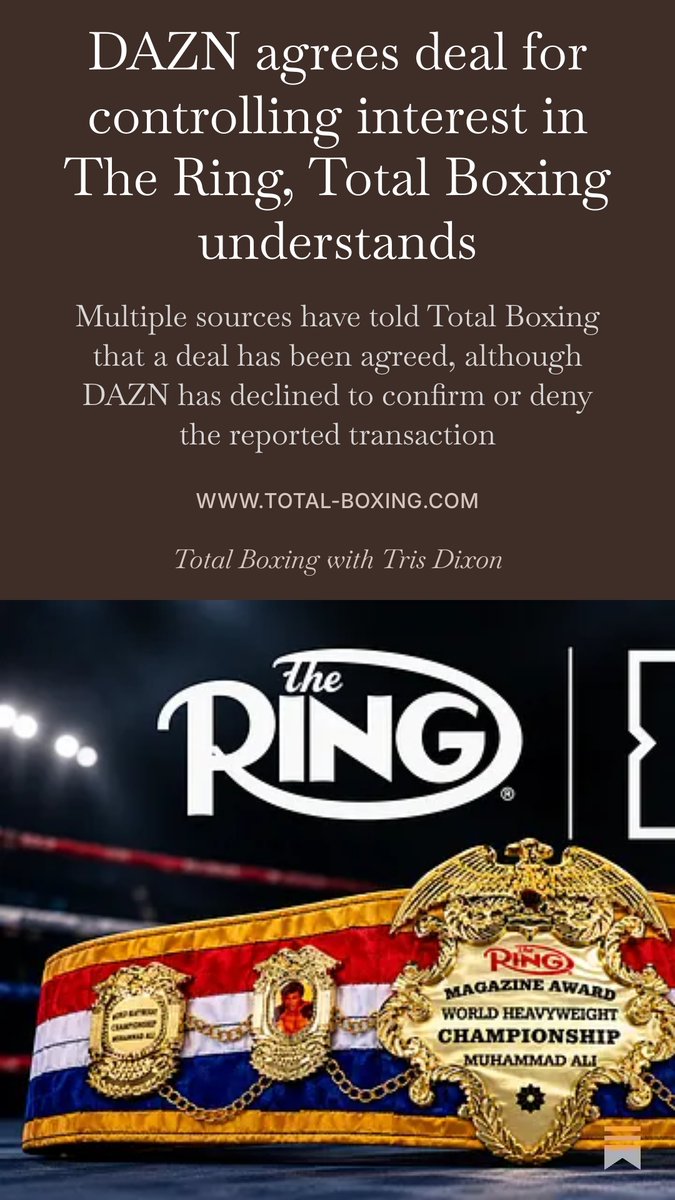
Linear Champion — “The Man Who Beat The Man.” The champion in a line of succession tracing back through defeats of previous champions. You can only win the linear title by beating the current holder. The Ring Magazine title is considered the linear championship.
Franchise Champion — A designation created by the WBC that allows a champion to fight whoever they want without being stripped for not fighting their mandatory challenger. Criticized as a way to avoid mandatories and collect extra sanctioning fees.
Interim Champion — A title created by sanctioning bodies when the full champion is inactive, injured, or involved in another fight. Often used as a negotiating tool. Critics call interim titles “paper titles” because the interim champion didn’t actually beat the real champion.
Mandatory Challenger — The fighter ranked highest by a sanctioning body who is officially designated as the next required opponent for the champion. Champions must fight their mandatory within a certain timeframe or risk being stripped of their title.
Voluntary Defense — A title defense against an opponent of the champion’s choosing, rather than the mandatory challenger. Champions can typically make one or two voluntary defenses between mandatory obligations.
Purse Bid — When a promoter and a champion’s team cannot agree on financial terms for a mandatory title fight, the sanctioning body holds an auction. Promoters submit sealed bids, and the highest bidder wins the right to promote the fight. The purse is then split between the fighters according to the sanctioning body’s rules (usually 55/45 or 60/40 favoring the champion).
Purse — The guaranteed money a fighter earns for a bout. This is separate from any additional income from pay-per-view shares, sponsorships, or other revenue streams. Purse amounts are publicly reported to the commission.
Site Fee — Money paid by a venue, casino, or government entity to host a major fight. In major fights, site fees can reach tens of millions of dollars — Saudi Arabia’s Riyadh Season has paid enormous site fees to attract marquee bouts. The site fee is typically used to guarantee fighter purses.
Step-Aside Fee / Step-Aside Deal — Money paid to a mandatory challenger to voluntarily give up their mandatory position so the champion can take a different, more lucrative fight. Common when a big-money superfight is available but the champion has a mandatory obligation in the way.
Promotional Agreement — A contract between a fighter and a promoter, typically covering multiple fights over several years. The promoter agrees to promote the fighter’s bouts and the fighter agrees to fight exclusively under that promoter’s banner. These agreements are one of the biggest points of contention in boxing because fighters from different promoters often have difficulty fighting each other.
Co-Promotion — When two promotional companies work together to stage a fight, usually because each promotes one of the fighters involved. Co-promotions are necessary when fighters from rival promotions need to fight each other for unification or other major bouts.
Network Deal / Platform Deal — An agreement between a promoter and a television network or streaming platform to broadcast their fights. Major current deals include ESPN/Top Rank, DAZN/Matchroom, and Amazon Prime/PBC. The network deal largely determines a fighter’s exposure and earning potential.
Card — The full lineup of fights on an event, from the first bout of the night to the main event. A typical professional card might have 8-12 fights total, with the main event and co-main event receiving the most promotion.
Main Event — The featured, final, and most high-profile fight on a card.
Co-Main Event (Co-Feature) — The second-most important fight on a card, usually immediately preceding the main event.
Undercard — All fights before the main event. The undercard often includes prospects, local fighters, and fighters being developed by the promoter. A strong undercard is what separates a great live boxing event from a mediocre one.
Alphabet Soup — Derogatory term for the confusing proliferation of boxing titles and sanctioning organizations. Between the WBC, WBA, IBF, WBO, and their various “interim,” “regular,” “super,” “gold,” “silver,” and “diamond” titles, there can be a dozen or more “champions” in a single weight class. The phrase captures the sport’s organizational mess.
Provision of Services Agreement — A contract where one promoter agrees to provide fighters or services for an event promoted by another company. Common in co-promotions or when a promoter wants to use another promoter’s fighters on their card.
Four-Round / Six-Round / Eight-Round / Ten-Round / Twelve-Round Fight — Professional fights are scheduled for different lengths based on the fighters’ experience and the significance of the bout. Debuting fighters typically start at four rounds. Championship fights are twelve rounds. The scheduled distance is a key indicator of where a fighter is in their career.
Record (Win-Loss-Draw) — A fighter’s official professional record, listed as wins-losses-draws, with knockouts in parentheses. Example: 36-4 (21 KOs). A fighter’s record is the primary way fans, matchmakers, and media evaluate their career.
Ring Slang & Broadcast Terms
Sweet Science — Boxing’s most enduring nickname, coined by sportswriter Pierce Egan in the 1800s and popularized by A.J. Liebling’s 1956 book The Sweet Science. Refers to the technical artistry and intellectual depth beneath boxing’s apparent brutality.
Bleeder — A fighter who cuts easily. Some fighters have scar tissue or thin skin that makes them vulnerable to cuts, which can lead to fights being stopped by the ringside doctor.
Bum — Disrespectful term for a low-level or unskilled fighter.
Can / Tomato Can — A weak or overmatched opponent brought in specifically to lose. Named because they’re as easy to open as a can of tomatoes. Promoters use cans to pad a prospect’s record, but the practice is criticized for being unsafe and dishonest.
Gatekeeper — An experienced, skilled fighter who isn’t championship material but serves as a measuring stick for rising contenders. If a prospect can beat the gatekeeper, they’re ready for the next level. If they lose, they probably aren’t. Classic gatekeepers include guys like Jose Luis Castillo, Antonio Margarito (pre-scandal), and Devon Alexander.
Journeyman — A professional fighter who makes a living by fighting frequently, often losing to better opponents but providing competitive rounds. Journeymen have genuine skills and toughness — they’re professionals doing a job, not pushovers. The boxing economy depends on them.
Prospect — A young, undefeated or lightly tested fighter being developed for future title contention. Prospects are typically in the early stages of their career, fighting on undercards against gradually increasing levels of competition.
Contender — A fighter ranked in the top 10-15 of a weight class who is in position to fight for a world title.
Glass Jaw / Glass Chin — A fighter who is easily knocked out or hurt by punches to the head. Chin durability is one of the great unknowns in boxing — some fighters can absorb enormous punishment while others go down from relatively modest shots.
Chin / Good Chin / Iron Chin — A fighter’s ability to absorb punches without being knocked down or hurt. Having a “good chin” means a fighter can take hard shots and keep fighting. Marvin Hagler, Jake LaMotta, and Roberto Durán are famous for their chins.
Heart — A fighter’s willingness to endure pain, keep fighting when hurt, and refuse to quit. One of boxing’s most respected qualities. “He’s got heart” is among the highest compliments in the sport.
Gas Tank / Cardio — A fighter’s stamina and endurance. A fighter who “runs out of gas” is physically exhausted and can no longer maintain their offense or defense.
Faded — When a fighter runs out of energy in the later rounds, or when a once-great fighter is past their prime and declining.
Caught Cold — Getting hurt or knocked out early in a fight before being properly warmed up or mentally engaged.
On the Ropes — Trapped with your back against the ropes in a vulnerable position. Also used metaphorically outside of boxing.
On Queer Street — An old-school term for a fighter who is badly dazed and disoriented from a punch — still standing but clearly hurt and barely conscious. The lights are on but nobody’s home.
Palooka — Old-school term for an unskilled or broken-down fighter. Made famous by the 1920s comic strip Joe Palooka.
Puncher’s Chance — When an outmatched fighter’s only realistic path to victory is landing one big punch. An underdog “always has a puncher’s chance” if they carry legitimate power.
Go to the Body — Strategic instruction from a corner to focus attacks on the opponent’s torso rather than the head. Body work pays dividends in later rounds as the opponent’s legs weaken and their hands drop.
Go the Distance — Lasting for the full scheduled number of rounds without being stopped. For an underdog, going the distance against a power puncher is often considered a respectable achievement.
Throw in the Towel — When a fighter’s corner stops the fight by literally or figuratively throwing a towel into the ring, signaling their fighter cannot continue. This is a corner’s most important responsibility — knowing when to protect their fighter from further damage. Also used metaphorically outside boxing.
Go to War — When both fighters abandon caution and trade heavy punches. A “war” is a fight with sustained, dramatic exchanges where both fighters take and give significant punishment.
Mouse — A raised, isolated lump of swelling on a fighter’s face, usually around the eye. Different from general swelling because a mouse is a distinct bump.
Flash Knockdown — A quick knockdown where the fighter gets up almost immediately and wasn’t seriously hurt. Often caused by being caught off-balance rather than genuinely rocked.
Rubber Match — The third fight between two boxers who have split their first two meetings (each winning one). The rubber match decides the rivalry.
Stablemate — Fighters who train at the same gym or are promoted by the same promoter. Stablemates typically won’t fight each other, which can create complications when two top fighters in the same division are with the same team.
Roadwork — Running done as part of a fighter’s training. Traditionally done early in the morning. Roadwork builds the cardiovascular base that allows a fighter to maintain pace over 10 or 12 rounds.
Sparring — Practice fighting in the gym, typically with headgear and larger gloves. Sparring is where fighters develop timing, test strategies, and prepare for the pace of an actual fight.
Training Camp — The intensive preparation period before a fight, typically 8-12 weeks. Fighters may relocate to a dedicated training facility, follow strict diets, and train multiple times per day. Also called “camp.”
Blow-by-Blow — A detailed, punch-by-punch description of the action, usually by a commentator during a broadcast. The play-by-play announcer is the blow-by-blow man.
Pound-for-Pound — A ranking concept that attempts to determine who the best fighter in boxing is regardless of weight class. The idea is to evaluate fighters on skill, record, and achievement rather than simply who would win in an actual fight (which would always favor heavyweights).
Upset — When a heavy underdog defeats the favored fighter. Buster Douglas knocking out Mike Tyson in 1990 is the most famous upset in boxing history.
Tune-Up Fight — A fight against a lesser opponent designed to keep a champion sharp and active between major bouts. Tune-ups are standard practice but carry risk — champions occasionally lose tune-up fights, creating massive upsets.
Stay Busy Fight — Similar to a tune-up — a fight taken primarily to stay active rather than for a significant ranking or title purpose.
Showcase Fight — A fight specifically designed to make a prospect look good, usually against an overmatched opponent, often on a big televised card to give the prospect exposure.
Memorial Ten Count — A ringing of the bell ten times before the start of a boxing event in honor of someone in the boxing community who has recently passed away. The crowd stands in silence during the count.
For more, explore our Boxing Rules & Scoring Guide, Weight Classes Explained, Famous Boxing Gyms in America, and How to Watch Boxing: Complete Streaming Guide.
Last updated: February 2026