No division in boxing carries the cultural weight of the heavyweight class. A heavyweight title fight has always been more than a sporting event — it has been a referendum on power, courage, and, at its best, the human condition itself. From the smoke-filled arenas of the 1940s to the flood-lit mega-stadiums of the modern era, the fights below represent the best the division has ever produced, organized not by a single ranking but by the era that gave them meaning.
The Classic Era (1940s–1950s): Louis, Marciano, and the Foundation
The modern heavyweight title fight was shaped in large part by Joe Louis, whose 25 title defenses between 1937 and 1949 established the championship as a long-term institution rather than a single crowning event. The two fights that most defined this era, however, were not between Louis and aging challengers — they were moments of genuine dramatic tension.
Joe Louis vs. Billy Conn I (June 18, 1941) remains one of the great what-ifs in boxing history. Conn, a former light heavyweight champion giving away nearly 30 pounds, was winning the fight on all three scorecards entering the 13th round — and then chose to trade with the most dangerous puncher of his generation. Louis stopped him in that round. The fight drew 54,487 to the Polo Grounds in New York and is still cited by historians as the finest performance ever absorbed by a losing fighter.
Rocky Marciano vs. Jersey Joe Walcott I (September 23, 1952) produced arguably the most dramatic single punch in title fight history. Walcott had Marciano down in the first round, built a commanding lead, and appeared on the verge of retaining his championship — until Marciano landed a right hand in the 13th round that has been studied, slowed, and replayed for seven decades. Marciano went on to retire undefeated at 49-0, a record that still stands.
The Golden Age (1960s–1970s): Ali, Frazier, and Foreman
If the classic era built the foundation, the golden age built the cathedral. The convergence of Muhammad Ali, Joe Frazier, and George Foreman in a single decade produced a concentration of great heavyweight title fights that has never been matched. For a deeper look at this remarkable period, BoxingInsider’s complete history of the heavyweight golden age covers the full scope of the era.
Muhammad Ali vs. Joe Frazier I (March 8, 1971) — “The Fight of the Century” — was the first heavyweight title unification bout between two undefeated champions. It was also the first Ali fight after his return from a three-and-a-half-year exile. Frazier won by unanimous decision, dropping Ali with a left hook in the 15th round. More than one billion people watched globally. The fight was, as Ali’s legacy makes clear, the opening act of boxing’s most important rivalry.
Muhammad Ali vs. George Foreman (October 30, 1974) — the “Rumble in the Jungle” in Kinshasa, Zaire — matched a 32-year-old Ali, a 4-to-1 underdog, against a champion who had stopped Frazier and Ken Norton in a combined five rounds. Ali’s rope-a-dope strategy — absorbing punishment against the ropes while Foreman exhausted himself — was not a plan the boxing world had seen before. Ali stopped Foreman in the eighth round and reclaimed the heavyweight championship. Norman Mailer covered it for Rolling Stone. George Plimpton wrote a book about it. It remains the most written-about fight in the sport’s history.
Muhammad Ali vs. Joe Frazier III (October 1, 1975) — the “Thrilla in Manila” — was by almost any measure the greatest heavyweight title fight ever staged. Fought in 100-degree heat in the Philippines, it pushed both men to the edge of physical collapse. Ali was dominant early; Frazier came back savagely in the middle rounds. By the 14th, Ali told his corner he wanted to quit — a detail his trainer Angelo Dundee suppressed. Frazier’s trainer, Eddie Futch, stopped the fight before the 15th to protect his fighter’s eyesight. Neither man was ever fully the same.
The Iron Mike Era (1980s–Early 1990s): Dominance and Disruption
The heavyweight division entered the 1980s with Larry Holmes holding the title in a workmanlike grip — dominant but not galvanizing. What followed Holmes was something genuinely new.
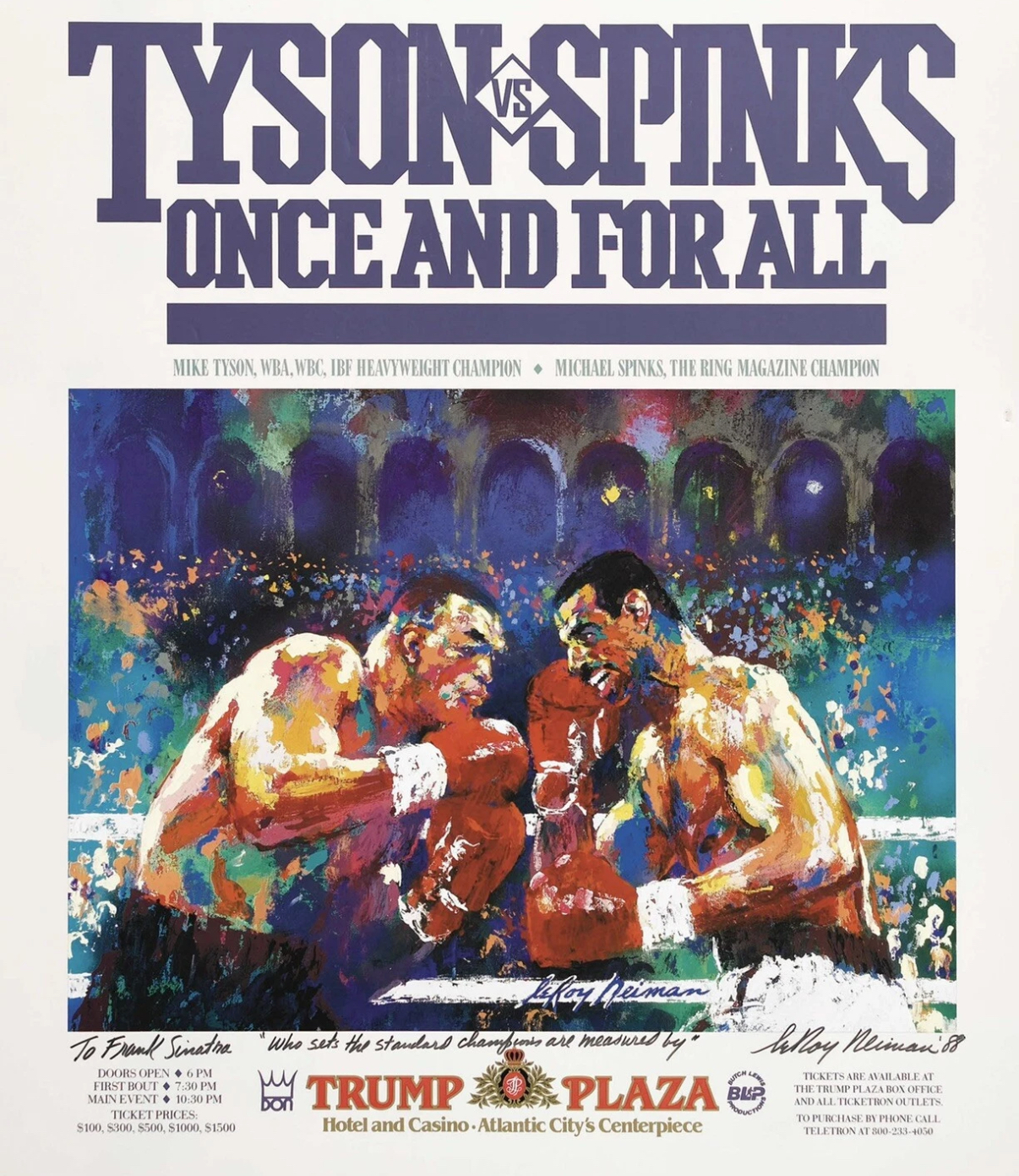
Mike Tyson vs. Michael Spinks (June 27, 1988) lasted 91 seconds and was as complete a destruction of a credible heavyweight challenger as the division has ever seen. Spinks, undefeated and a former unified light heavyweight champion, entered with legitimate claims. He never landed a meaningful punch. Tyson’s demolition of Spinks was the peak of the most feared version of Iron Mike — the fighter who had made the entire division flinch. For more on Tyson’s place in the broader hierarchy, this early BoxingInsider analysis of Tyson’s historical standing remains a useful reference point.
Buster Douglas vs. Mike Tyson (February 11, 1990) produced the most stunning upset in heavyweight title fight history. Douglas entered as a 42-to-1 underdog in Tokyo. He had been knocked down in the eighth round and beat the count with a disputed long count — then came back to stop Tyson in the 10th. It remains the only loss of Tyson’s prime career and one of the defining upsets in all of sports.
Evander Holyfield vs. Riddick Bowe I (November 13, 1992) was the fight that ended the era of fragmented titles and produced a genuine undisputed heavyweight champion for the first time in more than a decade. Bowe out-worked, out-landed, and ultimately outpointed Holyfield in a punishing 12-round fight that produced a standing ovation. The trilogy that followed was nearly as good.
The Modern Era (2000s–Present): Unification and the Return of Meaning
The proliferation of sanctioning bodies through the 1990s diluted the heavyweight title to near-meaninglessness. The modern era has been partly defined by the effort to put it back together.
Lennox Lewis vs. Evander Holyfield II (November 13, 1999) was, in retrospect, one of the most important fights of the era — a correction. Their first fight had ended in a draw widely considered a robbery. The rematch, staged at the Thomas & Mack Center in Las Vegas, produced a clear, wide unanimous decision for Lewis, who unified the WBC, IBF, and lineal championships. It was the closest the division came to an undisputed champion between 1992 and 2016.
Oleksandr Usyk vs. Tyson Fury I (May 18, 2024) is the most significant heavyweight title fight of the current generation. Usyk, the unified WBA, IBF, and WBO champion, faced Fury — the WBC titleholder — in Riyadh, Saudi Arabia, with undisputed status at stake for the first time since Lennox Lewis in 1999. Usyk won by split decision in a fight that most ringside observers scored more clearly for the Ukrainian. It was the culmination of a decade of heavyweight fragmentation finally resolved in a single night.
With Usyk’s next title defense set for May 23 at the Pyramids of Giza against Rico Verhoeven, the division’s present moment carries genuine historical weight — a legitimate undisputed champion defending against the backdrop of one of the world’s ancient wonders.
What Makes a Heavyweight Title Fight Great
The fights above share common qualities that transcend era: genuine stakes, credible opposition, and something larger than the sport itself at play. Louis-Conn was about craft versus power. Ali-Frazier was about identity and politics as much as boxing. Tyson-Douglas was about the illusion of invincibility. Usyk-Fury was about whether boxing could still produce a true undisputed champion.
The heavyweight division has always reflected its moment. The greatest title fights in its history didn’t just happen in history — they made it.