
In January, BoxingInsider published a plain-language guide to the peptides being talked about in every serious gym in the country. This week, the Department of Health and Human Services announced that six of those compounds can now be made by compounding pharmacies without fear of federal enforcement. Four of the six were broken down in that original guide. Here is what changed, what did not, and why the answer for anyone holding a boxing license is exactly the same as it was ten months ago.
The six peptides covered by the new HHS interim enforcement discretion policy are BPC-157, TB-500, KPV, MOTS-c, Epitalon and Semax. Readers of the January guide will recognize the first four. BPC-157 and TB-500 are the two halves of what the market calls the Wolverine Stack. KPV is the anti-inflammatory tripeptide that turns the GLOW blend into KLOW. MOTS-c is the mitochondrial peptide we described as the exercise mimetic. Epitalon, a four-amino-acid peptide studied for sleep and aging, and Semax, a Russian-developed nootropic peptide, were not in the original guide.
The policy is not FDA approval. The HHS document itself is blunt about that: “Compounded drugs are not FDA-approved, which means FDA does not review their safety, effectiveness, or quality before they are marketed.” What HHS is doing is telling state-licensed pharmacies, federal facilities and licensed physicians that it “does not intend to take enforcement action” against them for compounding these six substances, as long as a list of conditions is met, until the FDA finishes formal rulemaking on the 503A bulks list.
The department framed the decision as harm reduction. “This limited enforcement-discretion policy will discourage the continued, widespread use of certain research-use-only peptides supplied by foreign manufacturers that pose a safety risk to US patients,” the policy states. “By allowing limited compounding of the substances addressed in this guidance under appropriate safeguards, the policy provides patients with a more controlled alternative.” It adds that “the Secretary has determined that the policy advances patient choice and freedom while appropriately protecting patient safety.”
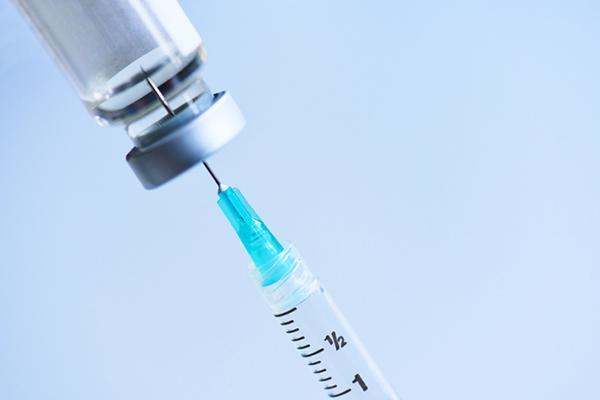
The conditions are not trivial. The raw peptide has to come from a manufacturer registered with the FDA, with a certificate of analysis covering identity, purity, potency, endotoxins, heavy metals and microbial contamination. Every product requires a patient-specific prescription. Compounders must report serious adverse events and quality problems to the FDA’s MedWatch system. Labels must carry the words “This is a compounded drug product. Not for resale.” And the only delivery device allowed is an FDA-cleared syringe.
Two conditions will matter most to the people who read our first article. First, the policy permits “only a single Active Pharmaceutical Ingredient” per product. That means the pre-mixed blends that dominate the market, the Wolverine Stack, GLOW and KLOW, are not covered as combination vials. A pharmacy could compound BPC-157 and TB-500 separately. It cannot put them in the same vial under this policy. Second, the routes of administration are specific to each peptide. BPC-157 is covered for subcutaneous, intramuscular, oral and topical forms. TB-500, Epitalon and MOTS-c are covered only as injectables. KPV is covered for topical and oral use. Semax is covered for intranasal use only. Epitalon is also expected to be “dispensed in intermittent courses” rather than continuously.
The road here was a long one. All six peptides were placed in the FDA’s Category 2 list of bulk substances that “raise significant safety risks” in September 2023, which is the regulatory move our January guide flagged. They came off that list on April 22 of this year. In July, the FDA’s Pharmacy Compounding Advisory Committee voted to recommend adding them to the 503A bulks list, over the written objection of the agency’s own scientific staff, who had recommended against all seven peptides under review. A seventh, emideltide, was voted down. HHS released the interim policy on Wednesday, October 28, and the notice was formally published in the Federal Register on Friday, October 30. The committee is scheduled to review five more peptides in February 2027.
The compounding industry welcomed the announcement. Scott Brunner, chief executive of the Alliance for Pharmacy Compounding, said: “We’ve said all along that the question isn’t whether patients are using these peptides. They are. The question is where they’re getting them. Right now, far too many patients are obtaining peptides from illicit suppliers with little assurance about what’s actually in the vial.” Brunner also cautioned against assuming the vials ship tomorrow. “Today’s announcement doesn’t necessarily mean pharmacies can begin dispensing these peptides immediately,” he said. “Suppliers will need to demonstrate that their API meets the extensive requirements in the policy, and pharmacies will need to verify that documentation. That may take time, and patients and prescribers should understand that.”
The opposition was just as direct. Jim Stansel, general counsel of the pharmaceutical trade group PhRMA, said in a statement reported by BioSpace: “It is deeply concerning that HHS is telling the FDA they should ignore the law and allow illegal compounding of unapproved peptides. Permitting access to peptides that have not been demonstrated to be safe or effective in clinical trials jeopardizes patient safety.” Robert Steinbrook of Public Citizen’s Health Research Group urged HHS to rescind the policy, saying, as reported by Regulatory Focus: “All peptide substances should go through the standard FDA approval process for new drugs.” Researchers from the Center for Science in the Public Interest argued in JAMA that listing the peptides “would fundamentally undermine the FDA drug approval process itself,” because companies “will have little incentive” to run clinical trials “knowing that compounders will simply be able to sell them without ever generating such evidence.”
None of this debate reaches the dressing room. For a licensed amateur or professional boxer, this week changed nothing. A compounding pharmacy being allowed to fill a prescription has no bearing on the anti-doping code a fighter signs up to when the commission issues a license. BPC-157 is named by name on the WADA Prohibited List under S0, the category for substances with no current approval for human therapeutic use. TB-500 falls under S2 as a peptide hormone and growth factor. MOTS-c falls under S4.4 as a metabolic modulator. Epitalon, KPV and Semax carry no approval from any health authority anywhere, which places them under S0 as well. VADA follows the WADA list. State commissions that test follow the same framework. A prescription from a telehealth doctor is not a therapeutic use exemption, and a fighter who tests positive for BPC-157 in 2027 will be suspended just as fighters have been in 2026.
That is worth saying plainly because the marketing is about to get louder. Clinics will advertise “legal BPC-157.” Gym chatter will shift from “is it legal” to “my guy can write for it.” Both of those things can be true for the general fitness population and still be career-ending for anyone with a license in a drawer. The HHS policy is written for patients. Boxing commissions do not regulate patients. They regulate fighters, and the fighter is responsible for everything in his or her body regardless of how it got there or who signed the script.
For everyone else, the practical advice from the January guide still holds. If you are going to explore any of these compounds, do it through a licensed provider who runs bloodwork first, and be aware that the single-ingredient rule means the blend you have been reading about on social media is not what a compliant pharmacy can hand you. Ask whether the supplier is FDA-registered and whether the pharmacy has verified the certificate of analysis. If the answer to either question is a shrug, that is the same gray-market product with a nicer label. The whole point of the new policy, in HHS’s own words, is to move people away from “research-use-only peptides supplied by foreign manufacturers.” A pharmacy that cannot document its sourcing has not done that.
HHS says it “may revisit application of this interim policy” if a safety signal emerges, and the policy ends whenever the FDA completes its rule, which could add these peptides to the bulks list permanently or leave them off. The advisory committee meets again in February. We will keep covering it. In the meantime, the January guide remains the place to start for anyone who wants to understand what these compounds are before deciding whether any of this applies to them.
The information in this article is for educational purposes only and is not intended as medical advice. Compounded drugs are not FDA-approved. Always consult a licensed healthcare provider. If you hold a boxing license or compete in any sanctioned combat sport, the compounds discussed here remain prohibited and BoxingInsider.com does not endorse, recommend or encourage their use.