
By Larry Goldberg and Boxing Insider
The story this week is that Mauricio Sulaimán beat Dana White in Washington. Sports Illustrated ran it as the WBC president dealing Zuffa Boxing its biggest loss, crediting him with forcing the company to cooperate with the sanctioning bodies instead of replacing them. On the narrow question, that is right. Between the House bill that passed in March and the Senate text introduced in July, the sanctioning bodies gained ground.
But a win for the WBC’s fee structure is not a win for boxing. A win for the Unified Boxing Organization (UBO) structure is not a win for boxing. Both are real, and both were fought for by people paid to fight for them. Neither one touches the only column that measures this sport, which is what changed for the men getting hit in the head.
The scoreboard coverage is not wrong so much as incomplete. Reporting on who beat whom is easier than reading forty pages of statute, and the people who benefit from the framing are the people returning calls.
So here is the answer up front. Zuffa won, decisively, and it is not close. The sanctioning bodies won a defensive round and kept their fee structure. The states drew. Boxing lost, and the club level lost worst and quietest. Here is how the ledger gets there.
Start with what the sanctioning bodies got. The House version capped championships at one per weight class, which would have ended the super, interim, regular, and franchise titles that generate their sanctioning fees. That cap is gone from the Senate text, as this series documented when the bill dropped. They also got language letting a unified boxing organization recognize their titles and rankings, which keeps the four majors relevant inside the new system rather than routed around it. Both changes protect the same business, and both arrived after a lobbying campaign the WBC has been open about running.
Now what Zuffa got, which the victory-lap framing keeps leaving out: the UBO itself, in federal law, permanently. One company promoting the fights, ranking the fighters, crowning the champions, and signing them to exclusive contracts. And it certifies its own compliance. That is not my characterization; the Congressional Budget Office described the mechanism in its score of the House bill, noting that a UBO is deemed in compliance with federal boxing law so long as it meets the alternative requirements laid out for its own system. Losing the title cap is a bad afternoon. A federal license for the structure the original Ali Act was written to prevent is a generational win.
The states kept their authority. No federal agency layered on top, no new commission telling them what to do.
Now the other column.
Start with the coercive contract protections, because they are the reason the Ali Act exists at all. Congress spent two years in the late nineties listening to testimony about fighters being told they could have the title shot if they signed the option, and the 2000 Act banned that specifically. It is the one provision in federal boxing law with sworn testimony behind it. Under the new structure, the company that promotes the fight, runs the rankings, and owns the belt operates on its own substitute rules and attests to its own compliance with them. The single protection built from fighters’ own testimony is now on the honor system, administered by the party it was written to restrain. And the oversight that does exist got handed to a trade association, which this site examined in March.
Then everything that never made either version. The measuring stick here should not be mine, so use John McCain’s, because his committee passed his bills twice, unanimously, in a chamber that agrees on nothing.
A federal commission with authority to license promoters, managers, and sanctioning organizations, and to pull those licenses: not in this bill. A national registry, one file per fighter, every result, every suspension, every medical flag, visible to every commission before licensure, which is the single change that would end commission shopping: not in this bill. Published ratings criteria, requiring an organization to explain in writing why a fighter moved: not in this bill, though the Senate version gestures at disclosure for UBO ratings. Real enforcement behind any of it: not in this bill. The Congressional Research Service history of those efforts is public and it is not long reading, and this site walked the same ground in a brief history of Congress trying and failing to fix boxing and in the fifty-year fight that set the stage for it.
Sit with the registry for a second, because it is the proof of the whole thesis. Nobody opposes it. There is no lobby against knowing a fighter’s medical history. The data already exists; the sport generates it every weekend. It has been the consensus good idea in boxing reform for twenty-five years, it would cost almost nothing, and it is not in the bill. Not because somebody killed it. Because nobody was paid to carry it.
That is the pattern in all of it. Every item that survived had an organization billing hours to protect it. Every item that vanished protects fighters, who do not have a trade association, a membership, or a budget.
There were fighter-side voices in the process, and look at what showing up got each of them. Oscar De La Hoya went to the Senate and testified against the bill, a Hall of Famer who has been the fighter and become the promoter, and what he took home was a three-year federal cap on every first deal his company signs. Nico Ali Walsh carried his grandfather’s name to Washington, got real meetings and real attention, and says he made inroads; I hope he is right, and the text that exists today does not yet show them. Traditional promoters filed objections, and Rick Glaser argued publicly on X this week that the bill gives promoters no reason to develop fighters at all, because the ones worth keeping get taken the moment the clock runs out. None of them arrived with a trade association behind them, and in that building, that is what turns a concern into a line of text. Coverage is not leverage. Testimony is not leverage. A lobbyist is leverage.
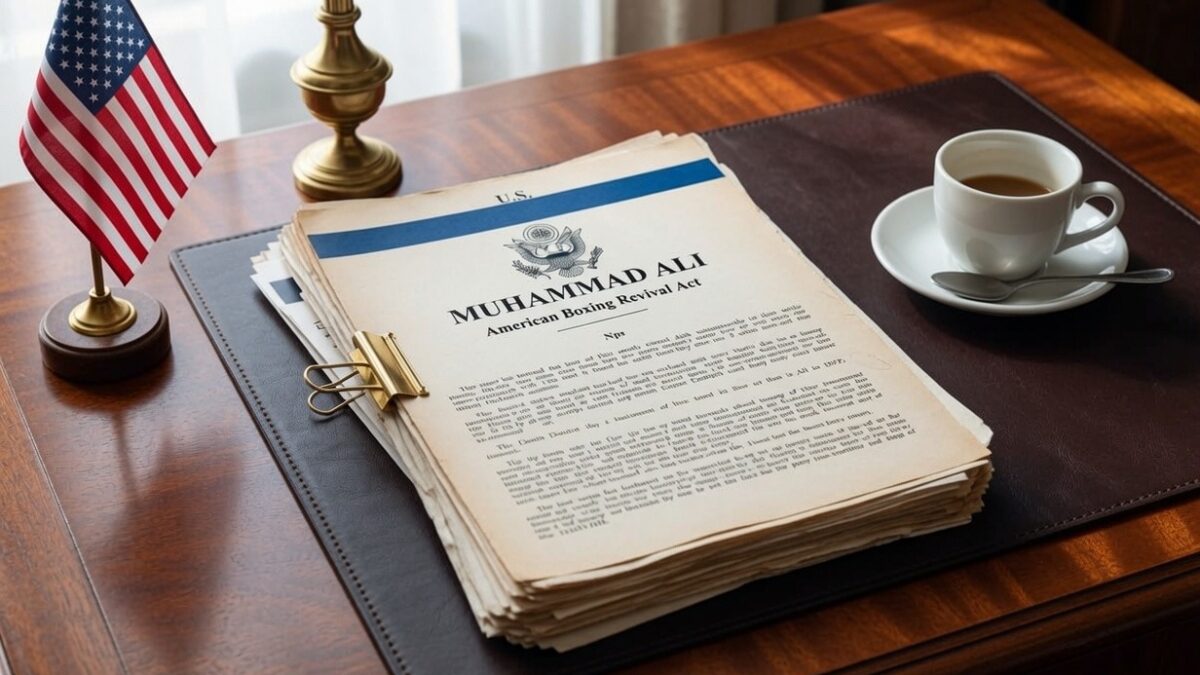
I am not accusing anybody of a conspiracy, and I do not need to. Trade organizations protect their members; that is the job, and the WBC did it well, and so did Zuffa. But the result is a bill named for Muhammad Ali that leaves out the registry, the enforcer, and the published criteria, and that puts the coercive contract ban on the honor system, while every business at that table walks away holding what it came for. Call that whatever you want. Just do not call it reform, and do not tell the kid on my next four-rounder that Washington spent a year looking out for him.
And the same gap runs past boxing entirely, into the sports this bill never mentions, which I wrote about yesterday.
Which is why the amendment window after the recess is the whole ballgame. We have spent the last two weeks reading every page of this bill and writing the repairs: sixteen amendments, most of them McCain’s language or Mullin’s, dusted off and pointed at the current text. Every one is a sentence or two. Not one takes a win off anybody’s table. The list publishes here when it’s finished.
The bill can still be what its title says it is. But somebody in that building has to stand up for the part of this industry with no connections and no trade association. Maybe it is Joe Courtney of Connecticut, who was one of only four votes against this bill in committee and saw the problem early. Maybe it is Brian Jack, whose name is on the bill and who has the most riding on it becoming what its title promises. Maybe it is Ted Cruz, whose committee holds the pen right now. What none of them can say is that they weren’t warned.