
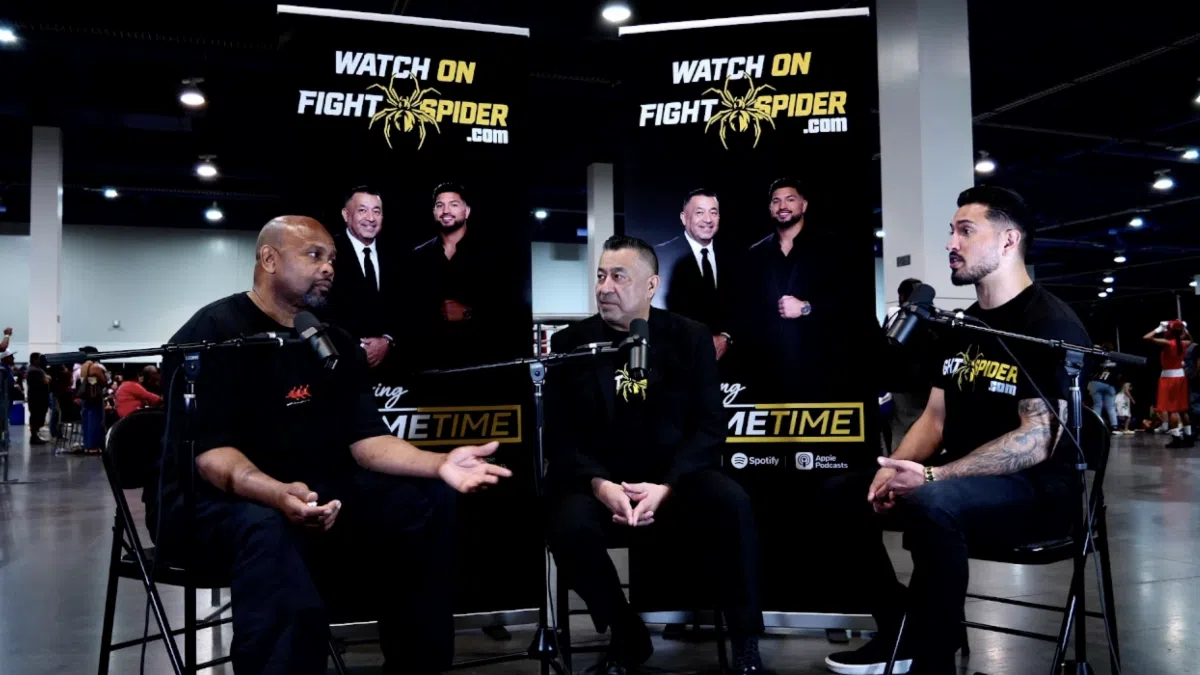
Roy Jones Jr. used an appearance on Fight Spider’s Boxing Primetime Show to deliver a blunt warning about the direction American boxing could take if Dana White and Zuffa Boxing succeed in reshaping the Muhammad Ali Act. The Hall of Famer sat down with host Andrew Bocanegra and former world champion Brian Mendoza for a wide-ranging conversation that quickly turned to the legislative effort moving through Washington.
Zuffa, operating under the TKO Group umbrella, has been pushing for revisions to the Ali Act through proposed legislation referred to as the Muhammad Ali American Boxing Revival Act. The framework would create a Unified Boxing Organization, a centralized structure modeled in part on the UFC. White has said fighters who prefer to remain under the existing Ali Act framework could continue to do so, but opponents contend the proposal would centralize matchmaking, lengthen promotional contracts, and concentrate control over the sport.
What the Original Ali Act Was Built to Do
The Muhammad Ali Boxing Reform Act was enacted in 2000 to address what Congress viewed as longstanding abuses in professional boxing. The law targeted coercive contracts, conflicts of interest involving promoters and sanctioning bodies, and a lack of financial transparency. It also restricts promoters from holding ownership stakes in fighters they promote, a provision that has shaped the business of American boxing for a quarter century.
Opposition to revising the law has come from several recognizable figures in the sport. Nico Ali Walsh and Oscar De La Hoya have both traveled to Washington to meet with senators and argue against weakening the existing protections. Ali Walsh, the grandson of Muhammad Ali, has publicly defended the statute that bears his grandfather’s name. Senate Commerce Committee hearings earlier this year drew testimony from boxing figures on both sides of the debate, including ESPN-covered appearances by De La Hoya and TKO president Nick Khan.
Jones: “Our Sport Is Over in This Country”
Jones did not soften his language during the interview. He argued that what is being presented as structural improvement carries consequences that fighters are not fully weighing.
“The problem is doing just like everybody else does,” Jones said. “They show you something good over here to completely destroy you over there. So they give you this to make it look good, but they really tear you apart.”
He framed the issue in terms of identity, saying boxing’s character depends on the ability of fighters to operate as individuals rather than as employees inside a single promotional system.
“If they do what they are doing right now, our sport is over in this country,” Jones said. “You don’t have no more personality. You don’t have no more style. You don’t have no more individualism. You can’t be an individual no more. You belong. You’re just a sheep.”
The McGregor Comparison
Jones returned repeatedly to the financial argument, pointing to former UFC fighters who have earned significantly more in boxing than they did during their MMA careers. He cited Conor McGregor’s 2017 crossover bout with Floyd Mayweather as the clearest example of the disparity between the two business models.
“Some of your athletes left your sport, came to boxing, and made more in one fight or two fights than they made their whole career with you,” Jones said. “If Conor McGregor made more money in one fight than he made his whole career, why do I want your model in my game?”
He also raised concerns about fighter leverage under a centralized system, arguing that consolidated control would shrink the space for dissent.
“If they don’t like you or you say something against them, you cannot be world champion because they don’t like you and you got nobody to fight for your side,” Jones said. “Y’all better wake up.”
A Financial Warning
Bocanegra referenced the recent Senate hearing during the conversation, prompting Jones to close with a projection about what he believes a Zuffa-controlled structure would mean for fighter purses.
“It’s dead. This going to kill it for sure,” Jones said. “When you get where you should be making $20 million and you can’t make $2 million now, it won’t look so good because that’s what’s going to happen.”
The full interview is available on Fight Spider’s Boxing Primetime Show. Jones’s remarks add another high-profile voice to a debate that continues to draw sharp lines between figures inside the established boxing industry and those backing Zuffa’s proposed restructuring of the sport.