
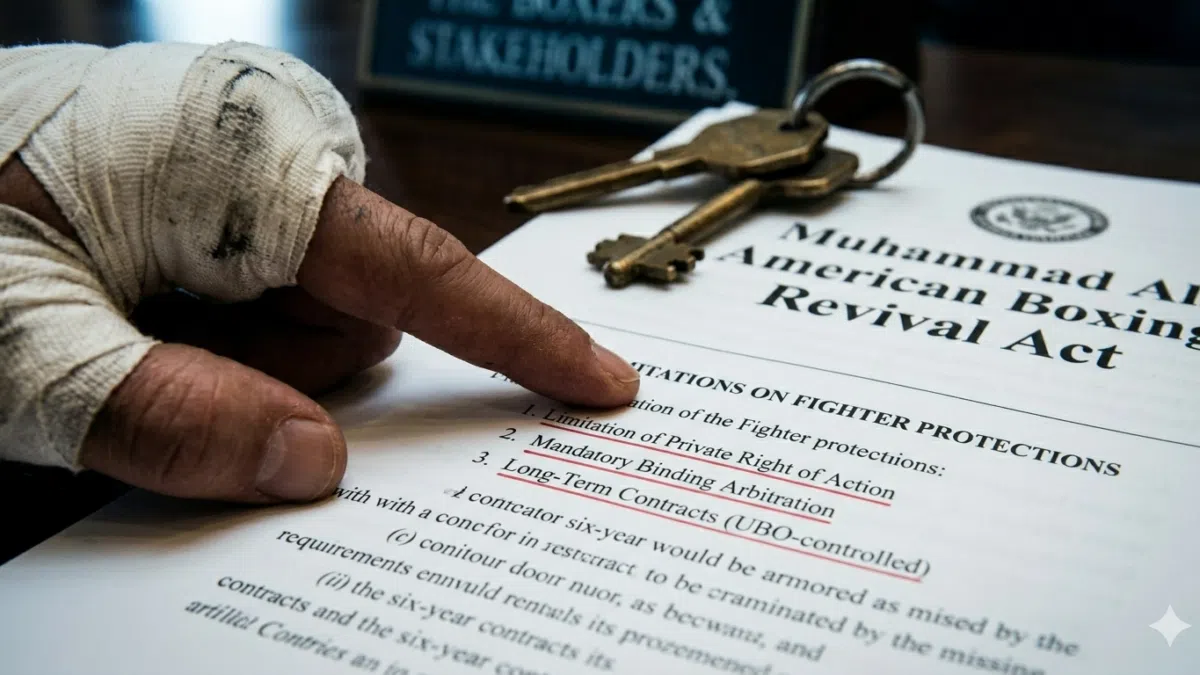
The U.S. House of Representatives will vote Tuesday, March 24 on H.R. 4624, the Muhammad Ali American Boxing Revival Act. The bill is the first proposed update to federal boxing law since the original Muhammad Ali Boxing Reform Act was signed in 2000.
The House will convene at 2:00 PM Eastern with votes postponed until 6:30 PM. The bill is being brought to the floor under Suspension of the Rules, a procedural mechanism that limits debate to 40 minutes, prohibits amendments, and requires a two-thirds supermajority to pass — 290 votes.
The bill passed the House Education and Workforce Committee in January by a vote of 30–4 with bipartisan support. It was placed on the Union Calendar on February 25 and the Committee on Energy and Commerce was subsequently discharged. A revised version of the legislative text was posted on March 17.
What the Bill Does
H.R. 4624 would create a new category of entity called Unified Boxing Organizations — UBOs — that could handle promotion, rankings, titles, and sanctioning under a single organizational structure. The bill also establishes a minimum payment of $200 per round for all professional boxers, requires $50,000 in medical coverage per fight, mandates certified ringside physicians, and includes anti-doping provisions. These requirements apply to all promoters, not only UBOs.
The bill was introduced in July 2025 by Rep. Brian Jack (R-GA) and Rep. Sharice Davids (D-KS). TKO Group Holdings — the parent company of the UFC and WWE — has been the primary corporate supporter. Lonnie Ali, widow of Muhammad Ali, and the Association of Boxing Commissions have also endorsed the legislation.
The bill has drawn significant opposition from across the boxing industry. Bob Arum — the Hall of Fame promoter who promoted Muhammad Ali — wrote to Congress identifying three specific Ali Act protections the bill removes for fighters who sign with a UBO: protections against coercive contracts, financial disclosure requirements, and the manager-promoter firewall. USA Boxing withdrew its endorsement in late February after its board determined the original support letter was never formally authorized.
What 290 Means
Under Suspension of the Rules, the bill needs two-thirds of voting members to pass — 290 votes if all 435 are present. That is a higher bar than normal. Leadership chose this procedure because it limits debate to 40 minutes and prohibits any amendments from being offered on the floor.
If the bill falls short of 290, it is not killed. It goes back to leadership, who can bring it to the floor again under a standard rule. The difference: under regular order the bill only needs a simple majority of 218, but members of Congress can offer amendments and the bill gets a full floor debate. That is the process opponents of the bill have been asking for — not to kill the legislation, but to force an open debate before it becomes law.
If the bill passes the House, it moves to the Senate, where it would need 60 votes to overcome a potential filibuster. If passed by both chambers, it goes to President Trump’s desk.