By Eric Bottjer
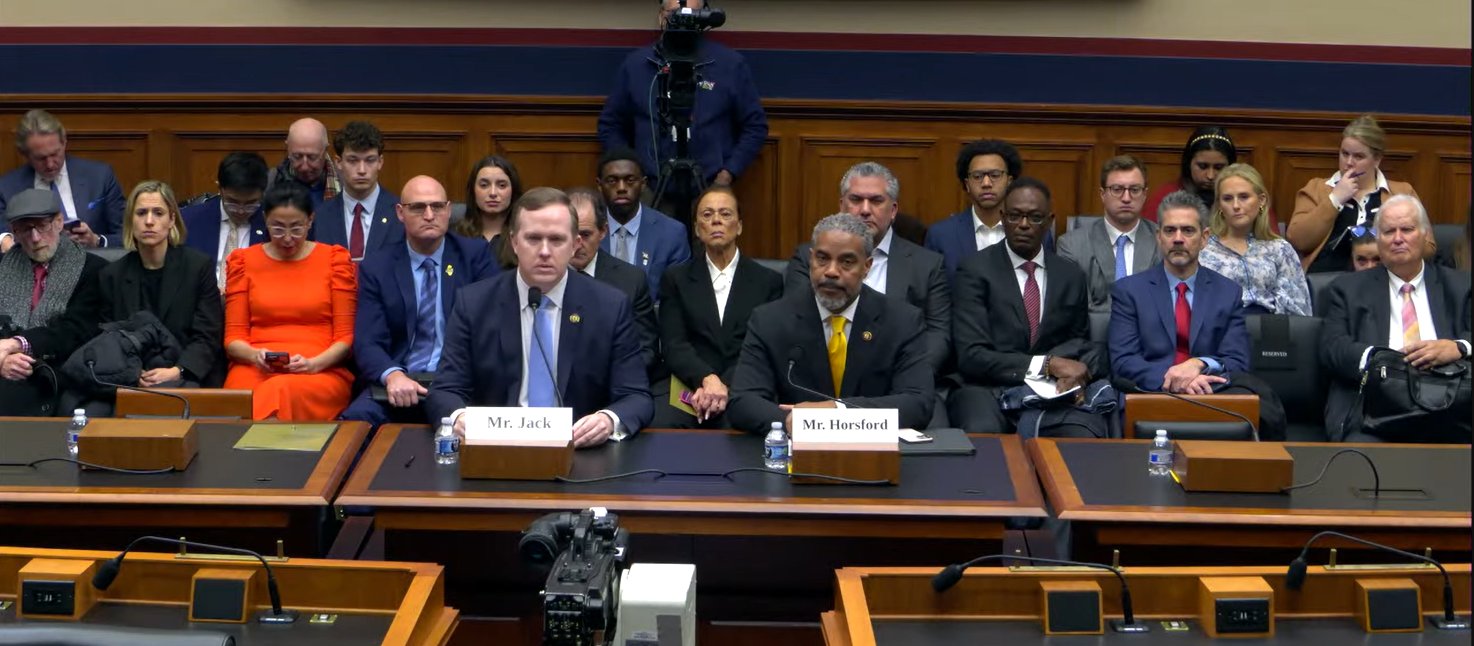
A bill introduced in July to the U.S. House of Representatives that would create an amended version of the existing boxing reform acts from 1996 and 2000 was discussed today on Capitol Hill, the first public hearing on the matter since it’s introduction by sponsor Brian Jack, a Georgia Republican. Supporters of the bill say the new legislation will create new opportunities for fighters and lead to long-term rehabilitation of a business that has cratered after 130 years of existence. Detractors say the bill will allow for a UFC-type monopoly similar to the current business model of professional mixed martial arts.
Committee Chairman Ryan Mackenzie (R-Allentown, Pa.) set the tone immediately in his opening remarks. The bill, he said, will make boxing “great again” (the phrase “great again” was repeated, well, repeatedly, just in case you were wondering about Mackenzie’s political bent). Ranking member Omar Ilhan (D-Minneapolis, Minn.) stated she saw value in the bill, but added, “There are sections of this act that raise the question as to who will actually control the future of boxing. Are we prioritizing Goliath to the detriment of David? This bill as crafted gives more power to big corporations than it does to boxers.”
The genesis of the bill – called the Muhammad Ali Boxing Revival Act – is the UFC’s desire to enter (and critics say, take over) boxing, backed in part by Saudi Arabia and its’ “public investment fund.” Those testifying in support of the bill pushed back on the monopoly narrative. Rep. Jack emphasized the bill, if made law, would not remove the reform acts of 1996 and 2000 and that rather than create a monopoly, it would simply give another option for boxers to advance their careers. The law would spawn Unified Boxing Organizations (UBOs), according to Jack, which would create a “parallel system to the (existing) sanctioning bodies. The bill will fix boxing’s “widespread exploitation and corruption,” Jack said.
Testifying in favor of the bill (HR 4624) was Andy Foster, executive director of the California State Athletic Commission, who envisioned multiple “UBOs” in the coming years. Foster pointed out UBOs would not charge boxers or promoters “crushing sanction fees,” and added the bill guarantees club-level boxers a minimum pay structure ($150 per round), as well as medical insurance with zero deductibles (currently either paid by promoters or boxers). At times, boxers leave a fight venue worse off financially than when they arrived, Foster said. He encouraged the committee to add an amendment to the bill that adjusted the purse minimums in the future to match inflation rates.
Foster was supported at today’s hearing by Lonnie Ali, Muhammad Ali’s widow, and the UFC’s COO Lawrence Epstein, who stated, “It is undeniable that professional boxing has suffered a steady decline in the United States. The Muhammad Ali Boxing Revival Act can reverse this decline by creating an innovative model that will grow the industry.”
Epstein and supporters of the bill are sensitive to the criticism that this potential law would result in a monopoly and emphasized that, in their view, it simply creates an additional path for boxers to explore. “UBOs would not replace sanctioning organizations,” Epstein said.
UBOs would be a “separate, parallel system” to the four existing major sanction groups.
The lone wolf at the hearing was well-known attorney Pat English, who worked on the two previous boxing reform acts that are current law. “There are things (in the first two laws) that should be corrected and modified,” English said, “but this Act is not the way to go.” The “real purpose” of the new act, English said, is to give a monopoly power to a particular UBO – Zuffa Boxing, backed by the UFC. Most boxers are opposed to this idea, English said. While supporters of the bill note its drug-testing requirements, English added that the bill does not require the test results to be reported to athletic commissions or to Boxrec, the current official record-keeping service employed by the Association of Boxing Commissions.
Supporters of the act include the ABC, as well as the California commission, promoter Tom Brown, Mike Tyson, various arenas in the U.S. And, oh, the Teamsters.
The bill now returns to the committee that hosted today’s hearing (the House Committee on Education and Workforce). Possible changes or amendments will be discussed (for example, Foster’s proposal to have a boxer’s minimum purse raised in the future), before it’s sent to the House for a vote. That process will take “weeks,” according to Arnaud Armstrong, communications officer at Rep. Mackenzie’s Allentown office. If it passes, it will be sent to the Senate, which typically takes longer than the house to get a bill up for a vote.