By Larry Goldberg, Boxing Insider Promotions
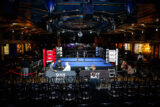
Saturday night we streamed our 20th professional boxing card live and free on YouTube from the Tropicana in Atlantic City. The whole card aired without a hitch — six fights, every round, available to anyone with an internet connection. No paywall. No subscription. No charge.
Then I got back to the dressing room after the event and found out the replay was already blocked.
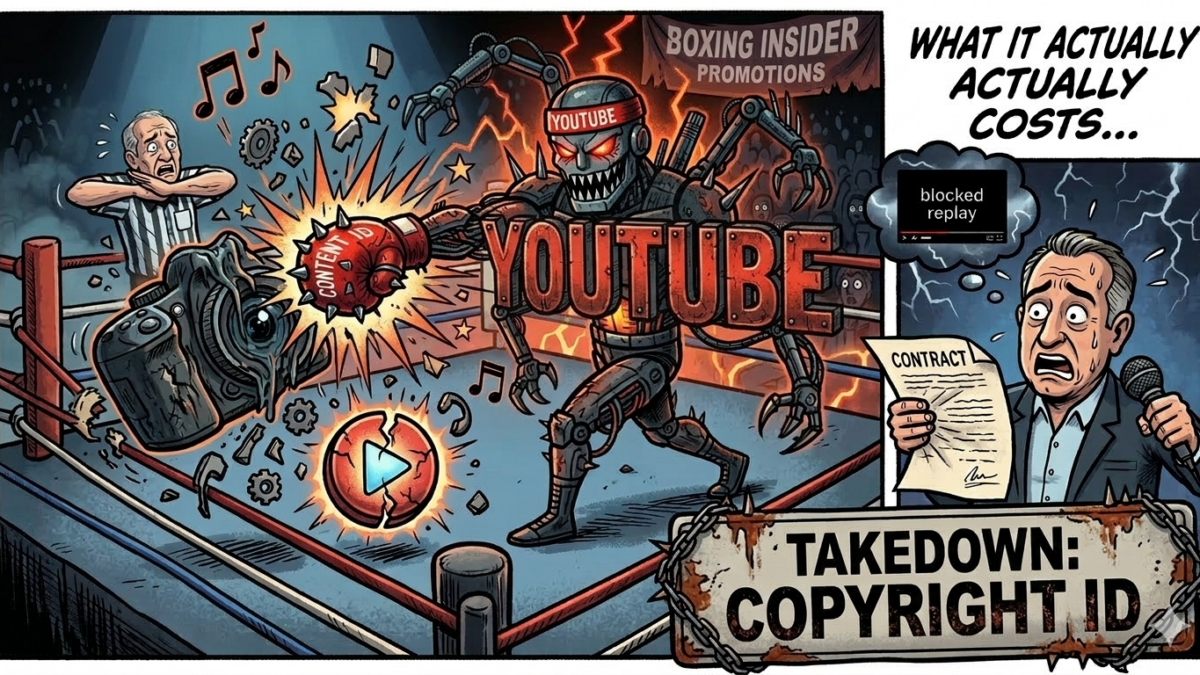
A Nipsey Hussle walkout song the DJ played during one of the ring entrances triggered YouTube’s Content ID system, and the entire video got hidden. Not demonetized — blocked. Nobody could watch the replay. We were told that incidental music in the background would be fine. The walkout songs were too much.
This is not a story about one bad night. This is the reality of what it takes to stream live combat sports as an independent promoter in 2026, and most fans — and most people in the boxing industry — have no idea how it works. And this does not just apply to boxing. If you are streaming anything live on YouTube — a concert, a wrestling show, a charity event, a church service — and copyrighted music plays through your audio, everything in this article applies to you.
How Content ID Works
YouTube’s Content ID system scans every video uploaded to the platform against a database of copyrighted audio and video. When it finds a match, the rights holder gets to decide what happens: they can monetize your video, mute the audio, block it in certain countries, or block it entirely. The system is automated. There is no human reviewing your boxing stream in real time. An algorithm hears Iron Maiden’s “The Trooper” playing through the house speakers during a fighter’s walkout and flags the entire video.
For our March 7 card, 10 separate songs were flagged. Most of them triggered claims that blocked monetization, which does not matter to us — we do not monetize our streams. But one claim — “Don’t Save Me” by Nipsey Hussle — came back as “can’t be seen or monetized.” That is the one that killed the replay. One song out of ten took down the whole video.
The Venue Is Licensed — But That Does Not Cover Your Stream
Most people assume that because the venue is licensed to play music, the stream is covered. It is not. The Tropicana pays for a blanket public performance license through ASCAP — and likely BMI and SESAC — which allows the DJ to play whatever he wants through the house speakers. That license covers the physical room. The moment that audio goes through your livestream, you are broadcasting, and broadcasting requires a completely separate set of licenses that the venue’s deal does not touch.
What It Would Cost to Fix This the Right Way
To legally use a copyrighted song on a livestream, you need two separate licenses: a sync license from the publisher, which covers the composition — the notes and lyrics as written — and a master use license from the record label, which covers the specific recording. Two different negotiations, two different rights holders, two different invoices. For one song.
For the 10 songs flagged on Saturday’s stream, that is potentially 20 separate negotiations. Independent artists or smaller labels might cost a few hundred dollars per song. But Saturday night’s walkout playlist included Iron Maiden and Michael Jackson. Those are major label catalogs — Sony, Universal — and they are not cheap or easy to deal with for a one-off regional boxing show. A single major-label sync license can run into the thousands, and that is before the master use fee.
Even if you did negotiate and pay for every license, you would then need to ask each rights holder to add your YouTube channel to their Content ID allowlist. Because even with a valid license, the automated system will still flag your stream. The license gets you the legal right. The whitelist gets you the practical ability to keep the video up. Without both, you are stuck.
What the Big Promotions Do
Organizations like PBC, Matchroom, and DAZN have legal teams that negotiate blanket sync licenses and master use licenses with labels and publishers. They also get their YouTube channels whitelisted by the rights holders so Content ID does not touch them. That is how a fighter walks out to Lil Baby on a DAZN card and nobody’s stream gets flagged.
We do not have that infrastructure. We are an independent promoter running cards at a casino showroom in Atlantic City, streaming them free on YouTube because we believe that is how club boxing should be accessible. The big promotions have legal departments. We have a DJ and a prayer.
The Realistic Fix
There are two practical solutions for an independent promoter.
The first is an audio split. The arena hears the fighter’s walkout music through the house PA — the crowd gets the full experience, the fighter gets the entrance they want. But the stream runs on a separate audio feed with royalty-free or pre-cleared music. The viewer at home hears something different during the walkouts, but the fights themselves are unaffected, and the replay stays clean. This is what a lot of mid-level promotions actually do. It is not as cool, but it works.
The second is streaming on multiple platforms simultaneously. If YouTube blocks the replay, the backup lives somewhere else. We are setting this up for our next card.
We have clips going up now from Saturday’s card and full individual bouts will be posted. The full results are on BoxingInsider.com.
Nobody tells you this stuff when you start promoting. You learn it the hard way — one blocked replay at a time. Lucky for you, I also have a website that needs original content.
Larry Goldberg is the founder of Boxing Insider Promotions and owner of BoxingInsider.com.