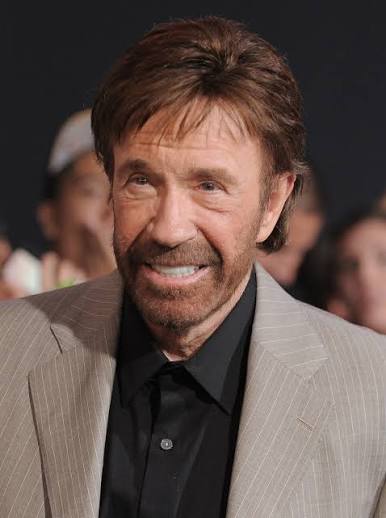
Chuck Norris, the martial arts champion and action-film icon, died Thursday in Hawaii. He was 86. His family confirmed the news Friday, saying he passed suddenly and was surrounded by loved ones. Just ten days earlier, Norris had celebrated his birthday with a social media video of himself throwing punches, captioning it with the declaration that he doesn’t age — he levels up.
The world knows Carlos Ray Norris as a six-time World Professional Middleweight Karate Champion, a black belt in five disciplines, and the star of Walker, Texas Ranger. But for the boxing world, Norris’s story carries threads that connect directly to the sweet science — more substantial than casual fans might expect.
Ali’s Shadow Over the Most Famous Martial Arts Fight Ever Filmed
The most direct line between Norris and boxing runs through Muhammad Ali and Bruce Lee. In 1972, Lee cast Norris as his nemesis in The Way of the Dragon, whose climactic Colosseum fight remains one of the most celebrated martial arts sequences ever filmed. What has received far less attention is where Lee found the movement vocabulary for that scene. According to multiple accounts from Lee’s students and biographers, Lee studied Ali’s 1966 destruction of Cleveland Williams obsessively, running eight-millimeter film over and over on a projector to dissect Ali’s footwork, angles, and punching. That real-ring mastery became the blueprint for the fictional fight that launched Norris into global stardom.
A World Title at the Garden — For a Thousand Dollars and a Broken Jaw
Norris’s competitive career peaked in the same building that housed the greatest boxing matches of the twentieth century. In June 1967, he won the Grand Champion title at S. Henry Cho’s All-American Karate Championship at Madison Square Garden, defeating Joe Lewis with a single side kick — the only point scored in the final.
On The Dick Cavett Show, Norris recalled the financial reality: “You know what I got paid for my first world title? Fight here in New York at Madison Square Garden. I won the World Champion. I got a thousand dollars. Plus, I had a broken jaw, which cost me more than a thousand dollars to get fixed. So I really lost on that even though I won the World Title.” Any small-hall fighter who has done the math on a purse after expenses understands that arithmetic.
Joe Lewis, Rocky Graziano, and the Birth of Kickboxing
Norris’s defining rival was Joe Lewis — not the heavyweight boxing legend, though the martial artist earned his own comparable nickname: “the Muhammad Ali of karate.” On January 17, 1970, Lewis and opponent Greg Baines entered the ring at the United States Karate Championships wearing boxing gloves. The announcer introduced them as “kickboxers.” Lewis won by second-round knockout, and American kickboxing was born — built on a framework borrowed directly from the sweet science.
Lewis had crossed paths with former middleweight champion Rocky Graziano while stationed in Vietnam with the Marines. He defeated Norris early in both men’s careers, but Norris won their highest-profile matchups. In 2004, Norris told Black Belt magazine that Lewis was “the greatest fighter the tournament scene has ever had.”
Norris himself trained with Benny “The Jet” Urquidez, one of kickboxing’s all-time greats, whose hand technique was rooted in Western boxing. Through Urquidez, Norris incorporated boxing fundamentals — head movement, combination punching, ring generalship — into his own system.
A Fighter’s Arithmetic
Strip away the memes and the action-movie mythology, and what remains is a fighter’s biography that boxing people recognize instinctively: a kid from nothing who found discipline in a combat sport, fought in the same building where Ali and Frazier traded blows, earned a world title for a purse that didn’t cover his medical bills, and spent the rest of his life parlaying that toughness into something larger.
Chuck Norris was not a boxer. But the sweet science was woven into his story — from the Ali footage that shaped his most famous fight scene, to the Garden floor where he bled for a title, to the boxing gloves Joe Lewis wore when kickboxing was born. In combat sports, the borders between disciplines have always been more porous than the sanctioning bodies would like to admit. Norris understood that.