
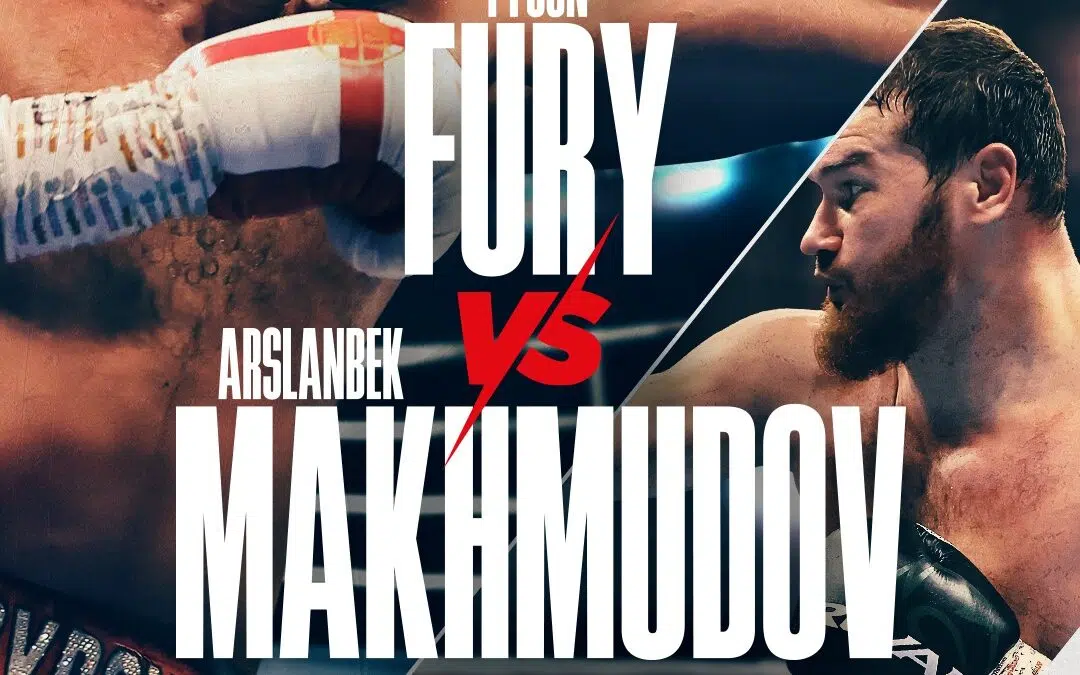
Nine days from now, Tyson Fury will climb through the ropes at Tottenham Hotspur Stadium for the first time in over 15 months, facing Arslanbek Makhmudov in a heavyweight bout promoted by Ring Magazine and streamed globally on Netflix. It is supposed to be a triumphant homecoming. Instead, the buildup has been defined by cratering ticket prices, a family rift playing out in tabloid headlines, and real questions about whether the version of Fury who shows up on April 11 still belongs at the elite level of the division.
The Ticket Question
When World Boxing News first examined ticket availability on March 21, more than 12,000 seats remained unsold at the north London venue. For a fighter who once packed arenas on name alone, the number drew immediate attention. Since then, the sales trajectory has moved in two directions at once. According to World Boxing News, approximately 67,000 tickets have now been sold, leaving roughly 5,000 remaining in a venue that expands to just under 72,000 for boxing configurations. On paper, the event is tracking toward a near sellout.
But the secondary market tells a different story. As the Telegraph reported, restricted view seats at the back of the stadium are now available on resale platforms for as little as £19, a sharp drop from the £44 to £55 range that represented the floor just a week earlier. That kind of price collapse on resale does not happen when organic demand is healthy. Official Ticketmaster listings still show standard seats starting below £44, with ringside options under £2,000 and premium hospitality packages reaching as high as £5,530. Sources close to the event have denied any major demand issues, and the raw numbers support the case that the stadium will be full. But there is a difference between filling a stadium and filling it at face value, and the resale market suggests significant inventory is being moved at steep discounts to avoid empty seats on camera.
Context matters here, too. When Fury headlined the same venue for his third fight against Derek Chisora in December 2022, he had sold roughly 50,000 tickets by late October and still drew 59,789 on fight night. That was a fight widely dismissed as a mismatch. The Makhmudov bout carries similar optics, and the late surge follows a familiar pattern for Fury stadium events. But the floor falling out of resale pricing this close to fight night is a data point worth noting. It speaks to a broader question: how much commercial pull does Fury retain after consecutive losses to Oleksandr Usyk and a retirement that lasted barely a year?
A Father’s Warning
The most dramatic storyline of fight week has nothing to do with tickets or training footage. In a raw interview with Playbook Boxing, John Fury declared that his relationship with his son has been “destroyed completely” and confirmed he will not attend the fight. The 60 year old, who has been a fixture in Tyson’s corner for the better part of two decades, did not soften his assessment of the comeback.
John told Playbook Boxing that he believes his son’s decline traces directly to the Deontay Wilder trilogy, calling the American one of the hardest punchers in boxing history and saying the three fights took something from Tyson that cannot be replaced. He was blunt about Makhmudov, calling him a problem for Tyson and adding that his son’s legs are no longer there. He suggested the only way Tyson will accept that reality is when the first bell rings.
As BoxingInsider’s examination of the Fury family divide detailed, the opposition to this comeback extends beyond John. Tyson himself told the Daily Mail that his father, his brothers, and even his wife Paris cut off communication when he announced his return. The timing is commercially loaded: Season 2 of At Home With The Furys, the Netflix docuseries, drops on April 12, the day after the fight. Netflix is streaming the bout. Netflix is producing the reality show. The family conflict that is driving tabloid coverage is the same conflict that will power the show’s narrative arc.
John also took aim at trainer SugarHill Steward, branding him “useless” and questioning his methods in detail. Those comments landed in the same week Fury confirmed he would enter the ring without a recognized head trainer, a decision that has divided opinion across the sport.
Training Alone
Fury has spent the bulk of this camp in Thailand, training alongside former WBO heavyweight champion Joseph Parker, who appears to be functioning as an informal advisor. SugarHill Steward, who guided Fury through his second world title reign and six consecutive fights, will not be in the corner. Reports have indicated Steward may have joined the Thailand camp at some point, but Fury’s public stance has been unambiguous.
At the February press conference at Tottenham Hotspur Stadium, Fury compared himself to Clubber Lang from Rocky III, telling reporters he would train alone. He later told Sky Sports he was “a one-man army” and that all he needed between rounds was someone to give him a drink and apply Vaseline.
The bravado plays well for cameras, but the practical concerns are real. This is a 37 year old fighter coming off consecutive decision losses, returning after 15 months of inactivity, against a man who has knocked out 19 of his 23 professional opponents. The absence of a structured coaching voice, both in camp and during the fight itself, is not a minor detail. Without a trainer to impose tactical adjustments in real time, the risk of a comeback fight that was already dangerous on paper increases considerably.
The Opponent: Arslanbek Makhmudov
Makhmudov (21-2, 19 KOs) is not the kind of opponent who should be casually dismissed, but he is not world class either. The 36 year old Russian, based in Montreal and trained by the highly respected Marc Ramsey, built his reputation on first round devastation. Thirteen of his 19 stoppages came in the opening round. He accumulated regional titles, stopped former world title challenger Samuel Peter in one round, and outpointed durable veteran Carlos Takam over 10 rounds in 2022.
His ceiling, however, was exposed in back to back losses. In December 2023, Agit Kabayel dropped him three times and stopped him in the fourth round at the Day of Reckoning card in Riyadh. Makhmudov later revealed he had broken his right hand in two places during the second round. Eight months later, Guido Vianello stopped him in the eighth round in Quebec City after severe swelling closed his left eye. In both fights, the pattern was the same: when Makhmudov could not land the early bomb, he faded under sustained pressure and volume.
He rebuilt with a first round knockout of Ricardo Brown in June 2025 and then travelled to Sheffield to outpoint Dave Allen over 12 rounds in October, winning the WBA Inter-Continental title and, more importantly, proving he could go the distance in a competitive fight. Allen, who has never been dropped in his career, was largely outworked but never in serious danger, which raised its own questions about Makhmudov’s ability to break down a tough opponent over the championship rounds.
The stylistic question for April 11 is straightforward. Makhmudov’s path to victory is a short one: land something heavy in the first half of the fight, before his engine starts to sputter and before Fury’s length, movement, and ring IQ take over. If Fury uses his 85 inch reach to keep Makhmudov on the end of a long jab and refuses to trade on the inside, this should be a manageable night’s work. If Fury is sluggish, stationary, or content to engage in exchanges, as he was at various points against Francis Ngannou and in both Usyk fights, Makhmudov’s power becomes a genuine factor.
The Undercard and the Bigger Picture
The supporting card adds significant weight to the evening. Conor Benn faces former two division champion Regis Prograis in the co-main event, marking Benn’s first fight since leaving Matchroom Boxing to sign with Dana White’s Zuffa Boxing. Jeamie TKV meets Richard Riakporhe in a heavyweight clash between two Boxxer promoted fighters. Frazer Clarke faces Australian contender Justis Huni. The promotional footprint is sprawling: Spencer Brown’s Gold Star Promotions holds the lead promoter role after securing his British Boxing Board of Control license, while Boxxer, Zuffa Boxing, and Queensberry all have fighters on the card.
The event represents the first time Zuffa Boxing has been directly involved in a British show, a development that carries broader implications for the sport’s promotional landscape. Frank Warren’s Queensberry Promotions, which remains Fury’s official promoter, will not be handling the on the ground operation. That structural distance has not yet escalated into a full rupture, Warren was personally invited to the press conference, but the arrangement is emblematic of the fragmented power dynamics reshaping heavyweight boxing.
For Fury, the stakes extend well beyond Makhmudov. A convincing victory would set the stage for a potential trilogy with Usyk, who has publicly expressed interest in revisiting the rivalry, or an all British showdown with Anthony Joshua later in 2026. A loss, or even a labored, unconvincing performance, would accelerate the narrative that Fury’s best years are behind him and that the decline his own father described in such painful detail is already well underway.
John Fury’s words will hang over the stadium whether he is in the building or not. He told Playbook Boxing that his son is testing himself, and that the only way Tyson will see the truth is when that first bell rings. On April 11, roughly 70,000 people and a global Netflix audience will find out alongside him.